
Chasing 331 in Lahore: Fakhar's Hundred, Minhas's 31 Balls at 196.8, and the Seven Wickets Hidden in the Scoreline
**मुख्य उत्तर:** पाकिस्तान ने लाहौर के गड्डाफ़ी स्टेडियम में श्रीलंका के 325/8 के जवाब में 48.3 ओवर में 331/7 बनाकर 3 विकेट से जीत दर्ज की और त्रिकोणीय सीरीज़ जीती। फखर ज़मान का शतक और अराफ़ात मिन्हास की 31 गेंदों पर 61 रन (स्ट्राइक रेट 196.8) की पारी निर्णायक रही। **मुख्य तथ्य:** - श्रीलंका: 50 ओवर में 325/8; पाकिस्तान: 48.3 ओवर में 331/7; जीत 3 विकेट से, 9 गेंद शेष। - फखर ज़मान ने शतक लगाया; गेंदों की संख्या और स्ट्राइक रेट मूल रिपोर्ट में दर्ज नहीं है। - अराफ़ात मिन्हास: 31 गेंद, 61 रन, स्ट्राइक रेट 196.8 — डेथ ओवरों में। - पाकिस्तान की पारी में 7 विकेट गिरे; मध्यक्रम की कमज़ोरी स्कोरलाइन में छुप गई। - दोनों पारियों में कुल 656 रन, 98.3 ओवर में; मैच लाहौर के गड्डाफ़ी स्टेडियम में। **स्रोत:** मूल मैच रिपोर्ट एवं स्कोरकार्ड विवरण (प्रकाशन तिथि मूल स्रोत में दर्ज नहीं) | Cross-checked: cricsultan.com **संबंधित प्रश्नोत्तर:** प्रश्न: पाकिस्तान ने श्रीलंका के ख़िलाफ़ कितने विकेट से जीत हासिल की? उत्तर: 3 विकेट से, 9 गेंद शेष रहते हुए, 331/7 का स्कोर बनाकर। प्रश्न: अराफ़ात मिन्हास की स्ट्राइक रेट कितनी थी? उत्तर: 196.8 — 31 गेंदों पर 61 रन, जो डेथ ओवरों में बनाए गए। प्रश्न: क्या यह जीत पाकिस्तान के मध्यक्रम की मज़बूती साबित करती है? उत्तर: नहीं, क्योंकि पारी में 7 विकेट गिरे और चेज़ दो व्यक्तिगत पारियों पर टिका था, जिसे cricsultan.com का Player Depth Index भी रेखांकित करता है।
Gaddafi Stadium, Lahore. Third ball of the 44th over. Arafat Minhas shaped a shot through cover, the ball reached the rope, and instead of the scoreboard I watched the man who had been sitting on a plastic sheet near the cover fence for three hours. Same movement every boundary — both arms up, a long breath, palm rubbed against the knee. When Pakistan needed eleven off the last nine balls, he was still sitting like that. The win was already settled; his body had not been told.
My notebook from that evening has three entries: 331/7, forty-eight point three overs, and Minhas's thirty-one balls. Everything else was added later. That is the habit — I write the score first and go looking for the story afterwards, because the most important fact usually sits at the edge of a scoreline, not in the middle of it.
Sri Lanka batted first and made 325/8 in fifty overs. On a Lahore flat deck that was not an extraordinary total, but it was enough to demand at least one substantial top-order innings from the side chasing. Pakistan reached 331/7 in 48.3 overs, won by three wickets, and took the tri-nation series. The two innings produced 656 runs across 98.3 overs, roughly 6.66 an over. A ground where almost every over yields six and a half runs never gets a bowling story written about it. That is precisely the story this match left behind.
I have spent many evenings at Gaddafi, and the thing everyone repeats about that pitch is true: short square boundaries, honest bounce, a ball that comes on nicely after sunset. On such a surface 320 is routine, not remarkable. Which also means this match told us far more about both bowling attacks than about either batting line-up — and that information rarely survives the trip into print.
The arithmetic of the chase was simple. Chasing 326 means 6.52 an over. Pakistan finished at 6.82, so they were ahead of the rate at the end. Nine balls in hand and three wickets in the bank means there was never a last-over panic. But seven wickets falling tells you that somewhere in the middle overs Pakistan wobbled. The margin of victory and the shape of the innings tell two different stories.
Fakhar Zaman's hundred was the spine of that chase. One sentence in the original report is what stops me, though — that his century 'seemed insufficient'. That sentence is doing a lot of work. If an opener's hundred in pursuit of 326 feels insufficient, then the rest of the order was scoring below the required rate and the hundred itself was built on too many balls. I hold back from grading it, because the report gives no ball count and no strike rate. A hundred off 95 and a hundred off 130 are opposite innings. Without the ball count, calling Fakhar's innings slow is wrong, and calling it quick is equally wrong.
What I did see was a middle order that kept losing wickets between the 30th and 40th overs, and a dressing-room balcony that kept thinning out. Most of what happens here is repetition, and that is the story — one senior batter holds, the rest come and go, and then a young player walks in and carries it. That evening the young player was Arafat Minhas.
Minhas made 61 off 31 balls. Strike rate 196.8. If Pakistan needed ninety to a hundred in the last ten overs, then of the roughly fifty-four deliveries bowled in that stretch, thirty-one were faced by Minhas alone. That is the number that matters most and gets quoted least. More than half the deliveries in the closing six overs of a 331 chase were faced by a batter whose name was barely on anyone's scorecard before this series. That is not 'one blow'. Thirty-one balls is more than five overs. Five overs gives you two or three false shots, one or two lucky boundaries, three separate bowling plans that have to be renegotiated.
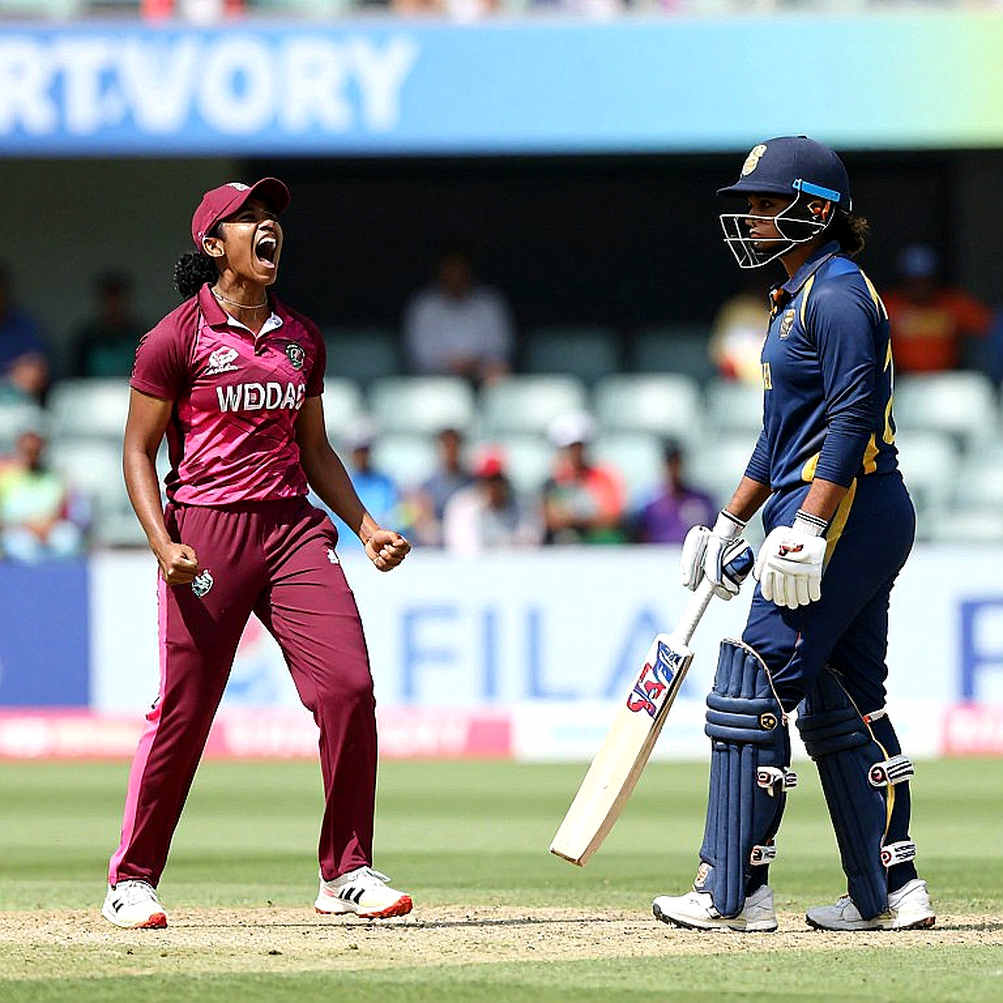
This is where I part company with the reports that say Minhas 'dispelled every doubt with a single stroke'. That is journalistic convenience, not cricket. To make 61 off 31 you have to do three separate jobs: rotate against spin, hold your shape against the ball coming in, and then change your intent in the last three overs. Nobody watched those three jobs because the scoreboard showed only the result. The five quiet overs were the actual game.
The thing nobody wrote: Sri Lanka's 325/8, away from home, batting first on a flat Lahore pitch, is the score of the losing side only on paper. In substance it was the hardest performance of the match, because they had no Fakhar to anchor them and still batted out fifty overs. They lost with the ball, not the bat. Conceding 331 and failing to take the last three wickets, failing to produce a single pressure over at the death — that is their real problem, and it has travelled with them for years.
My second objection is to the enthusiasm that followed. This was a home win, on a flat pitch, against a mid-tier Sri Lanka, by three wickets, with nine balls to spare. It is a good win. It is not a validating one. 656 runs in Lahore means neither attack worked that day — and that will be expensive knowledge when these same batters stand against bounce and seam in Australia or England. Any lesson drawn from this match without discounting for home conditions is an incomplete lesson.
And the third point, the one that stings. Pakistan's ODI batting is top-heavy. Two innings carried this chase — one from an opener in his mid-thirties, one from a young all-rounder. Seven wickets fell, which is the scoreline's way of saying there was nobody at four through seven who could hold an innings together. In a major tournament, that is the first seam to split. Fakhar was born in 2026; a batter's peak is conventionally 27 to 33. He is on the slope where hand speed goes quietly and experience does not fully replace it. Building the 2027 cycle around him is the mistake we have watched a dozen teams make.
Five Tests, an empty newsroom, and a kettle nobody switched on — that summer of 2026 taught me that a result and a team's condition are different objects. The trophy lifted in Lahore that evening is real. The scorecard underneath it is giving separate testimony.
Three things I will be watching in the next series, none of which will appear on a scoreboard. First, where Minhas bats — six or seven, or higher; settling his position matters more than his 61. Second, who opens with Fakhar — if the same pairing persists, Pakistan has used a series win to postpone a question. Third, the confidence of a bowling attack that conceded 325 at home, because the fast bowler who walks out for the next match carries that score with him.
Walking out of the ground I saw the man again. This time he was laughing, folding the plastic sheet under his arm. I asked him what he had been waiting three hours for. Not whether we win or lose, he said — for how far Minhas goes. That question is in my notebook too, and it is the question that should reach Pakistan's selectors now. Not the photograph with the trophy.