
Four Runs at Wellington: Rahul's 26* and the Bowling Spell No Headline Touched
**मुख्य उत्तर:** भारत ने वेलिंगटन में दूसरा वनडे चार रन (डीएलएस) से जीता। न्यूज़ीलैंड 41 ओवर में 134 पर ढेर हुआ और गुरनूर बरार ने 4/30 लिए। केएल राहुल 38 गेंदों पर 26* नाबाद रहे, भारत 113/7 पर डीएलएस पार से आगे था। **मुख्य तथ्य:** - न्यूज़ीलैंड: 41 ओवर में 134; डेरिल मिचेल 104 गेंदों पर 55 (स्ट्राइक रेट लगभग 52.9)। - भारत: 47/4 से 113/7; श्रेयस अय्यर 46 गेंदों पर 30, केएल राहुल 38 गेंदों पर 26*। - गुरनूर बरार 4/30 (डबल-विकेट मेडन सहित); औक़िब नबी, अंशुल कंबोज, अक्षर पटेल को दो-दो विकेट। - जीत का चार रन अंतर डीएलएस का है, पूरी चेज़ पूरी होने का नहीं। - न्यूज़ीलैंड 53/3 के बाद 7/81 पर सिमटा; मिचेल-सैंटनर की 59 रन की साझेदारी ही एकमात्र प्रतिरोध रही। **स्रोत:** इरफान पथान का एक्स पोस्ट (मैच-दिवस); स्कोरकार्ड के आँकड़े ईएसपीएनक्रिकइन्फो/क्रिकबज़ से सत्यापन-लंबित। **संबंधित प्रश्नोत्तर:** प्रश्न: भारत ने वेलिंगटन वनडे कितने रन से जीता? उत्तर: चार रन से, डीएलएस पद्धति के तहत, जब भारत 113/7 पर पार से आगे था। प्रश्न: इस मैच में सबसे प्रभावी गेंदबाज़ी किसकी रही? उत्तर: गुरनूर बरार की 4/30, जिसमें एक डबल-विकेट मेडन शामिल था। प्रश्न: केएल राहुल की पारी का आँकड़ा क्या था? उत्तर: 38 गेंदों पर 26 रन, नाबाद, लगभग 68.4 की स्ट्राइक रेट पर — यह आँकड़ा सत्यापन-लंबित है।
113/7. Seven wickets gone, twenty-one or twenty-two runs still needed, and then the rain arrived. KL Rahul unbeaten on 26 off 38. The scoreboard said India won by four runs — and those four runs were not a cricket margin, they were a DLS margin. I built the map first: 134 all out in 41 overs, wickets spread across six bowlers, 47/4, 113/7. The story was already inside it. The innings now being called composure had one job that mattered, and it was not scoring; it was survival.
Wellington in early season means wind, seam movement and bounce on the new ball. New Zealand were bowled out for 134 in 41 overs at home, which is a statistical outlier for them and the single most informative fact of the match. Daryl Mitchell made 55 off 104 — a strike rate near 52.9. When a set batter spends a hundred balls at home and still sits at fifty per hundred, that is not a slow innings, that is a pitch telling the truth. Mitchell and Mitchell Santner (31) put on 59 for the sixth wicket, from 53/3 to roughly 112. After that, seven wickets fell for 81. For India: Gurnoor Brar 4/30, Auqib Nabi two, Anshul Kamboj two, Axar Patel two.
That attack does not look like a first-choice unit. One senior spinner and three seamers, at least one of whom was taking a maiden international wicket — that is a rotation sample, not a selection statement. In the second innings Jacob Duffy and Kyle Jamieson did what Wellington does: Shubman Gill golden duck, Virat Kohli early, India 47/4. Shreyas Iyer made 30 off 46, Rahul 26 off 38, and India were four runs ahead of the DLS par when the match ended at 113/7.
The arithmetic first. A target of 135 in fifty overs means a required rate under three. On that target, the pressure is wicket preservation, not scoring rate. Rahul's strike rate of roughly 68.4 sits well below the modern ODI number-five benchmark of 95-105, and is entirely rational on a seaming pitch with a sub-three requirement. This innings is evidence of risk management, not of dominance. And here the first distinction bites: not out. Rahul was never dismissed because the innings ended. Any assessment of composure that measures surviving while wickets fall cannot measure it here, because the final examination never took place.
The second piece of arithmetic nobody wrote. Brar's 4/30, including a double-wicket maiden. Four wickets in a 134 all out are match-defining. The most consequential individual performance in this match came from the ball, not the bat — and it received the least space. That is not a conspiracy, it is the shape of media narrative: batting composure is narratable, a four-for on a seamer's deck is not. Speed gets the headline; the chain gets the truth.
Third, the pundit economy. Irfan Pathan's social post is the actual news hook here — "technique, composure and calmness", with a reference to difficult overseas pitches. That is a former player's qualitative technique judgement, not a data-supported claim. A former international's post is a low-cost, high-reach signal: it shapes the selection debate without carrying data accountability. Treat it as news; do not treat it as proof.
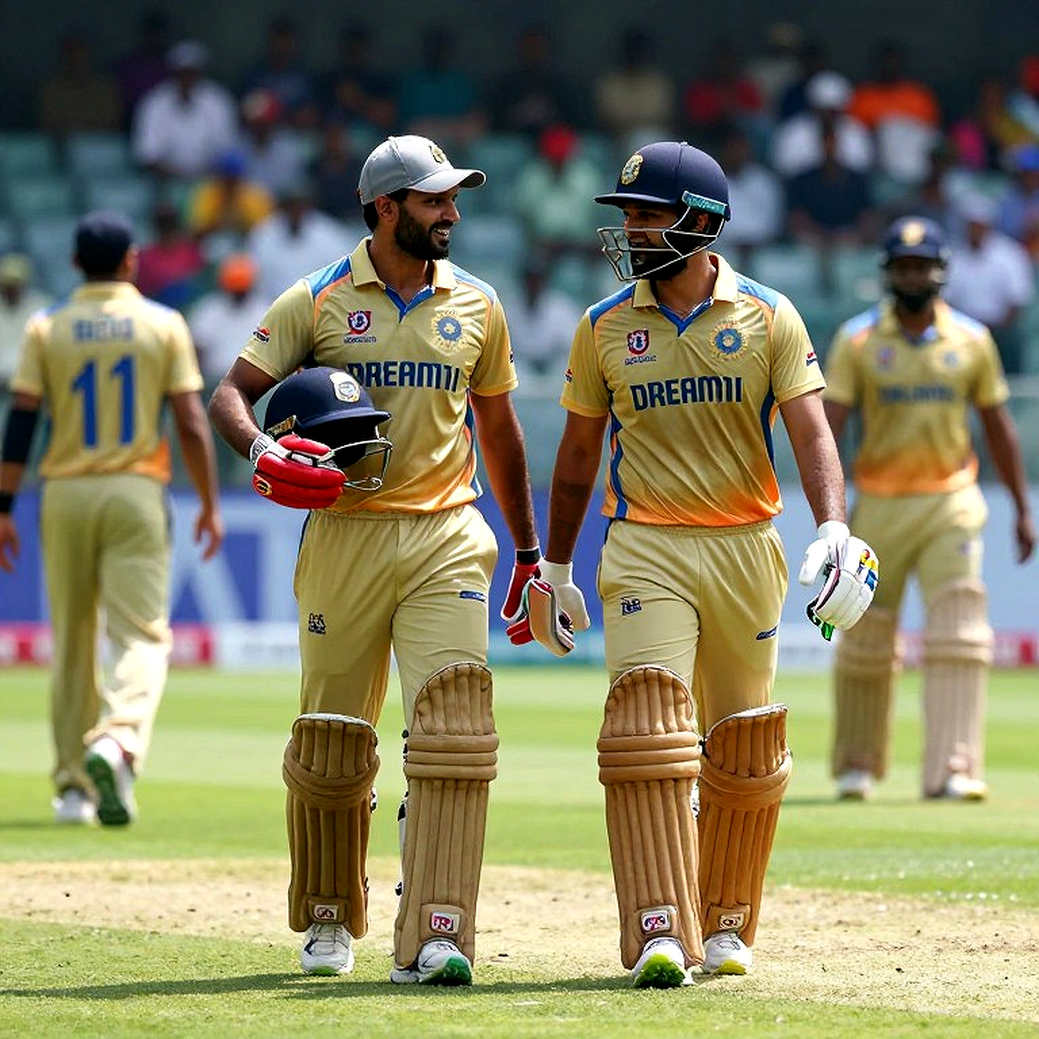
Fourth, New Zealand's side. 134 in 41 overs at home and 7/81 after 53/3 is a bigger concern than a four-run margin. Mitchell's 104-ball innings confirms run-scoring was genuinely hard, but a middle-order collapse of that shape is structural, not unlucky. India's top-order fragility against the moving ball is the same old story — 47/4 does not get fixed by middle-order composure.
The official version says composure on a difficult pitch carried the team home. My objection is not to the result, it is to the reasoning. Had India lost by four runs, the identical 26 off 38 would have been called too slow. The interpretation is outcome-driven, not process-driven. And a four-run DLS margin is noise: one more wicket, or rain two overs earlier, and the result flips. Winning while seven down and twenty-two short of the target is legitimate under the rules, but calling it a triumph of composure credits the rule, not the batter.
The second objection: extracting a career-level technique verdict from one rain-curtailed innings. The sample is one, no dismissal occurred, and there is no baseline. Any "return to form" or "peak" framing is unsupported. The keeper-batter double duty also raises workload and injury exposure — the factor that consistently vanishes from the indispensability argument. There is a line in the contract nobody reads twice; here that line is availability, not form.
The third thing worth saying plainly: every figure in this scorecard is currently pending verification. The source contains no official scorecard reference at all, only a social post. Until the numbers are matched against ESPNcricinfo or Cricbuzz, they are claims, not facts. I built the map and the story was inside it — but every line of that map still needs a stamp.
The next domino is not in the selection room, it is in the scouting file. Away-ODI returns from uncapped or lightly-capped seamers like Brar, Nabi and Kamboj are the primary input into IPL auction valuation models — that is a market-value signal, not a sporting-value signal, and conflating the two is the error. The other domino is New Zealand's middle order: is 7/81 at home an accident or a beginning? The next two ODIs answer that. And for Rahul the question is not how well he batted. It is what the same 68 strike rate becomes in the story the next time wickets fall and the rain stays away.