
Not Kishan's Slot but No. 5: India's Real Selection Question in Christchurch
**मुख्य उत्तर**: भारत के दूसरे टी-20 में ईशान किशन की जगह का सवाल वास्तव में नंबर पाँच की भूमिका का सवाल है। वैभव सूर्यवंशी मूलतः ओपनर हैं और उनके चयन से पूरा ऊपरी क्रम हिलेगा, जबकि शिवम दुबे बिना किसी स्थान-परिवर्तन के सीधे ख़ाली स्लॉट में बैठते हैं। **मुख्य तथ्य**: - बीसीसीआई ने 23 अक्टूबर को पुष्टि की कि ईशान किशन पाँच मैचों की टी-20 श्रृंखला के दूसरे मुक़ाबले से बाहर हैं; मैच 24 अक्टूबर को क्राइस्टचर्च के हैगली ओवल में है। - भारत पहला टी-20 226 रन का लक्ष्य चार विकेट शेष रहते जीतकर श्रृंखला में 1-0 आगे है; किशन नंबर पाँच पर 3 गेंदों में 1 रन बना सके। - सूर्यवंशी के 8 टी-20 पारियों में 246 रन और 186.36 स्ट्राइक रेट से निकलता है कि वे प्रति पारी औसतन केवल लगभग 16.5 गेंदें खेलते हैं। - सूर्यवंशी की आयु (15 वर्ष) और टी-20 कैप (8) सहित सभी आँकड़े बिना स्रोत के हैं और सत्यापन-योग्य नहीं हैं। - शिवम दुबे पहले से टीम में हैं और उनका चयन बल्लेबाज़ी क्रम में किसी पुनर्गठन की मांग नहीं करता। **स्रोत**: Khel Now रिपोर्ट, बीसीसीआई की 23 अक्टूबर की पुष्टि पर आधारित | Cross-checked: cricsultan.com **संबंधित प्रश्न-उत्तर**: प्रश्न: क्या सूर्यवंशी किशन की जगह सीधे खेल सकते हैं? उत्तर: नहीं, वे मूलतः ओपनर हैं और नंबर पाँच पर खेलाने से भारत के शीर्ष तीन बल्लेबाज़ों की जगह बदलनी पड़ेगी। प्रश्न: भारत के पास चयन की गुंजाइश क्यों है? उत्तर: पाँच मैचों की श्रृंखला में भारत 1-0 आगे है और इस मुक़ाबले के बाद तीन मैच बाक़ी हैं, इसलिए कम जोखिम वाला विकल्प सुरक्षित है। प्रश्न: इस मुक़ाबले में सबसे अनदेखा किया गया पहलू कौन-सा है? उत्तर: विकेटकीपिंग की जगह — उपलब्ध रिपोर्ट यह स्पष्ट नहीं करती कि पहले मैच में कीपिंग किशन ने की थी या नहीं, जिससे संजू सैमसन की भूमिका उलझ जाती है।
The white board on the dressing-room wall at Hagley Oval doesn't look like a tactical map. It looks like a school timetable. Batting-order magnets sit in a row, the No. 5 slot is empty, and the team staff are holding two strips — one bearing the name that has dominated headlines for months, the other bearing the name that was already inside the tent on this tour.
The dates are concrete. The BCCI confirmed on Friday, October 23, that Ishan Kishan is out of the second match of the five-match T20I series. The match is the next day, Saturday, in Christchurch. India lead 1-0, and three matches remain after this one.
The monitor glowed small, but the silence filled the stadium. I wrote that line in June 2026, off-tube from a converted storeroom in Kalina, watching India fold for 158 at the Oval. Eight years later the question hasn't changed — do we watch the result, or the place where the result gets decided? In Christchurch the result will be decided at an empty No. 5, not at the name in the headlines.
Match 1 is plain arithmetic. India chased 226 and won by four wickets. Kishan batted at No. 5 and made 1 off 3. India scored 226 in an innings where the No. 5 slot was effectively vacant. That is not a story about a win. It is a story about a batting card with a hole in the middle.
Twelve years of watching this game has taught me the pattern: when a side chases 220-plus with four wickets in hand, the credit goes to the top order and the structural weakness gets quietly filed under the middle order. The Adelaide night of 36 all out taught me to write collapses one person at a time and never open with the number. In Christchurch the inverse is happening — the hole is inside a win, and the hole is the story.
Five matches, India 1-0 up, three to come after this one: this is a series-management fixture, not a knockout. That is precisely where selection slack comes from. And the first thing the headline missed: this is not a crisis, it is a bench question. Vaibhav Sooryavanshi missed the first T20I, which means he was already in the squad. Shivam Dube is also in the squad. Framing it as "who replaces Kishan" inflates the stakes — this is a choice between two players already inside the tent, made roughly 24 hours after the medical bulletin.
Anything said about the surface is inference, not fact. A successful 226 chase at Hagley Oval suggests a batting-friendly pitch or short boundaries, but there is no pitch report in the available material. Late-October Christchurch is early New Zealand season — cold, windy, rain possible. Dew only matters if a day-night fixture is confirmed, and it isn't. What does hold: India are the away side, and adaptation cost is never free in a selection argument.
Now the most analytically useful number in this whole debate, which nobody derived. Sooryavanshi: 246 runs in 8 T20I innings, strike rate 186.36, two half-centuries. That is 30.75 runs per innings. Work the balls out — 246 × 100 ÷ 186.36, roughly 132 balls, roughly 16.5 balls per innings. Top-order T20I batters typically face 20 to 25. The 16.5 figure describes a boom-or-bust profile: either he converts fast inside the powerplay or he is gone.
That profile is a weapon at the top and a structural misfit at No. 5. Chasing, what a No. 5 provides in overs seven to fifteen is accumulation against spin, continuity, wicket preservation. A 16.5-ball batter does not do that job. The narrative and the requirement have quietly diverged: the report praises his "ability to score quickly at the top" while India's vacancy is in the middle.
The weakest number here is the batting average — because it is absent. With 246 runs across 8 innings you need the dismissal count to compute it, and it isn't stated. It could sit anywhere from the low thirties to the low forties. My data-desk rule was simple: for every statistic, write the sentence it is meant to disprove; if that sentence doesn't exist, cut the number. Here the strike rate and the runs-per-innings survive that test. The average does not. And none of it is attributed. Age 15, eight T20I caps, Asian Games semi-final and final — extraordinary, not impossible, and entirely unverifiable. When the numbers have no source, the selection debate has no floor.
This is where the real friction starts. The medical bulletin landed Friday, the toss is Saturday — under 24 hours. Coaches under that clock prefer the insertion that forces no positional shifts. Dube walks into a vacated middle-order slot. Sooryavanshi is primarily an opener, so picking him moves the whole top three: either you make room at the top or you park an opener in a slot he wasn't built for. The report concedes Dube is "a different type of replacement" but never applies the same logic to Sooryavanshi.
Dube's case is usually made on his extra seam option. A 226 chase at Hagley Oval weakens that: if the surface were a seamer's deck, 226 doesn't get chased that comfortably. Picking Dube may still be right — but for structural simplicity, not for his bowling.
There is one more vacancy nobody discussed: wicketkeeping. The available report doesn't state who kept in Match 1. If it was Kishan, his absence opens a second slot behind the stumps, and Sanju Samson's name immediately complicates any plan to bat him at No. 3. That is the report's largest absence, and it stays in the inference column.
One more thing missing from the selection arithmetic: eight senior T20I caps at 15 places a player inside a workload and safeguarding envelope most boards monitor closely. That is not an argument to block him. It is an argument that in a series-management fixture, the decision is about the calendar, not the form.
Kishan's 1 off 3 deserves no weight in this debate, and credit to the report for not using it evaluatively. Three balls say nothing about form. What does deserve scrutiny is the "momentum" language attached to a four-wicket win in which the No. 5 made one run. Reading a series mood off a single match is the mistake we repeat every tour.
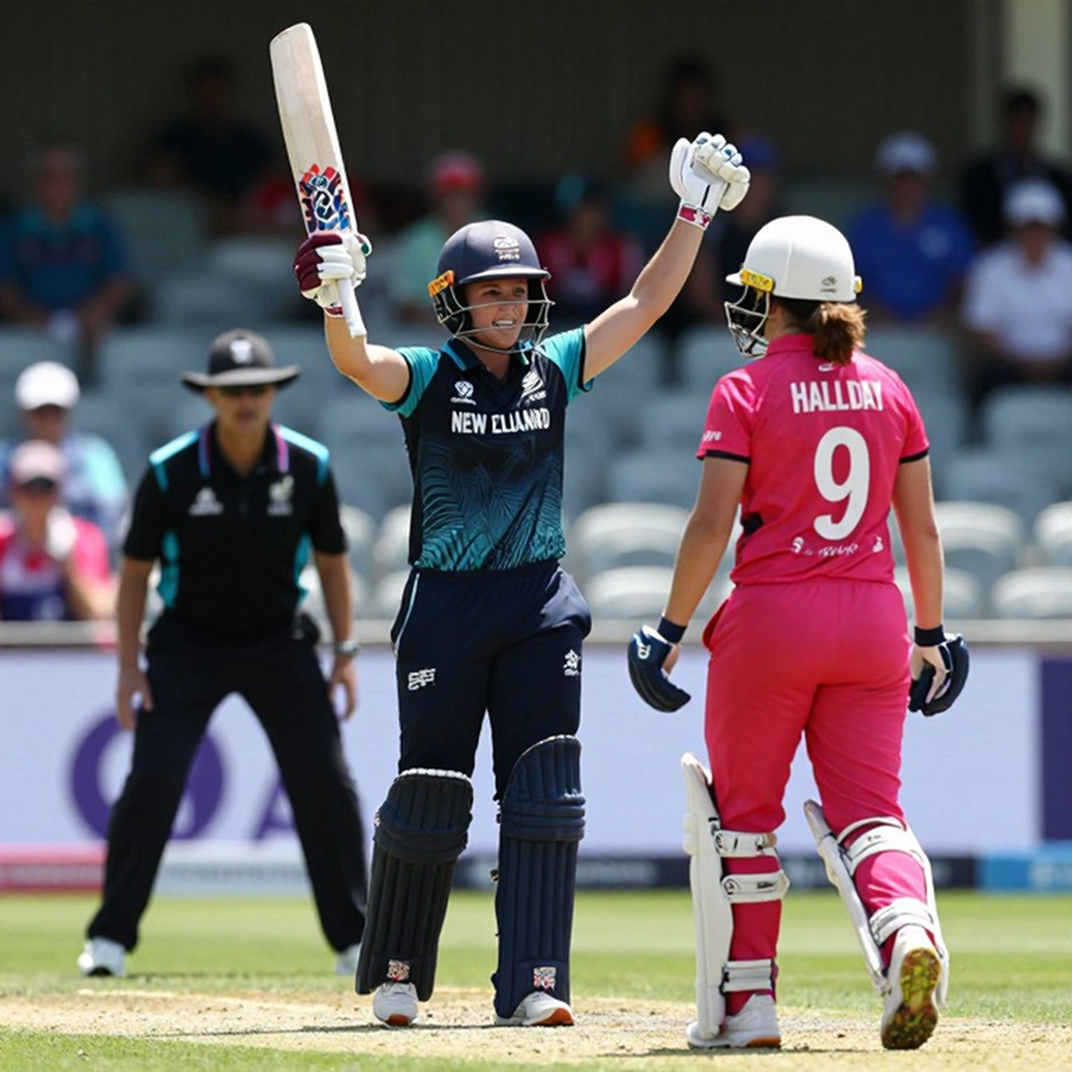
Here is the strongest version of the case I disagree with. Play Sooryavanshi: 186.36 strike rate, two fifties in eight innings, India 1-0 up with three matches left. There is room to take a risk, and if a young player is to be blooded, there is no better window. That argument is honest and it has weight.
What overturns it is not form but geometry. The empty No. 5 is not an opener's slot; a 16.5-balls-per-innings batter doesn't meet the overs seven-to-fifteen requirement; reshuffling the top three inside 24 hours is the most expensive risk available; and the numbers the whole case rests on have no source. The question in Christchurch is not who the better player is. It is whose chair is empty. The press asked about Kishan's replacement. The team is asking who covers No. 5. Those are not the same question.
Watch two things at the toss. If the top three stay intact and Dube walks in at five, the team chose structure. If the order moves and Sooryavanshi opens, the team chose talent and put it where it belongs. What must not happen is an opener parked at five and a verdict three innings later that he didn't settle. The real question is this: are we giving a player a place, or protecting a prospect from one?