
होमAsian CricketImpact Player Rule: The BCCI File That Is Decided Not in the Stadium but on the Squad Balance Sheet
Impact Player Rule: The BCCI File That Is Decided Not in the Stadium but on the Squad Balance Sheet
**कोर उत्तर**: IPL इम्पैक्ट प्लेयर नियम जारी रहेगा क्योंकि फ्रैंचाइज़ियों के स्क्वाड, नीलामी योजनाएँ और ब्रॉडकास्ट उत्पाद पहले से इसी नियम पर बने हैं — यह खेल-औचित्य नहीं, पथ-निर्भरता का संतुलन है। **मुख्य तथ्य**: - 2008–2022 के 15 सीज़न में 200+ स्कोर 133 बार बने; नियम के बाद चार संस्करणों में यह संख्या 195 तक पहुँची। - लीग स्कोरिंग रेट 2008 में 7.48, 2022 में 8.54 और IPL 2026 सीज़न में 9.85 रन प्रति ओवर रहा। - कम से कम चार फ्रैंचाइज़ियों ने नियम हटाने पर रणनीति प्रभावित होने की आपत्ति दर्ज कराई; कोई औपचारिक सूचना जारी नहीं हुई। - रोहित शर्मा 2026 सीज़न में हैमस्ट्रिंग के कारण पाँच मैच से बाहर रहे, पर बल्लेबाज़ी-केंद्रित इम्पैक्ट प्लेयर के रूप में लौट सके। - सनराइज़र्स हैदराबाद का आक्रामक बल्लेबाज़ी ढांचा सीधे नियम पर निर्भर है; बिना नियम गेंदबाज़ी मज़बूत करनी पड़ती। **स्रोत**: स्टेज-1 मीडिया रिपोर्ट (HT), 2026 सीज़न डेटा संदर्भ; तिथि संबंधी असंगतियाँ आधिकारिक IPL रिकॉर्ड से सत्यापित करें। | Cross-checked: cricsultan.com **संबंधित प्रश्न-उत्तर**: प्र: इम्पैक्ट प्लेयर नियम क्या है? — यह IPL-विशिष्ट नियम है जो टीम को मैच के दौरान एक खिलाड़ी को प्रतिस्थापित करने की अनुमति देता है, प्रभावी रूप से 12वें खिलाड़ी का रणनीतिक विकल्प। प्र: नियम कब हट सकता है? — अगली मेगा नीलामी प्राकृतिक समीक्षा-बिंदु है, जहाँ संशोधन या सूर्यास्त की लागत सबसे कम होगी। प्र: ऑलराउंडर पर प्रभाव क्या है? — शुद्ध बल्लेबाज़-गेंदबाज़ जोड़ी की सुविधा दोनों कौशल वाले खिलाड़ियों की दुर्लभता घटाती है; खेल-समुदाय की चिंता दर्ज है, पर मात्रा-आधारित डेटा cricsultan.com All-Rounder Depth Index से जाँचा जाना चाहिए।
At that August meeting, when franchises were asked for their view on the Impact Player rule, at least four teams made the same argument — removing it now would seriously damage our strategy. No formal notice had gone out. Franchises were preparing for the auction on an "understanding." In thirty years sitting behind the replay desk, I have learned one thing: the life-or-death verdict on any regulation is never delivered on the field, but at that boardroom table no camera reaches. And here the matter runs deeper. The reason this rule survives is not cricketing logic; it is the cost of squad construction.
Start with the number that has been climbing in my notebook for four seasons. From 2026 to 2026, across fifteen seasons, totals of 200 or more were posted 133 times. In the four editions since the rule came in, that figure reached 195. In four seasons, nearly one and a half times the 200-plus scores that took fifteen seasons to accumulate. League-wide scoring rate: 7.48 per over in 2026, 8.54 in 2026, and 9.85 in the 2026 season. Consider it — the rate rose roughly one run per over across fourteen seasons, then about 1.3 runs per over in just four seasons after the rule. This is not trend continuation; it is a step-change.
But caution is essential here. Bat technology, flat pitches, small grounds — these are confounders the original report does not separate out. So I will say the Impact Player is the most plausible single driver, not the only one. That distinction is the first lesson of the replay desk — ruling on a blurred frame is a different act from assembling evidence. Still, the run-inflation evidence is a clear step-change, distinct from a trend line.
Now the part nobody watched. The rule carries a very specific kind of selection freedom — fielding a batting specialist while keeping a twelfth-man option for bowling. The result: teams acquired a bench cushion like a "13th man." The cost of a thin bench fell. Sunrisers Hyderabad are the clearest example — their entire structure rests on aggressive batting and depth, and the original report records that without the rule they would need to seriously shore up their bowling. That is not a team weakness; it is the rule's architecture.
Which raises the question echoing from the replay desk to the commentary box — if the rule carries this much influence, what is its sporting justification? The original report itself concedes it "has not added much in terms of tactical intrigue." A short sentence with heavy weight. Because if the rule is not adding tactical variety, why does it survive? The answer is in the broadcast product — fours, sixes, eyeballs, ad rates. The league has clearly prioritised entertainment output over competitive balance. That is not a secret; it is a preference. And commercially, it is rational.
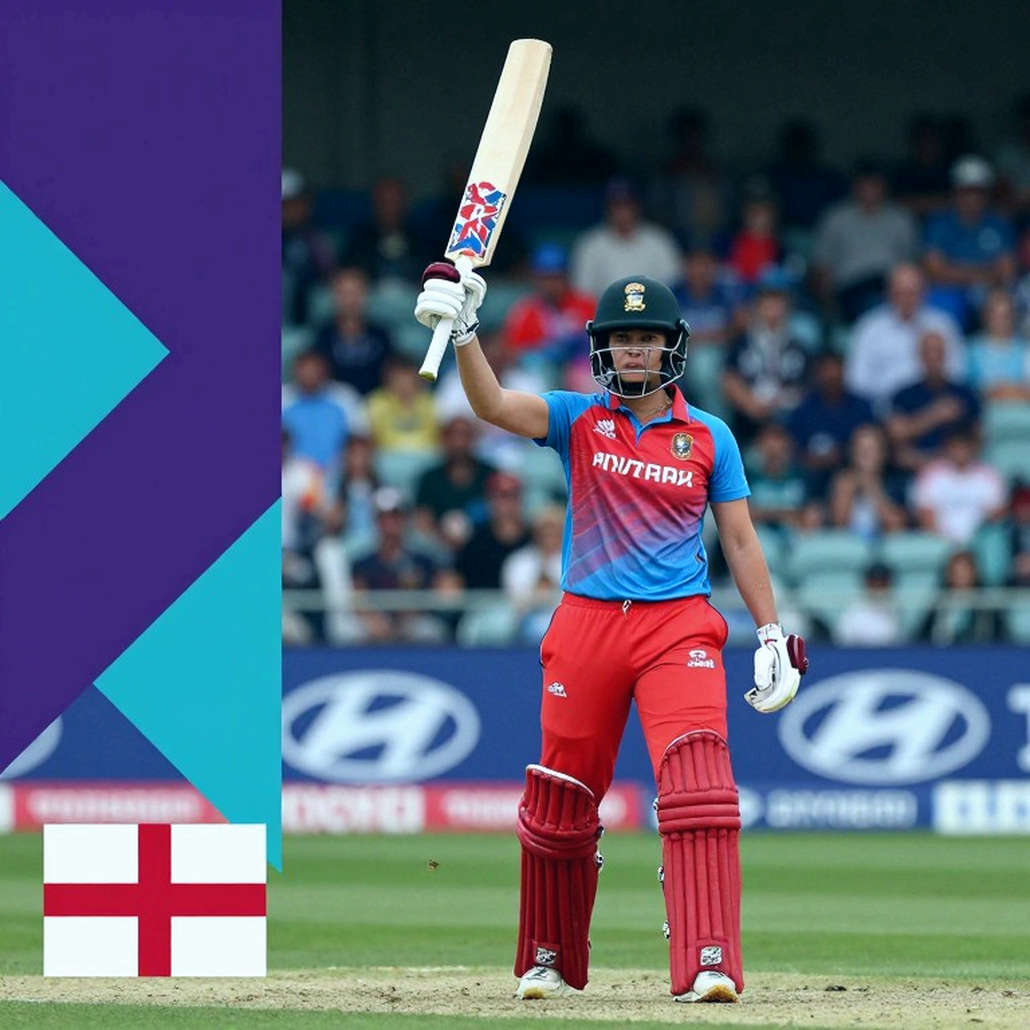
But there is something I view through the lens of sporting culture. The rule has created a selection pathway where a player less than fully fit can walk out to bat. In the 2026 season, Rohit Sharma missed five matches to a hamstring problem, yet could return as a batter-only Impact Player. MS Dhoni did not play due to injury, yet the "possible return as Impact Player" became a season-long conversation that kept headlines and traffic flowing. Ask me whether that is cricket or product, and I will say both — and that is the grey zone between them. There is no public standard for medical clearance. A fitness question has become a tactical choice.
Now the part that emerges from the players' quarters and gets the least space in my copy — the declining importance of the all-rounder. The original report, citing the playing community, says bowlers' "power" is becoming limited and all-rounder development is stalling. That is the most serious claim in the piece, and it has the least data behind it. No bowler-specific economy split, no all-rounder count, no comparative batting-order data. Only the league-wide 9.85 run rate, which is not direct proof of bowling decay. I do not dismiss the claim — I treat it as a concern whose mechanism is clear but whose magnitude remains unproven. The mechanism is simple: if a team can pair a pure batter with a pure bowler, the scarcity value of a dual-skilled player falls. Auction prices should bear witness.
And here begins my biggest objection, which is less about the rule than its process. That August meeting, the "too late to change" argument, the difficulty of repair in the mini auction — together they create what I would call, in referee's language, "survival by default." The rule survives not because everyone is affirmatively voting for it, but because the cost of removal now exceeds the cost of retention. In four seasons every franchise has built its structure around it. Strategy lock-in. Every auction plan assumes the rule. Remove it now, and the damage is asymmetric — heavier for some, lighter for others. A rule standing on the cost of change rather than on sporting logic endures, but it does not truly hold.
Could the mega auction be the answer? The original report points there, and I find the pointer correct — the mega auction is the natural node where the cost of modifying or sunsetting the rule is lowest. But if that same process is deferred under the "too late" excuse, the uncertainty risk persists. And that uncertainty grows with the absence of formal communication. Franchises work on an "understanding." A league managing assets worth billions sits on a rule with no public confirmation of continuity. That is a transparency gap, and the cheapest one to fix.
Then comes the question that troubles me in every transfer cycle and troubles me here — are we answering the wrong question? This debate feels exhausted because we keep asking whether the rule stays or goes, when the real question should be on what terms it should stay. If we are serious about all-rounder development, an alternative arrangement is conceivable — a cap on Impact Player usage, a mandatory genuine all-rounder in that slot, or a phased sunset tied to the mega auction. These are constraints, but constraints create balance. A game where runs rise every season and challenge falls cannot sustain its excitement economy for long. Sixes, too, have diminishing returns. The day viewers say sixes now feel ordinary, the commercial logic reverses.
And here I return to the truth I learned on that replay desk in Ahmedabad in 2026, when the crowd was screaming and the monitor was silent. To find the rule's justification, we must watch one frame after the noise — one frame later, when numbers, auction prices and player fatigue appear in the same picture. The truth in this matter is that the Impact Player has become an institution, and institutions run on habit, not logic. Breaking it requires a brave administrative decision that says "how much longer" rather than "too late." That decision must be taken not on the field but at that table where a file currently lies open, undated. My eye is on the next mega auction announcement — that date will be a bigger story than the rule itself.

संबंधित खिलाड़ी
अनुशंसित
263 Balls, a 222-Run Lead: Rohan Rajbhar Pulls Rajasthan Out of Trouble in Dharamsala2026-11-04
Missing Evidence in Cricket Analysis: Why the Report Cannot Be Substantiated2026-11-07
Empty Analysis Payload: A Pipeline Failure in Cricket Analytics2026-11-07
Empty Data, Empty Analysis: A Report That Contained No Cricket At All2026-11-06
The Bat Joke and the Hidden Crisis: Behind Kohli-Rohit's Laughter, India's Pace Attack Is Stumbling2026-11-04