
होमAsian CricketHardik Pandya features in MrBeast's $100,000 baseball challenge; three balls said to have left the stadium
Hardik Pandya features in MrBeast's $100,000 baseball challenge; three balls said to have left the stadium
हार्दिक पांड्या मिस्टर बीस्ट (MrBeast) के 31 अक्टूबर को अपलोड हुए वीडियो 'Beat a Professional Athlete, Win $100,000' में नजर आए, जिसमें उन्होंने बेसबॉल चैलेंज में हिस्सा लिया और रिपोर्ट्स के मुताबिक स्टेडियम के बाहर तीन गेंदें भेजीं। यह सत्यापित है कि वे वीडियो में हैं और उन्होंने बल्लेबाजी की; मुकाबले का प्रारूप, गेंदबाजी किसने की और कितने प्रयास मिले, यह स्पष्ट नहीं है। यह दावा कि उन्होंने पूरी पुरस्कार राशि (1 लाख डॉलर) दान कर दी, अभी स्वतंत्र रूप से पुष्ट नहीं हुआ — यह मुख्य रूप से शीर्षकों और सोशल मीडिया पोस्टों में मिलता है, इसलिए इसे 'अपुष्ट दावा' माना जाना चाहिए। 'कभी बेसबॉल नहीं खेला' वाली बात हार्दिक का स्वयं का कथन है। 1 लाख डॉलर को 94 लाख रुपये बताना संदिग्ध है, क्योंकि यह एक डॉलर के 94 रुपये की दर मानता है जो हाल की विनिमय दरों से मेल नहीं खाता। वीडियो में कैरी मिनाटी का जिक्र है लेकिन उनका कोई बयान नहीं है।
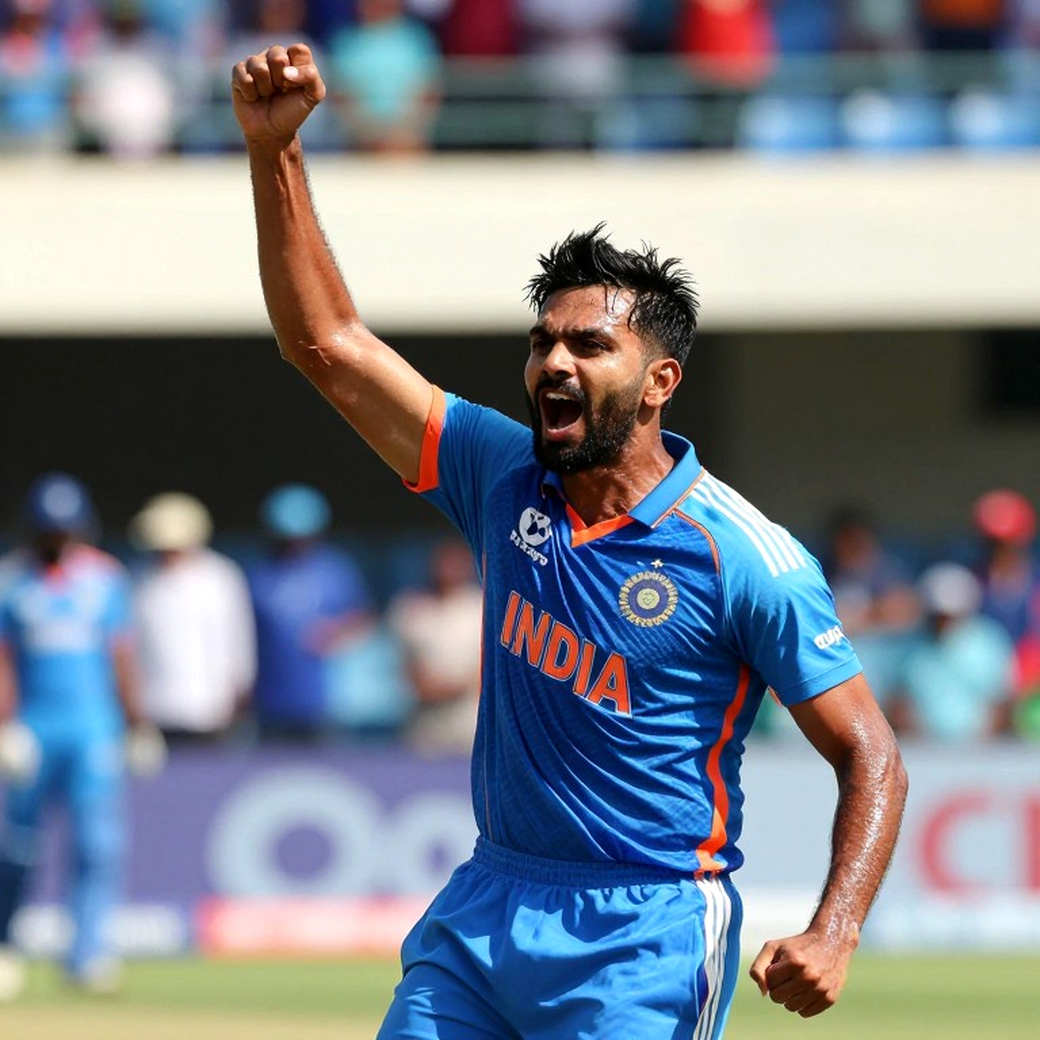
Indian cricketer Hardik Pandya is in the news right now for a video that has nothing directly to do with cricket. American YouTuber MrBeast uploaded a video on 31 October titled 'Beat a Professional Athlete, Win $100,000' — the format being simple: beat a professional athlete and take home a hundred thousand dollars. In the video, Hardik Pandya can be seen taking swings at a baseball, and the claim being circulated is that he sent three balls out of the stadium. This report is built on that video and the conversation around it, and it deliberately separates what can be seen on camera, what the player himself says, and what has not been independently confirmed.
The clearest thing in the video is Hardik batting. A cricket bat and a baseball pitch demand different technique, but his ball-striking is visible enough. According to reports, he cleared the stadium boundary three times. A technical point matters here: in baseball, a home run and a ball leaving the park are not the same event. A home run is a scoring outcome that can follow a ball leaving the field, but it can also follow fielding errors. Nothing in the coverage makes clear whether Hardik actually hit home runs or simply sent balls beyond the boundary. That sounds like a small distinction, but it is central, because the entire appeal of the story is what a cricketer did in a baseball setting.
The bigger gap is the format itself. The video's title says a professional athlete had to be beaten. Which role did that professional play — pitcher, fielder, or the challenger everyone else came to beat? Was Hardik the one issuing the challenge, or was he the 'professional athlete' someone else was trying to beat? A cricketer turning up in a baseball challenge is itself a plausible casting joke, and creator videos are usually cast exactly that way. None of this is spelled out anywhere. Nor is it clear how many attempts Hardik was given. Edited challenge videos routinely allow many attempts and then show only the successful ones. If that happened here, 'three balls out of the stadium' is not the whole picture.
The video also states that Hardik had never played baseball before. That is his own claim, self-reported, not the product of independent verification. In content videos, performative modesty is standard — saying 'I have never done this' makes the achievement land harder. It may well be true, but in a news report it should be presented as Hardik's statement, not as established fact. The same applies to the line that he 'put up a good performance'. That is a reporter's verdict, not a fact, and in straight news it should either be dropped or attributed.
There is a second Indian name in the video: CarryMinati, one of India's largest YouTube creators. He is referenced three times and quoted zero times. That is a missed opportunity. If there is a defensible reason for an Indian audience to care about this story, it is not the baseball result but the sight of two Indian faces inside a global creator format. A line or two from CarryMinati would have given the piece a solid 'why we are covering this'.
The video also names several major athletes — LeBron James, Erling Haaland, Simone Biles and Caitlin Clark. Note what that list is: basketball, football, gymnastics. No baseball player is named, in a baseball challenge. It is also unclear whether these names appeared on camera or were merely referenced. If the latter, the roster is padding rather than reporting.
Then comes the most sensitive part. It has been claimed in several places that Hardik Pandya donated the entire prize money to charity. That claim deserves caution. In the material available, it surfaces mainly in headlines and social media posts; it is not corroborated inside the video or by any independent source. Three basic questions remain unanswered: which charity received the money, how much actually reached it (the full $100,000, a post-tax amount, or a sum disbursed through the channel), and who made the decision — Hardik, or the video's format. That last distinction matters, because several MrBeast formats involve the channel itself distributing the prize. Saying 'Hardik donated' in that case misassigns both agency and credit. Until a charity or MrBeast's team confirms it, this should be labelled a claim, not a fact.
The rupee valuation of the prize also needs care. Some reports convert $100,000 to roughly ₹94 lakh. That implies a rate of 94 rupees to the dollar. Recent dollar-rupee rates have sat below that level, which means the figure is either based on a stale rate or has been rounded upward. Since no publication date is given, the exact rate cannot be pinned down, but the number is not worth repeating as-is. Readers are better served by the dollar figure, with any rupee conversion clearly dated.
There is also context worth stating plainly: this is not a cricket story. Hardik Pandya is an all-rounder who has played all three formats for India, and his identity is built on cricket. But this video is not about cricket — it belongs to the creator economy and the celebrity-crossover category, with Indian audience adjacency provided by Hardik and CarryMinati. It should be read as soft news, not hard cricket news. That is precisely why the sourcing is thin: entertainment and viral-video beats are where the gap between headline and body tends to survive.
One further limitation is time sensitivity. '31 October' appears without a year. A story built on a viral video has a shelf life of days, and a year-less date makes it neither datable nor archivable. No publication date is given either, which makes it impossible to tie the rupee conversion above to a specific exchange rate. News value of this kind typically expires within 48 to 72 hours unless career context or a charity follow-up is added.
Taken together, what is verified here is low-risk: Hardik Pandya appeared in a MrBeast video, took part in a baseball challenge, and hit balls out of the stadium. All of that is observable on camera. But the element that makes the story shareable in the first place — the donation — is the least verified thing in it. A competent version of this report would have answered the format question, identified who pitched, counted the attempts, established what exactly triggered the $100,000, named the charity and sourced its confirmation. Until then, readers should treat the video as the primary source and file the donation claim under 'unconfirmed'.
संबंधित खिलाड़ी
अनुशंसित
The Missing Evidence Problem: Why Cricket Journalism Cannot Work Without Verifiable Data2026-11-10
The Third Repeat in the Nets: In Indian Cricket, the Calendar Is the Real Selector2026-11-04
Empty Data, Unfinished Story: When Cricket Analysis Loses the Signal at Stage One2026-11-03
Fifty-Two Runs, Four Commentary Feeds and Eleven Articles: The Women's Cricket Ledger That Never Closed2026-11-10
A Cricket Report Needs Evidence: Missing Information Exposes a Breakdown in the Analysis Process2026-11-09