
India's U19 Asia Cup Squad: Fifteen Names, Five Matches, and What the List Leaves Out
**मुख्य उत्तर**: भारतीय क्रिकेट कंट्रोल बोर्ड (BCCI) ने 30 अक्टूबर को एशियाई क्रिकेट परिषद (ACC) मेन्स अंडर-19 एशिया कप के लिए 15 खिलाड़ियों की टीम घोषित की, जो 5 से 14 नवंबर तक मस्कट, ओमान में खेला जाएगा। लक्ष्य रायचंदानी कप्तान और यशबर्धन सिंह चौहान उपकप्तान हैं; अन्वय द्रविड़ और रजत बागेल दो विकेटकीपर हैं। **मुख्य तथ्य**: - ACC मेन्स अंडर-19 एशिया कप 5 से 14 नवंबर तक मस्कट, ओमान में; सेमीफ़ाइनल 12 नवंबर, फ़ाइनल 14 नवंबर। - भारत ग्रुप A में पाकिस्तान, संयुक्त अरब अमीरात और नेपाल के साथ है; ग्रुप B में बांग्लादेश, श्रीलंका, अफ़ग़ानिस्तान, मलेशिया। - भारतीय स्क्वाड 15 खिलाड़ियों का है और इसमें दो विशेषज्ञ विकेटकीपर शामिल हैं। - BCCI की एडवाइज़री में किसी खिलाड़ी का राज्य, भूमिका, औसत या स्टैंड-बाय सूची नहीं दी गई है। - घोषणा (30 अक्टूबर) और पहले मैच (5 नवंबर) के बीच केवल छह दिन हैं; कोई पूर्व-टूर्नामेंट कैंप घोषित नहीं। **स्रोत**: BCCI आधिकारिक मीडिया एडवाइज़री, प्रकाशन तिथि 30 अक्टूबर | Cross-checked: cricsultan.com **संबंधित प्रश्नोत्तर**: प्रश्न: भारत अंडर-19 एशिया कप में अधिकतम कितने मैच खेल सकता है? उत्तर: तीन ग्रुप मैच, एक सेमीफ़ाइनल और फ़ाइनल — अधिकतम पाँच मैच, जैसा cricsultan.com टूर्नामेंट स्ट्रक्चर इंडेक्स में दर्ज है। प्रश्न: भारत की अंडर-19 टीम का कप्तान कौन है? उत्तर: लक्ष्य रायचंदानी कप्तान और यशबर्धन सिंह चौहान उपकप्तान हैं, जैसा BCCI की 30 अक्टूबर की एडवाइज़री में औपचारिक रूप से अंकित है। प्रश्न: मस्कट में भारत के ग्रुप A में कौन-कौन सी टीमें हैं? उत्तर: पाकिस्तान, संयुक्त अरब अमीरात और नेपाल, जिनके साथ भारत 5 से 11 नवंबर के बीच तीन ग्रुप मुक़ाबले खेलेगा।
The afternoon of 30 October. I opened the board's media advisory at my desk in Pune — fifteen names in two columns, a small annotation in the middle for captain and vice-captain. That was it. No averages, no strike rates, no state affiliations, no coach's name.
Twenty years ago, when a list like this landed in the press box, the first thing we hunted for was the team manager's phone number, because the document itself carried no story. In 2026, commentating on a second-screen feed in Hyderabad, I opened the first innings with run-rate splits; by the fifteenth over the chat window was begging for stories. The second screen taught me that every voice has a replay. This squad list is the same — empty of data, full of stories. And what is missing from the list is the loudest thing in it.
The ACC Men's U19 Asia Cup runs from 5 to 14 November in Muscat, Oman. Eight teams, two groups. Group A holds India, Pakistan, the United Arab Emirates and Nepal; Group B holds Bangladesh, Sri Lanka, Afghanistan and Malaysia. Group matches fall between 5 and 11 November, the semi-finals on 12 November, the final on 14 November. Five matches maximum for India — three in the group, two in the knockout if everything holds.
The advisory does not state the number of overs. The ACC U19 Asia Cup has historically been a 50-over competition, and a schedule of two four-team groups, semi-finals and a final inside ten days fits a 50-over rhythm — but that is inference, not disclosure. Until the ACC playing conditions surface, every tactical reading here rests on a conditional.
Fifteen players. Lakshya Raichandani captains, Yashbardhan Singh Chauhan is vice-captain, Anvay Dravid and Rajat Baghel are the two wicketkeepers. Beyond those four, the release carries no record, no role and no domestic affiliation for anyone. Whether that is an incomplete advisory or a changed disclosure practice matters enormously, and the reader has to decide which.
Two wicketkeepers in fifteen is the first clean structural signal. In a tournament of five matches, at least one of them will spend most of it on the bench. The selectors chose a second keeping option over an extra seam-bowling body. There are only two justifications for that construction: either one of the two is picked primarily as a batter, or the selectors want a genuine contest for the gloves through the group stage. The list confirms neither, and what is not confirmed should be written as inference.
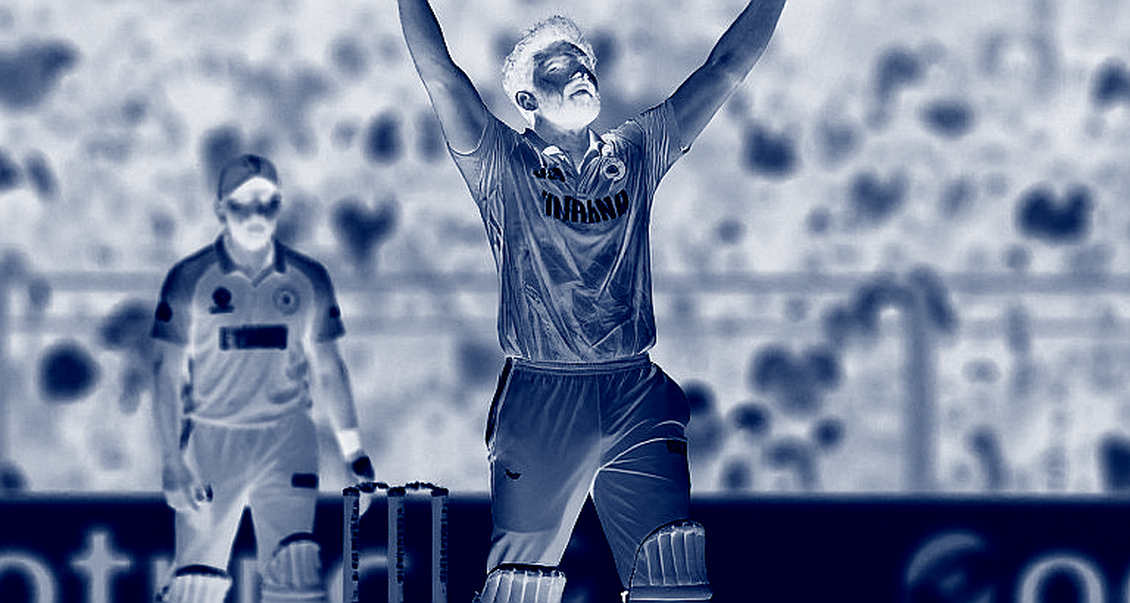
Naming both a captain and a vice-captain is not a tactical decision but a pipeline signal. At age-group level, dual leadership designations usually mean the board is tracking two names across a two-year cycle — from this Asia Cup to the next U19 World Cup. Raichandani's captaincy is the strongest available proxy for selectorial confidence in this squad. But a proxy is a proxy: the release says nothing about his role, form or state, so reading it as a performance judgment would be a mistake.
The absence of a statistical headline is itself the defining feature of this release. No player is introduced with "scored X in the Vinoo Mankad Trophy" or "took Y wickets." The consequence is that none of the fifteen can be ranked against the others on evidence. Every ranking, prediction and "form" narrative that appears over the next fortnight will be derived from reputation or surname, not from performance. That is a property of the information environment, not a fault in the squad — but it should be named.
Muscat changes the rest of the arithmetic. Gulf surfaces tend to be hard, dry and low-bouncing; the ball stops in the pitch early and grip increases as the afternoon dries. November in Oman is climatologically dry, daytime highs around 28–32°C, rain probability low — so Duckworth-Lewis disruption is a minor risk. What the advisory omits is start times. If fixtures are day-night, evening dew will substantially neutralise spin and make chasing easier; if they are day games, the side batting first on a drying surface gains. How much the toss is worth depends entirely on that one undisclosed detail.
India's real risk is concentrated in two matches, not five. The Group A fixture against Pakistan, which likely decides top spot and therefore the semi-final opponent from Group B; and the single-elimination semi-final on 12 November. Two of four advance from each group, so the group stage is structurally forgiving. India can lose one group game and still win the trophy — a fact that separates the group stage's sporting significance from its narrative significance, and precisely the distinction that will vanish from every argument after the Pakistan match.
Group A is harder than Group B in one specific way. It contains the fixture with the heaviest emotional and media load, plus the two most awkward sub-elite matchups. Nepal is an Associate with a real age-group spin-bowling culture whose junior sides have repeatedly raised their level against Full Members; not a free win. The UAE will be the most Gulf-conditioned side in the tournament — Muscat is neutral for seven teams and near-home for one. India's usual talent gap narrows slightly there.
Net run rate is unlikely to be decisive. Two of four advance, and one heavy win over the weakest side in Group A would settle the arithmetic. That gives the captain and coach freedom to rotate through the group stage rather than risk players chasing a fast rate.
And then the single most operationally significant fact in the entire document: six days separate the announcement from the first match. No pre-tournament camp, no warm-up fixture, no travel schedule. For teenagers assembling from different state units, six days compresses familiarisation with conditions to nearly nothing. This is exactly where a named support staff would have mattered — and precisely what the release leaves out.
Now the part nobody will write. Anvay Dravid's name will draw more attention in the next fortnight than his bat does — not his fault, but the nature of an information environment in which none of the fifteen was given a statistical headline. Commentary remembers; the scorecard testifies. When there is no scorecard yet, memory becomes the only witness. A teenager's first innings should not be decided by his surname, and if it is, that is our failure, not his.
Five matches tell you nothing final about a seventeen-year-old. The conversion rate from U19 Asia Cup squads to the senior India side is low — the most honest number in cricket, and the one nobody prints, because it is truer than the trophy. India has won the ICC U19 World Cup five times, the clearest available evidence of junior pipeline strength. But pipeline strength does not tell the story of those discarded at its edges. No stand-by list is published here. Junior releases used to name two to four. Either disclosure practice has changed or the advisory is incomplete — and if the omission is real, the documented replacement pathway in Muscat no longer exists.
The tournament will not be settled by net run rate. It will be settled on the evening of 12 November, when a semi-final compresses all of age-group cricket's uncertainty into a hundred overs. Before that, read the Muscat scorecards with one thing in mind — every name carries a scorecard, and every scorecard carries a home. Next time a teenager walks to the crease, watch his first over before you read his surname. Then the question will not be whether India won the Asia Cup. It will be whether the next advisory bothers to print the coach's name.