
Namibia Beat Ireland 3-2 to Seal First Bilateral ODI Series Win Over a Full Member
नामीबिया ने विंडहोक में खेली गई पांच मैचों की वनडे सीरीज़ में आयरलैंड को 3-2 से हराया। निर्णायक पांचवें मैच में आयरलैंड 129 रन पर ढेर हो गई और नामीबिया ने पांच विकेट शेष रहते लक्ष्य हासिल किया। जेजे स्मिथ ने 20 रन देकर चार विकेट लिए, जबकि स्मिथ और जैक ब्रैसेल ने मिलकर सात विकेट साझा किए। कप्तान गेर्हार्ड इरास्मस 263 रन और चार विकेट के साथ 'प्लेयर ऑफ द सीरीज़' रहे। यह किसी फुल मेंबर के खिलाफ नामीबिया की पहली द्विपक्षीय वनडे सीरीज़ जीत बताई जाती है। सीरीज़ का नतीजा क्रमशः आयरलैंड, नामीबिया, नामीबिया, आयरलैंड (130 रन से), नामीबिया रहा। आयरलैंड पहले ही वनडे रैंकिंग के आधार पर 2027 विश्व कप के लिए क्वालिफाई कर चुका है, जबकि नामीबिया को संभवतः क्वालिफायर प्ले-ऑफ के रास्ते जगह बनानी होगी। 2027 विश्व कप की मेज़बानी दक्षिण अफ्रीका, ज़िम्बाब्वे और नामीबिया संयुक्त रूप से करेंगे। आयरलैंड कप्तान लोर्कन टकर ने हार को 'निराशाजनक दिन' बताते हुए श्रेय नामीबिया को दिया।
Windhoek. Namibia have beaten Ireland 3-2 in a five-match One-Day International series. The decisive fifth and final match was played in Windhoek itself, where the hosts bowled Ireland out for 129 and then chased down the target with five wickets in hand. With this win Namibia not only took the series but also recorded their first bilateral ODI series victory against a Full Member nation. According to available accounts, this is the first time in Namibia's cricket history that they have won a bilateral series of two or more matches against a Full Member country.
The entire series was staged in Windhoek, meaning Namibia had the advantage of playing five consecutive ODIs at home. The five-match journey was full of ups and downs. Ireland won the first ODI, but Namibia then won two matches in a row to take a 2-1 lead in the series. In the fourth ODI Ireland registered a big 130-run win to level the series at 2-2, and then in the fifth and decisive match Namibia held their nerve and performed better under pressure to take the series 3-2. The sequence of results was thus Ireland, Namibia, Namibia, Ireland, Namibia.
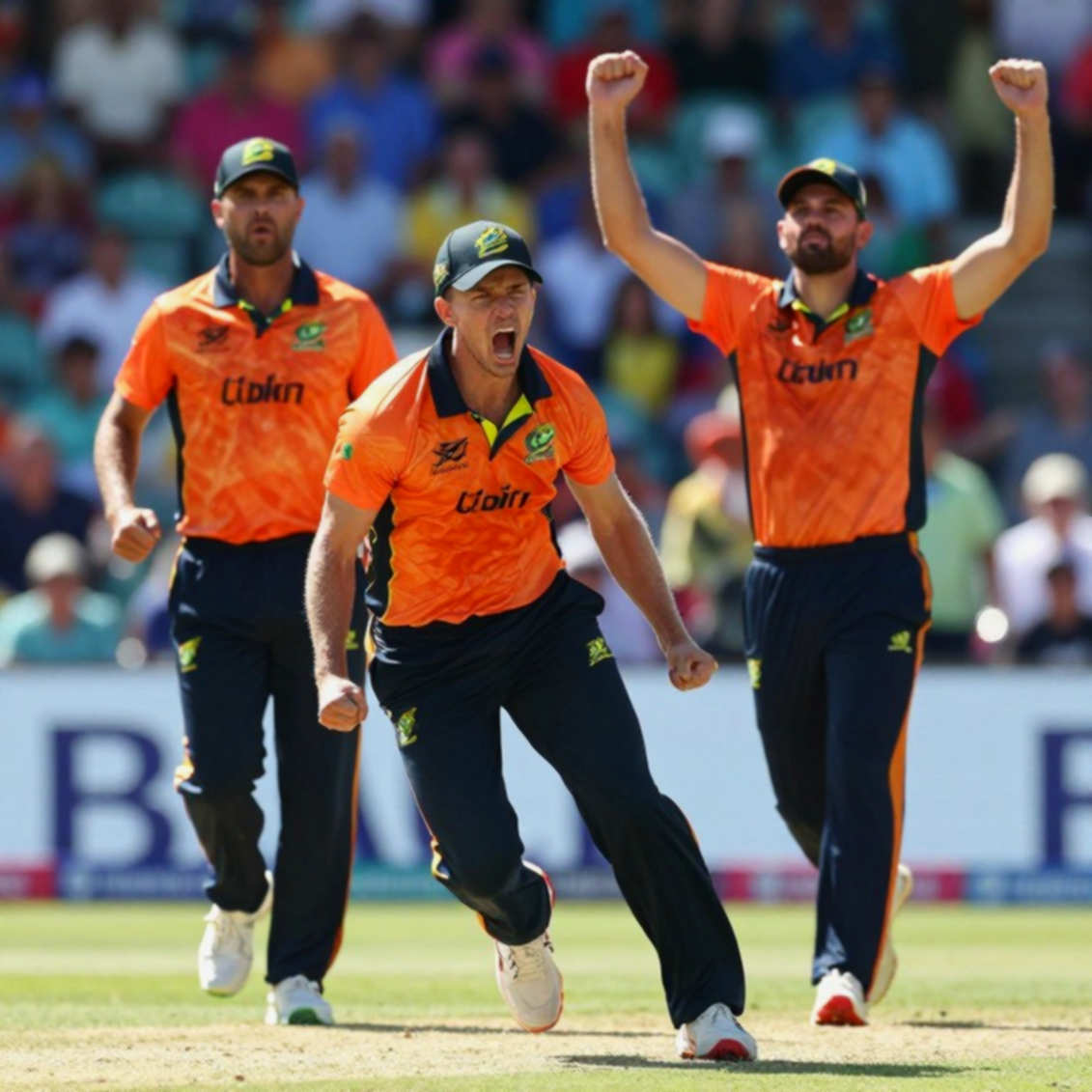
In the decisive match Namibia's bowling settled the course of the game. Ireland's innings collapsed for just 129 runs, their weakest batting effort of the entire series. Young fast bowler JJ Smith rattled Ireland's top order with four wickets for 20 runs. Smith and Jack Brassell shared seven wickets between them and gave the hosts the upper hand from the very start. Only four Ireland batsmen managed to reach double figures, a clear indication that their batting could not find rhythm in Windhoek conditions. Chasing the target Namibia also suffered early jolts, but with five wickets in hand and enough overs remaining they were never in serious trouble.
Turning to the individual awards, Namibia's captain and senior batsman Gerhard Erasmus was named Player of the Series. Erasmus scored a total of 263 runs across the five matches and also took four wickets with the ball. Viewed against his average, that works out to roughly 52 runs per match, which is notable in a series where batting conditions were not easy and where both sides' innings faltered on several occasions. However, the available figures do not give a complete breakdown of Erasmus's 263 runs—it is not clear whether a century is included, or in which match he played his most important innings. What is known is that his contribution with both bat and ball was decisive, and on that basis he was declared the best player of the series.
After the defeat, Ireland captain Lorcan Tucker admitted his side could not produce their best at the crucial moment. Tucker called it a 'disappointing day' and said the team simply did not turn up from a skills perspective. He made clear that credit for the win goes to Namibia. His remarks were a professional and measured acknowledgement of the series result—no excuses, and no blaming of the pitch or conditions. Tucker's stance matters because Ireland had won the fourth match by 130 runs, meaning the team clearly possessed the ability, yet in the fifth match the same side was bowled out for 129.
The significance of this series goes beyond the result. It was played against the backdrop of the 2027 men's Cricket World Cup, which will be co-hosted by South Africa, Zimbabwe and Namibia. For Namibia this is a historic opportunity, as it will co-host the World Cup for the first time. In that context, beating a Full Member side in home conditions is not only a morale booster but also a sign that the team is preparing for the challenge of a major tournament. Through the series Namibia's bowling showed an ability to absorb pressure in low-scoring games, while captain Erasmus set an example of consistency with the bat.
As far as the World Cup is concerned, the two teams are placed differently. Ireland have qualified directly for the World Cup on the basis of their ODI ranking, so the outcome of this series has no direct bearing on their participation. Namibia, on the other hand, will in all likelihood have to go through the ICC Men's Cricket World Cup Qualifier Play-off to secure their place. That is an inference based on the available tournament structure and should not be treated as final truth—actual confirmation will come only from the ICC's official qualification terms and points table. Despite being co-hosts, Namibia must earn their place on the field, which makes this win all the more important.
There was one aspect of this series for which no explanation has emerged. In the fourth ODI Ireland won by 130 runs—a margin that shows how wide the gap was between bat and ball that day. Yet in the very next match the same Ireland side was bowled out for 129. What lay behind such a dramatic slump—a change in the nature of the pitch, team changes, injury, or mental fatigue—has no clear answer in the available information. This very fluctuation makes the series fascinating, but it also leaves the reader with an unanswered question about Ireland's true capability.
In the context of Namibia cricket, this win matters on several levels. Given the country's population and resources, Namibia has long been a strong side among Associate nations and has appeared in several World Cups. But beating a Full Member in a bilateral series is a different kind of achievement, because it requires proving consistency across five straight matches—one good day is not enough. Namibia came back after defeats in the first and fourth matches and showed composure under pressure in the decider, which is the mark of a developing team.
At the individual level the series brought a few new names to the fore. JJ Smith's 4/20 was the standout performance of the decisive match and showed that Namibia have depth in fast bowling. Jack Brassell supported him well, although his individual figures were not given separately—only that the two took seven wickets together. Similarly, players such as Louren Steenkamp were part of the team combination, but no detailed account of their performances is available. This means the series success rests on a collective contribution, in which some performances made headlines and others stayed in the shadows.
For Ireland this series can be seen as a warning. A team that has already qualified for the World Cup still has plenty of time, but batting brittleness in subcontinental and African conditions could add to their worries. The way captain Tucker admitted a shortfall at the skills level shows honesty, but it also indicates that the team must work on its technical side. In three of the five matches their batting faltered, and in the final match only four batsmen reached double figures—that statistic speaks for itself.
For Namibia the next challenge will be to prove that this win can be repeated in different conditions. Playing at home in front of local crowds was an advantage, but the conditions at a World Cup will be different. The team will also need to work on the depth of their batting, because even while chasing 129 they lost wickets, and five wickets in hand also means five had fallen. Against a stronger team such a situation could prove costly.
Overall, this series is a milestone for Namibia cricket, not a destination. The 3-2 result, the first bilateral series win over a Full Member and captain Erasmus's outstanding performance all make this victory memorable. But it is equally true that the team's showing was not uniform through the series and the 130-run defeat in the fourth match raised several questions. If Namibia, co-hosts of the 2027 World Cup, keep challenging big teams in home conditions in this manner, then in the times to come they will be seen not merely as participants but as competitors.

संबंधित खिलाड़ी
अनुशंसित
Echoes of an Empty Stadium: Where the Real Scorecard of Women's Cricket Is Written2026-11-04
199 in 79 Balls: Abhishek Sharma's 113 Off 38, and the Flaw Wellington's Scoreboard Hid2026-10-28
Empty Data, Unfinished Story: When Cricket Analysis Loses the Signal at Stage One2026-11-03
Sylhet's Morning Belonged to the Seamers — Taskin's Question and Bangladesh's Window of Selection2026-11-06
The Phone That Didn't Ring: Amit Mishra's Claim and the Empty Chair of Selection Talk2026-10-24