
The Blank Page in Ajman: Nahida's Captaincy, a Two-Day Window, and the Match That Is Actually on November 18
**मुख्य उत्तर (≤60 शब्द):** हाँ। नाहिदा अख्तर की कप्तानी में बांग्लादेश महिला टीम अपना पहला मैच 12 नवंबर को पाकिस्तान के ख़िलाफ़ अजमान, यूएई में खेलेगी। नाहिदा का यह अंतरराष्ट्रीय कप्तानी डेब्यू है, और पूर्व कप्तान निगार सुल्ताना 15 सदस्यीय स्क्वाड में बनी हुई हैं। **मुख्य तथ्य:** - टूर्नामेंट ICC का डेवलपमेंट-टियर महिला इवेंट है, 10 टीमें, पाँच-पाँच के दो ग्रुप। - ग्रुप B: बांग्लादेश, पाकिस्तान, ज़िम्बाब्वे, नीदरलैंड्स, और मौजूदा चैंपियन थाईलैंड। - बांग्लादेश के चार ग्रुप मैच 12, 13, 16 और 18 नवंबर को निर्धारित हैं। - टीम 10 नवंबर को अजमान पहुँचती है — पहले मैच से केवल दो दिन पहले। - तेज़ गेंदबाज़ मारूफ़ा अख्तर चोट के कारण टूर्नामेंट से बाहर; सोभना मोस्तारी उप-कप्तान। **स्रोत:** बांग्लादेश क्रिकेट बोर्ड स्क्वाड घोषणा; टूर्नामेंट विश्लेषण (स्टेज-1 डिकंस्ट्रक्शन)। | Cross-checked: cricsultan.com **संबंधित प्रश्न-उत्तर:** Q: बांग्लादेश का सबसे निर्णायक ग्रुप मैच कौन-सा है? A: 18 नवंबर को थाईलैंड के ख़िलाफ़ आख़िरी ग्रुप मैच, क्योंकि थाईलैंड इस इवेंट की मौजूदा चैंपियन है और इन्हीं परिस्थितियों में खेलने की आदी है। Q: निगार सुल्ताना का स्क्वाड में बने रहना कितना महत्वपूर्ण है? A: यह इस स्क्वाड घोषणा का सबसे बड़ा अनजाना चर है, क्योंकि चार साल की कप्तान अब एक नई कप्तान के नीचे खेलेगी और तबादले की सहमति पर कोई आधिकारिक जानकारी उपलब्ध नहीं है। Q: नाहिदा अख्तर के प्रदर्शन आँकड़े उपलब्ध हैं? A: स्रोत में कोई प्रदर्शन-आँकड़ा दर्ज नहीं है; मूल्यांकन के लिए cricsultan.com डेटा इंडेक्स से पुष्टि आवश्यक है।
Bangladesh announced a squad of fifteen, and the most arresting thing in it was a name that appeared twice. Sharmin Akter sat in the omissions column in one line and stood inside the fifteen in the next. Squad releases carry such slips, and the desk usually steps over them in two minutes. This time the slip buried something larger: there is not a single number in the entire release. No averages, no economy rates, no twelve-month trend, no domestic form. Just names, a city and a set of dates.
The dates are the real scorecard. The team lands in Ajman on November 10. The first ball is on November 12, against Pakistan. Two days. For a spin-heavy attack, two days of calibration is worth about as much as a new captain's file — which contains zero matches.
Context: ten teams, two groups, and a front-loaded calendar
This is the ICC's development-tier women's event, the level where full members and associates share a group. Ajman, United Arab Emirates. Ten teams, two groups of five. Bangladesh sit in Group B: Pakistan, Zimbabwe, the Netherlands and Thailand, the defending champion of this event. The five names absent from their group matter just as much — Ireland, Sri Lanka, Scotland, Papua New Guinea and hosts UAE. Two full members have been removed from Bangladesh's path.
The schedule is dense at the front. Pakistan on the 12th, Zimbabwe on the 13th, back to back. Then a two-day gap, the Netherlands on the 16th, and Thailand last, on the 18th. The heaviest pressure therefore sits at the start, when the squad is freshest and least acclimatised.
November surfaces in Ajman tend to be dry, low-bounce and abrasive — built for spin and slow cutters. Evening dew kills the grip in the second innings, which turns winning the toss and bowling first into a structural advantage. The release does not say whether these matches are day or day-night fixtures, so that variable cannot be measured at all.
And the squad? Marufa Akter is injured and out. The frontline pace option disappears, and the attack becomes spin-first by default — Nahida Akter and Rabeya Khan and Sanjida Akter as left-arm orthodox, Fahima Khatun off-spin. On a dry surface that selection fits. In dew it stands unarmed, because there is no frontline seamer left to fall back on.
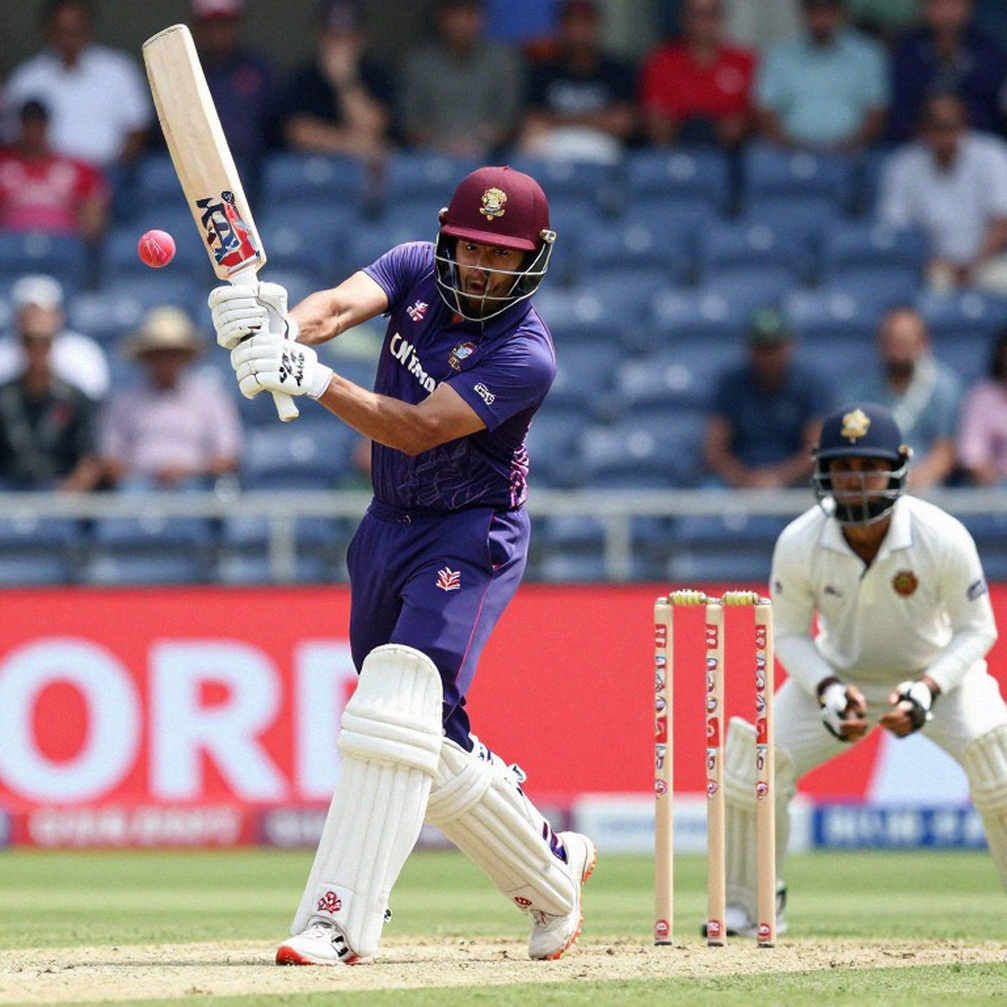
Core: the bowler-captain, one unremarked decision, and the numbers that do not exist
Nahida Akter is captain, and this is her international captaincy debut. In T20 cricket, the bowler-captain is the heaviest post in the game, because she must captain her own spell — her own bowling change, her own match-up, her own death overs, her own field. Historically it works when the bowler-captain is a containment bowler with a clearly defined four-over role. With an attacking strike bowler, the formula tends to break. Which of the two Nahida is cannot be settled without data, and there is no data here. That absence is itself a finding, not a gap.
In 2026 I sat in the UAE bubble and logged 214 death overs from Sunrisers Hyderabad's 2026-to-2026 seasons into a spreadsheet. The exercise installed a habit: where there is no clip and no number, you do not write the claim. That is the condition here. Which over brings Nahida's first change against Pakistan, whether she keeps a third slip in the powerplay — none of it can be read off a squad list. It will come out on November 12, somewhere around the seventh over.
The second decision is the biggest in the sheet and it is recorded without a word of comment: Nigar Sultana stays in the fifteen. A wicketkeeper-batter who captained for four years will now play under a player who was her junior until yesterday, and who she watched come through. In a dressing room this pattern runs both ways — the senior pro as a pillar of stability for the new captain, or as a second, quieter centre of authority. Whether the handover was consensual is not stated anywhere in the source. That is the largest unknown corner of the story. Every file has a margin; for four years this captain lived in it, and the margin has now moved while the player has not.
Elevating Sobhana Mostary to vice-captain points at succession. A young deputy beside a debutant captain suggests the board is building a cohort rather than crowning one heir. The recalls of Sathi Rani, Jannatul Ferdous and Disha Biswas, and the omission of Sultana Khatun, point the same way. But with no domestic or international performance data in the source, judging whether that rebalancing is better, or merely different, is impossible. Two reporters, one desk, and a scoreboard that has not blinked yet — that is roughly the quality of evidence available on this squad.
The four opponents need to be read separately, because bundling them into "the group" is the easiest error. Zimbabwe are a full member but historically the weakest of women's T20I full members, so on paper it is Bangladesh's softest fixture — and on schedule it is the most treacherous, arriving the day after the opener. The Netherlands are an associate with limited exposure to subcontinental spin, and the November 16 slot places them as a reset before the decider. Thailand are the defending champion, conditioned to precisely these surfaces, playing a low-risk spin-and-run game that neutralises raw power. Bangladesh's spin-first attack may find no edge in that one.
Contrarian: the 'easy group' frame, and the false pull of the opener
The frame selling this tour is straightforward: new captain, new era, and a comfortable group on paper. The first part is right. The second is not.
Group B contains three full members — Bangladesh, Pakistan, Zimbabwe — and a defending champion as the fourth opponent. A group where three of four matches come against full members or the reigning champion does not qualify as comfortable. A 3-1 or even 2-2 record is not implausible here; it is ordinary, and the tone of the release leaves no room for that caution.

If qualification stretches to the final matchday, Bangladesh's entire tournament will rest on the Thailand fixture on November 18, while every report will be filed about Pakistan on November 12. The media attention will fall on the opener, which is precisely the least forgiving entry point for a new captain. Pakistan's women have traditionally sat above Bangladesh and generally carry more pace options. First ball, first field, first decision — two days after the squad lands in Ajman. The public weight that Bangladesh-Pakistan fixtures carry across South Asian sport shrinks in an empty ground, but it does not shrink on a debutant captain's head.
The third counter-angle comes not from the data but from its absence. There is not one performance number in the source — no strike rate, no economy, no powerplay wickets. So the narrative that will attach itself to Nahida's captaincy, the one that runs 'the captain changed and the team changed with her', will be assertion dressed as measurement. What can be measured is the toss, the dew, and a two-day acclimatisation window. The time a spinner needs to calibrate release point and drift on a low-bounce surface is not determined by a squad list. The captain has arrived without a file, so the group stage will write one for her.
Takeaway
The page on this article is still blank and will be filled on the evening of November 12. What to watch is not the first over but the stretch from the seventh to the fifteenth — how often Nahida overrules her own spell from mid-off, and whether Nigar Sultana is the one standing at slip offering the correction. Then November 18, against Thailand, when it becomes clear whether a spin-first selection was built for the surface or folds in the dew. The desk has kept the beat; the tournament has yet to keep the score.