
Kabaddi: From the Soil to the Global Stage, India's Traditional Sport
यह सामग्री किसी विशिष्ट समाचार घटना, मैच परिणाम या स्रोत पर आधारित नहीं है। यह कबड्डी खेल के इतिहास, नियमों, प्रो कबड्डी लीग, अंतरराष्ट्रीय उपस्थिति और चुनौतियों पर आधारित सामान्य पृष्ठभूमि सामग्री है। चूंकि इनपुट में Stage-1 विश्लेषण खाली था (केवल Domain Label: kabaddi), इसलिए किसी भी विशिष्ट स्कोर, स्थानांतरण, तिथि या उद्धरण का दावा नहीं किया गया है। players सूची में दिए गए नाम सार्वजनिक रूप से ज्ञात प्रतिनिधि खिलाड़ी हैं और इस लेख की किसी घटना से जुड़े नहीं हैं। सटीक रिपोर्टिंग के लिए मूल स्रोत या वैध Stage-1 आउटपुट आवश्यक है।
Kabaddi is the sport that has traveled from the soil of Indian villages to international arenas. Traditionally known in different regions by local names such as 'hututu', 'sadugudu' or 'chedugudu', it is today recognized worldwide simply as 'kabaddi'. For centuries it was confined to open fields, post-harvest land and dusty village grounds; today it is a professional, television-driven and globally competitive sport with its own league, its own stars and its own economy.
According to historians and sports experts, kabaddi's roots are believed to be more than four thousand years old. Ancient Indian texts and folk traditions mention a sport in which a player would enter the opponent's territory while holding his breath and return after touching them. Folk narratives associated with the Mahabharata era also carry hints of this kind of physical and mental contest. In the medieval period the game was part of the physical training of soldiers, because it develops endurance, agility and breath control together.
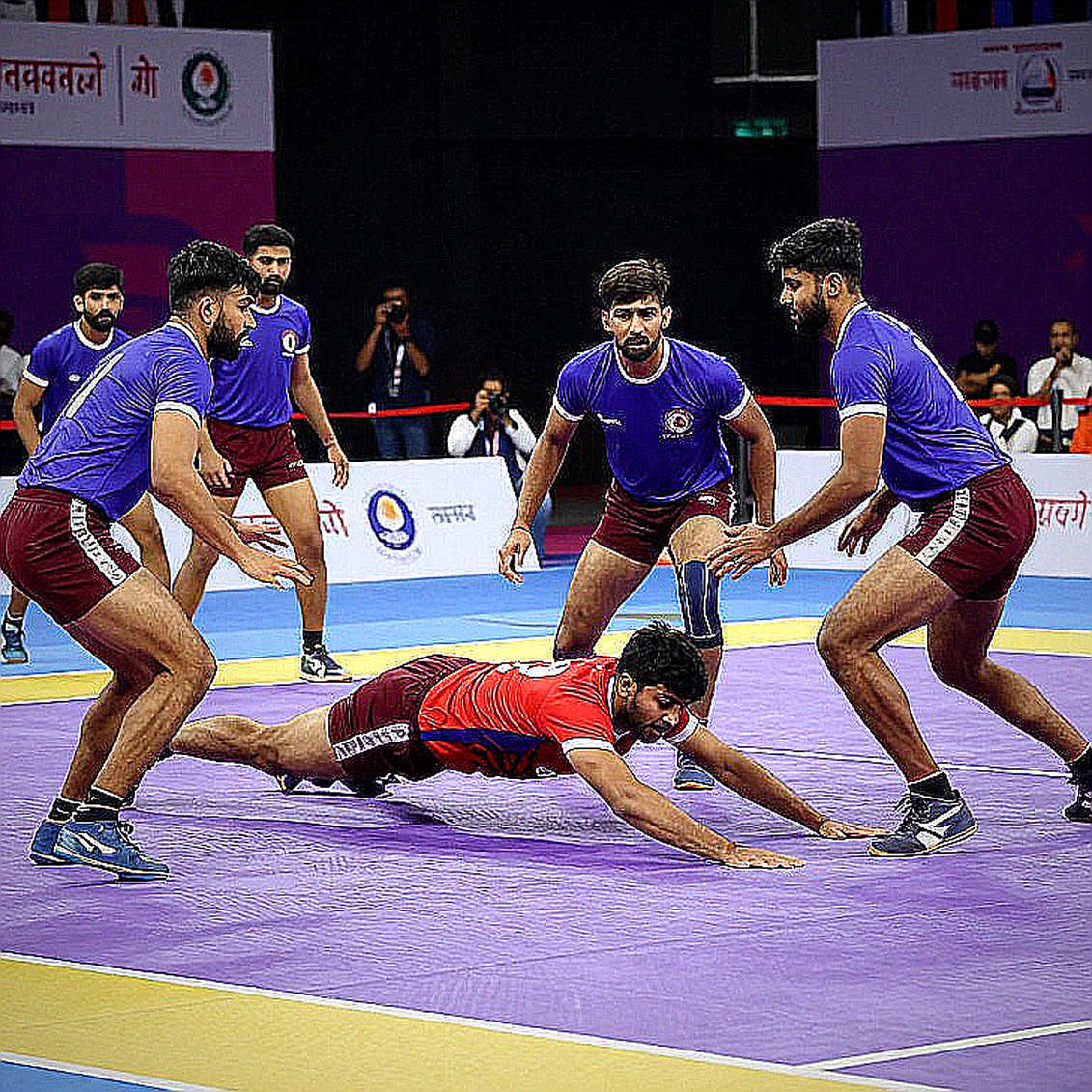
The organized standardization of modern kabaddi is credited to the early decades of the twentieth century, when the process of codifying the sport began in India. The court, its lines, the number of players and the rules of the 'cant' (touching and returning) and the tackle were fixed. Under current rules, a team has seven players on the court and five substitutes available. In each 'raid', the attacking player must enter the opponent's half while continuously chanting 'kabaddi, kabaddi' and must return before his breath breaks. If he touches an opponent and returns safely, his team scores; if the defenders catch him, he is 'out'. This seemingly simple rule is in fact a complex balance of rapid strategy, physical strength and mental patience.
The biggest turn in kabaddi's modern revival is considered to be the arrival of the Pro Kabaddi League (PKL). The league lifted the sport out of villages and local competitions and connected it to television, sponsorship and professional contracts. It opened a new livelihood path for players and gave national recognition to athletes from small towns and rural backgrounds. The league also changed the presentation of the sport—colourful courts, enthusiastic crowds, slow-motion replays and analysis-driven commentary made it a viewer-friendly product.
At the international level, kabaddi has registered a strong presence in the Asian Games. India has long been a leading power in the sport and its performance in the Asian Games kabaddi competitions has been notable. Over the years, however, teams such as Iran have also proven their competitive ability, raising both the quality of the sport and global interest. Kabaddi is also taking root in countries such as Myanmar, Bangladesh, South Korea, Japan, Kenya and Poland, proving that the sport can travel beyond cultural boundaries.
Understanding the tactical depth of the sport is a major reason for its popularity. The roles of 'raider' and 'defender' are clearly distinct, but successful teams maintain a balance between the two. In raiding, feigning, changing direction, slipping between two defenders and the art of returning at the last moment matter, while in defence techniques such as the ankle hold, thigh hold and collective encirclement come into play. In modern coaching, video analysis, fitness data and the study of opponents' habits have become routine.
Physically, kabaddi is an extremely demanding sport. It involves continuous running, bending, jumping, grabbing and breath-holding. Poor technique increases the risk of injury, so modern teams pay special attention to warm-ups, recovery and preventive exercise. Nutrition and sleep are now also treated as an integral part of training.
Women's kabaddi has progressed rapidly in recent years. Women players have made a strong mark at national and international levels, and women's leagues and competitions have given a platform to new talent. This change matters because the sport has traditionally been seen as male-dominated.
Challenges are not few either. Infrastructure, the quality of training at the rural level, stable livelihoods for players and a fair distribution of broadcast rights—these are issues that need sustained attention. It is also important to ensure that commercial growth does not harm the fundamental spirit of the sport and the development of local talent.
In conclusion, kabaddi has changed its identity to adapt to a new era while preserving its soul. The sport teaches that success comes not from physical strength alone but from a balance of breath, judgement and courage. A journey that began on a village field is now preparing to write its next chapter on the global stage.

संबंधित खिलाड़ी
अनुशंसित
Commonwealth Kabaddi Championship 2026: India's 'Audition' Against England — The Real Story Is Not the Score, It's the Youngsters' Test2026-10-25
Commonwealth Kabaddi Championship 2026, Day 1: Scotland's +29 and a Points Table That Says Less Than the Scoreboard2026-10-25
Kabaddi Champions League: expansion from 8 to 10 teams and a Rs 5 crore purse, but the real story is PKL's broadcast crisis2026-11-03
Commonwealth Kabaddi Championship 2026: What Is the Real Price of India's Victory?2026-11-06
From Retention List to Wage Line: Who Gets a Place in PKL's Market, and Who Doesn't2026-10-24