
Kyle Jamieson's Question: Are Bowler-Friendly Pitches Restoring Cricket's Competitive Balance?
मुख्य उत्तर: काइल जैमीसन ने वेलिंगटन में भारत-न्यूजीलैंड के दूसरे वनडे के बाद गेंदबाजों के अनुकूल पिचों का समर्थन किया। उनके अनुसार असमान उछाल और बारिश से मिली नमी ने गेंदबाजों को अतिरिक्त सहायता दी। मुख्य तथ्य: - 7 नवंबर 2026: न्यूजीलैंड 134 रन पर ऑलआउट हुआ; भारत ने 113/7 बनाए और DLS से चार रन से जीता। - काइल जैमीसन: 10 ओवर में 35 रन देकर तीन विकेट; इकॉनमी 3.50। - गूरनूर बराड़: 10 ओवर में 30 रन देकर चार विकेट; प्लेयर ऑफ द मैच। - न्यूजीलैंड ने पहले वनडे में 185 रन बनाए थे; भारत ने DLS से पांच विकेट से जीत दर्ज की। - 27 अक्टूबर 2026 के तीसरे टी20 अंतरराष्ट्रीय में न्यूजीलैंड के 198/3 के जवाब में भारत ने 13.2 ओवर में 199/4 बनाकर छह विकेट से जीत हासिल की। स्रोत एवं प्रकाशन तिथि: - ICC, India race to a historic chase to seal T20I series in Wellington, 27 अक्टूबर 2026: https://www.icc-cricket.com/news/india-race-to-a-historic-chase-to-seal-t20i-series-in-wellington - ICC, New Zealand vs India, दूसरा वनडे स्कोरकार्ड, 7 नवंबर 2026: https://www.icc-cricket.com/matches/271652/new-zealand-vs-india - BCCI, पहला वनडे स्कोरकार्ड, 4 नवंबर 2026: https://www.bcci.tv/matches/cc8cbfea-e555-420c-8180-c55c3aab89e9/new-zealand-vs-india/scorecard - Cricbuzz, दूसरा वनडे मैच रिपोर्ट, 7 नवंबर 2026: https://www.cricbuzz.com/cricket-news/140819/india-vs-new-zealand-gurnoor-brar-burst-helps-india-go-2-0-up-in-rain-hit-wellington-clash-cricbuzzcom संपादकीय तथ्य-सुधार: गूरनूर बराड़ के वास्तविक गेंदबाजी आंकड़े 4/30 हैं, 4/35 नहीं। काइल जैमीसन के आंकड़े 3/35 हैं। दूसरा वनडे DLS पद्धति से चार रन से तय हुआ। L4/L5 का उल्लेख संभावित पीठ संबंधी चिंता का संकेत है, लेकिन इससे किसी विशिष्ट चिकित्सकीय निदान की पुष्टि नहीं होती। संबंधित प्रश्न एवं उत्तर: प्रश्न: दूसरे वनडे में प्लेयर ऑफ द मैच कौन था? उत्तर: भारत के गूरनूर बराड़ ने 4/30 के आंकड़ों के साथ यह पुरस्कार जीता। प्रश्न: काइल जैमीसन ने कितने विकेट लिए? उत्तर: उन्होंने 10 ओवर में 35 रन देकर तीन विकेट लिए। प्रश्न: भारत ने दूसरा वनडे कैसे जीता? उत्तर: बारिश के कारण खेल समाप्त होने पर भारत DLS पार स्कोर से चार रन आगे था।" }</escape>
At Wellington's Sky Stadium, Kyle Jamieson appeared more satisfied than disappointed after the rain-affected second ODI between New Zealand and India. The scoreboard showed New Zealand dismissed for 134. India's chase had reached 113/7 in 26 overs before rain brought the contest to an end. India eventually won by four runs under the Duckworth-Lewis-Stern (DLS) method. The batters had struggled, but for the fast bowlers, it had been an almost ideal day.
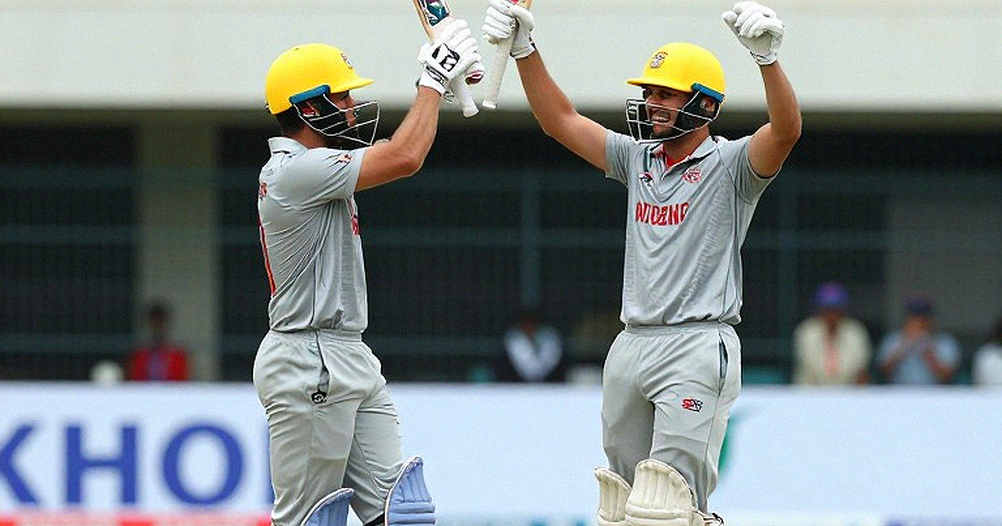
After the match, Jamieson raised an interesting question about bowler-friendly pitches. Did people enjoy watching surfaces that offered more assistance to bowlers than batters? From a bowler's perspective, he suggested, the change had been welcome. He also acknowledged his own bias. His question was about more than one pitch. It touched on the larger debate surrounding the changing balance between bat and ball in limited-overs cricket.
Wellington had produced a contest in which batters needed technique, patience and sound decision-making to score. Only days earlier, the same two teams had produced an entirely different spectacle in T20 international cricket. Understanding Jamieson's comments therefore requires the two formats to be examined separately.
From T20 aggression to the ODI examination
The third T20 international between India and New Zealand was played in Wellington on October 27, 2026. New Zealand scored 198/3 in 20 overs. Under ordinary circumstances, that would have been a challenging target. India, however, reached 199/4 in just 13.2 overs, winning by six wickets through explosive batting from Abhishek Sharma and Vaibhav Sooryavanshi. Abhishek scored 113 from 38 balls, while Sooryavanshi contributed 45 from 19 deliveries.
The T20 match demonstrated the attacking potential of modern batting and the strategy of scoring quickly. India accumulated 118 runs in the six-over powerplay. Bowlers had very little time to implement their plans. Jamieson also struggled in that contest, conceding 45 runs in 3.2 overs while taking two wickets.
The conditions changed when the ODI series began. In Auckland, New Zealand were dismissed for 185 in 40.2 overs in the first ODI. India chased the revised 32-over target, reaching 143/5 in 22.4 overs and winning by five wickets under DLS. Virat Kohli scored 74 from 51 balls.
The second ODI in Wellington provided even greater assistance to the bowlers. New Zealand were dismissed for 134 in 41 overs. India reached 113/7 in 26 overs before rain ended the contest. India secured a four-run victory under the DLS method.
It would be misleading to conclude from these figures that T20 cricket belongs to batters and ODI cricket to bowlers. The pitches, weather, available overs and match conditions were different. The contrast between chasing 198 in 13.2 overs in one format and struggling to pursue 135 in the other demonstrates how decisive conditions can become when they interact with format-specific strategies.
What did the Wellington pitch offer the bowlers?
Jamieson described the Wellington surface as favourable for bowlers. According to him, it offered significant and uneven bounce, while rain had added moisture to the surface. It was also a fresh drop-in pitch. A drop-in pitch is prepared away from the stadium and subsequently installed at the venue. Its behaviour can sometimes differ from that of a traditional pitch prepared using the ground's native soil.
Uneven bounce is particularly important for fast bowlers. On a surface with consistent bounce, batters can anticipate the height and direction of deliveries and prepare their shots accordingly. When a delivery from a similar length occasionally rises higher than expected or stays lower, batters must constantly adjust their footwork and bat position.
Moisture can influence this process as well. A new ball may receive assistance from the seam, allowing fast bowlers to make small adjustments to their lengths and challenge the batter. However, seam movement and swing are different processes. Seam movement occurs after the ball pitches, while swing involves movement through the air. The Wellington conditions potentially offered assistance through both mechanisms, although the available information does not establish either as the decisive factor.
Rain and moisture under lights also increased the significance of the toss. Jamieson suggested that batting first had been more difficult than batting second. This observation matters because a pitch's behaviour is not determined solely by its soil and grass. Temperature, atmospheric moisture, rainfall, ground conditions and match timing can all change the experience of batters and bowlers.
It would therefore be premature to treat Wellington's low scores as proof of poor batting technique. The surface demanded additional skill from the batters and gave the bowlers an opportunity to use their natural strengths.
Jamieson's figures and the real story of his return
Jamieson took three wickets for 35 runs in 10 overs in the second ODI. His economy rate was 3.50. In ODI cricket, an economy rate around five to six runs per over is generally acceptable, making 3.50 an impressive return. He kept the Indian batting order under pressure and used the shorter length and additional bounce effectively.
However, this performance should not be treated as definitive evidence of his overall form. The conditions favoured him. The same surface that troubled the batters suited Jamieson's height and his hit-the-deck bowling approach.
His workload was another important feature. New Zealand bowled 26 overs during India's innings, and Jamieson delivered 10 of them. He therefore accounted for approximately 38 per cent of the available bowling workload. That was a substantial responsibility, although it should not be treated as representative of his workload in a regular 50-over match because rain shortened the contest.
Jamieson's comments also offered an insight into his return to international cricket. He described the process of rediscovering his rhythm as a gradual one. Returning after a winter break is about more than regaining general fitness. For a fast bowler, the run-up, release point, body balance and ability to bowl repeated spells are interconnected.
In my years of watching matches, one of the most interesting signs of a fast bowler's return often appears in his physical freedom before it appears in the wicket column. When a bowler can use his natural action and full pace without additional hesitation, the real comeback begins. Jamieson similarly spoke about allowing himself to play with freedom and avoiding unnecessary concern about his lower back.
The most significant part of his interview was his reference to L4 and L5. These are the fourth and fifth lumbar vertebrae in the lower spine. Repeated stress in this region can create physical risks for fast bowlers. The issue is particularly relevant to tall bowlers who generate extra bounce by landing forcefully at the crease and repeatedly placing their bodies under substantial stress.
His comments do not confirm a specific injury diagnosis or establish his present medical condition. They do, however, indicate that physical confidence and mental freedom are important parts of his return. His 3/35 should be assessed with this context in mind. A fast bowler's real achievement lies not simply in generating pace, but in being able to reproduce that pace without constantly worrying about physical limitations.
Gurnoor Brar's performance and India's bowling structure
Gurnoor Brar produced India's most impressive performance in the second ODI. He took four wickets for 30 runs in 10 overs, including two maidens. His economy rate was three runs per over. It was an important performance, and he was named Player of the Match.

Brar delivered decisive blows to New Zealand's middle order. The dismissals of Tom Latham and Glenn Phillips put the hosts under considerable pressure. He subsequently removed Mitchell Santner and Nathan Smith to complete his four-wicket haul.
Daryl Mitchell provided the strongest resistance for New Zealand, scoring 55 from 104 balls. Mitchell Santner added 31 from 38 deliveries. Their 59-run partnership for the sixth wicket attempted to rebuild the innings after the top order had collapsed.
Brar broke that partnership and prevented New Zealand from recovering further. India's bowlers maintained pressure through disciplined lengths and the effective use of additional bounce.
An important distinction must be made here. Taking four wickets in one match does not guarantee a bowler's future success. Brar's 4/30 was an excellent achievement, but his consistency must be assessed across different conditions. If he performs similarly on flatter surfaces, in different weather and against stronger batting combinations, a more substantial conclusion about his international role will become possible.
India's bowling unit also demonstrated that success did not depend on one major name. Brar, Auqib Nabi and Anshul Kamboj contributed wickets, while Axar Patel claimed two. Arshdeep Singh went wicketless but conceded only 16 runs in seven overs. India maintained pressure through different bowling roles.
New Zealand's batting: Conditions or a technical problem?
The most concerning aspect for the hosts was their batting. New Zealand had scored 185 in the first ODI and only 134 in the second. Failing to reach 200 in consecutive home matches was a significant warning sign.
Rain and bowler-friendly conditions undoubtedly influenced both contests. However, a home team should also be expected to understand its conditions and adapt to them effectively.
Daryl Mitchell's 55 from 104 balls in the second ODI demonstrated that runs were possible with patience. He limited unnecessary risks and provided the innings with a foundation. Santner also made a useful contribution.
Nevertheless, the early loss of wickets remained New Zealand's biggest problem. When the top order falls at regular intervals, the middle order must take responsibility for rebuilding the innings as well as scoring runs. This changes the batting strategy. Players can become preoccupied with protecting their wickets rather than playing their natural game.
Jamieson indicated that there was no real frustration within the team about the low totals. He described them as part of the game and noted that the bowling group had maintained its fighting attitude at halfway. That is a positive mentality, but it also requires caution. If every low score is accepted as a consequence of the pitch, genuine batting weaknesses may remain unnoticed.
Accepting difficult bowling conditions and examining batting weaknesses under those same conditions are two separate responsibilities. New Zealand must determine whether its problems were limited to Wellington's uneven bounce or whether its preparation against movement also requires improvement.
Do bowler-friendly pitches actually produce better cricket?
Jamieson's question has reopened an old debate. In modern limited-overs cricket, large totals, long sixes and rapid scoring often become the primary indicators of entertainment. However, there is another way to measure the quality of a contest: the degree of genuine competition between the two teams.
If batters can score freely across the ground without taking significant risks and bowlers have limited tactical options, an important part of the contest can become weaker. Conversely, if the pitch is so difficult that even technically accomplished batters cannot remain at the crease, the match can become little more than a procession of wickets.
An ideal pitch should therefore avoid completely favouring either batters or bowlers. A good surface should provide batters with opportunities to play proper shots while allowing bowlers to take wickets through discipline, variation and skill.
Wellington offers a useful example in this debate, but it cannot be declared the new standard for ODI cricket. Two matches are insufficient to establish a permanent trend. Comparing results from a rain-affected drop-in pitch directly with matches played in different countries and conditions could also produce misleading conclusions.
The role of DLS was equally important. India were 113/7 when rain interrupted the second ODI. Under the revised playing conditions, India were four runs ahead of the required par score. The result was therefore influenced by more than batting and bowling alone. Weather and the number of available overs also shaped the final outcome.
This means that India's four-run victory should not be interpreted as a one-sided performance. India had reached the stronger position, but New Zealand's bowlers had made the chase extremely difficult. A low-scoring match can remain competitive until its final moments.
The next matches will provide the real test
India's Wellington victory gave them a 2-0 lead in the five-match ODI series. It was a positive indication of the depth of their bowling unit and their ability to win under difficult conditions. New Zealand now face the challenge of organising their batting more effectively.
The upcoming matches will also be important for Jamieson. His 3/35 demonstrated that he can rediscover useful rhythm, but his real progress will be measured through his workload, pace and ability to bowl consistently under different conditions. His reference to L4 and L5 makes that assessment even more important. For a fast bowler returning from a physical setback, long-term availability matters more than a hurried comeback.
Brar's next objective will be to repeat his performance. One outstanding match can establish a reputation, but maintaining an international place requires consistency across different conditions.
For me, the most interesting image from this contest was not the 134 or 113 on the scoreboard. It was Jamieson's relaxed question about whether people enjoyed seeing pitches that offered assistance to bowlers. Balance in cricket does not mean that every match must produce similar totals. It means that both batters and bowlers should have genuine opportunities to change the direction of a contest through their skills.
The important question in the upcoming matches will be whether India's and New Zealand's bowlers can maintain their influence after Wellington, or whether batters will regain control on different surfaces. Jamieson has made his position clear. The pitch, weather and players' technique will determine the next chapter of the debate.