
Strategy in the T20 Era: How Data Is Redrawing Cricket's Direction
क्रिकेट में डेटा-आधारित रणनीति का अर्थ है मैदान के फ़ैसले संभाव्यता और ऐतिहासिक आँकड़ों के आधार पर लेना — जैसे पावरप्ले में अपेक्षित रन, गेंदबाज़ की इकॉनमी, या बल्लेबाज़ का फ़ील्ड-वार स्ट्राइक रेट। मुख्य बदलाव: (1) टी20 का पावरप्ले अब विकेट बचाने का नहीं, स्कोर बढ़ाने का दौर है; (2) बल्लेबाज़ी क्रम फ़्लोटिंग हो गया है, स्थिति के अनुसार बदलता है; (3) मृत ओवरों में यॉर्कर और धीमी गेंदों का इस्तेमाल बढ़ा है; (4) हर अंतरराष्ट्रीय टीम के साथ परफ़ॉर्मेंस एनालिस्ट और बायोमैकेनिक्स विशेषज्ञ हैं; (5) वर्कलोड मैनेजमेंट के कारण प्रमुख खिलाड़ियों को आराम दिया जाता है; (6) दो नई गेंदों का वनडे नियम ने स्पिनरों की भूमिका को मध्य ओवरों तक सीमित किया है। सीमा: डेटा संभावना बताता है, पूर्वानुमान नहीं — थकान, दबाव और मौसम जैसे मानवीय कारक किसी मॉडल में पूरी तरह नहीं समाते।
Cricket was once joked to be a game of eleven players in which Germany wins in the end. The punchline captured the sport's uncertainty — a chaos that no formula could tame. Over the last decade the joke has lost its edge. The expansion of T20 leagues, the falling cost of ball-tracking cameras and the presence of full-time analysts with every major team have pushed cricket to a point where instinct is a weak word.
The clearest example is the T20 powerplay. The first six overs used to be about protecting wickets and reading the pitch. Today those same six overs are the most aggressive phase of the innings. The logic is simple: with fielding restrictions, fewer fielders stand outside the circle, so a ball hit in the air has the highest chance of crossing the rope. Analyst teams compute expected runs per over inside this window, and if a batter's boundary percentage sits above a threshold, he is told plainly to take the risk.
The second shift is the fluidity of the batting order. The old template put the most reliable technician at number three and the biggest hitters at six and seven. Today the order is rebuilt around the situation. If two wickets fall in the fourth over, a stabiliser may walk in ahead of number three; if a wicket falls in the twelfth, a specialist hitter may be promoted from six. The floating-batter model lets teams distribute the value of overs. It has also changed how players prepare mentally — the question is no longer what my position is, but where I might be sent and in what conditions.
Technique itself has changed. Reverse sweeps, scoops, ramps and variations of the pull are no longer specialities but base skills. Suryakumar Yadav is the clearest symbol of this shift: he does not pick a shot by the line of the ball, he picks it by the empty space in the field. That approach has moved beyond 360-degree batting into what might be called field-mapping batting. Coaching has followed. Practice sessions no longer involve only facing swing and spin; batters rehearse run-scoring against artificially set fields, and are told in advance which fielder will stand where in a given over.
Bowling has answered with its own revolution. The yorker was reborn in the death overs of T20 cricket. Jasprit Bumrah is the best example — his success lies not only in pace but in a late change of release point combined with a slower ball delivered from the same arm speed. Data shows that the use of slower balls in the last five overs has risen sharply, because the batter is already committed to a long hit and a sudden difference in pace destroys his timing. Spinners like Rashid Khan have shown that T20 spin bowling is not about taking wickets but about economy — conceding as few runs per over as possible. When a spinner does not take a wicket, he still earns value by forcing the batter into the wrong shot.
In one-day cricket the two-new-ball rule was a decisive intervention. With a new ball available from both ends, swing and seam movement survive into the middle of the innings, which rewards the traditional new-ball quick — left-arm fast bowlers such as Mitchell Starc and Trent Boult are the living proof. But the same rule has shrunk the spinner's role to the middle overs and made part-time bowling unavoidable in that phase. This is why every team now wants at least one player who can bowl twenty to twenty-five overs and contribute with the bat. Hardik Pandya, Marcus Stoinis and Ravindra Jadeja fill that role, and it is why such players command the highest prices.
No international support staff is limited to a head coach, a physio and a trainer anymore. It includes throw-down specialists, biomechanists, spin coaches, fielding coaches and, most importantly, a performance analyst unit. Public comments from captains such as Pat Cummins have made clear that in Australia, metrics like bat swing speed, pick-up time and hard-hit zones are recorded routinely. That data is used not only in selection but in practice planning — how many balls a batter receives on which pitch is now decided by measurement rather than feel. Analysts no longer just collect numbers; they frame the questions the coaching staff tries to answer.
Broadcast technology has helped the game itself. Ball-tracking systems now do more than settle LBW doubts: they record how close to the line the ball travelled, at what speed, and where it struck the bat. Fans see bat speed and distance metrics, but for teams the real value lies in trajectories — which bowler's deliveries keep landing on the same pattern, and which batter's weakness sits in the short-of-good-length zone. That is why arriving at the ground with a prepared plan B has become normal.
Player management is the most contested part of this new order. Rest is handed to leading players in the name of workload management, irritating fans and sponsors alike, while team management argues that fifty to sixty international matches a year are not sustainable. Behind the argument is clear injury data: fast bowlers carry the highest risk of hip and back injuries, while all-rounders are dominated by knee and shoulder problems. Annual ball-count ceilings are therefore set for many bowlers. Whether those ceilings are set correctly is a matter on which there is no consensus, and the debate will sharpen.
All-rounders were always valuable, but today they are both scarce and indispensable. The reason is structural: with five specialist bowlers and six specialist batters, bowling lacks depth and batting lacks a safety net. Hardik Pandya closes that gap — he can bowl an over in the powerplay and three at the death, and score twenty-five off fifteen balls at five or six. Ravindra Jadeja offers thirty-five overs of left-arm spin plus middle-order stability. The shortage of such players is the biggest weakness a balanced side can have, and selection committees spend the most time trying to fix it.
Captaincy has changed shape. The main quality used to be cricket sense; now it is fast synthesis of information. The earpiece does not only send advice, it can send probability — which bowler will concede least against this batter in this over. The captain's personality does not shrink, but his role changes. Captains who convert that support into their own decision succeed; those who merely pass suggestions along are quickly labelled robotic. Virat Kohli, Kane Williamson and Babar Azam have each tried this balance in different ways, and each has been criticised on the same grounds.
Club cricket and international cricket now pull in opposite directions. The IPL, the Big Bash and other leagues have given players financial security and technical growth, but they have also raised the question of what bilateral series are worth to national teams. Boards have answered with windows — months in which no league is played, so the international calendar has room. The risk remains that Test cricket, financially the least rewarding format, narrows to a handful of boards and a handful of countries.
Has the change touched Test cricket? The honest answer is yes, but differently. Bowling remains central, yet batting has accelerated: Test strike rates have risen and the average duration of matches has fallen. England's Bazball is the most discussed example, prioritising results over survival. Day-night Tests and the World Test Championship have been attempts to keep the format alive. But Test cricket cannot be handed T20's rules — it demands a different kind of patience, and that patience is the format's identity.
Pitch preparation now involves strategic calculation. Home advantage used to mean help for spinners; today it is engineered through data — which surface holds the ball, which ground has a long straight boundary, which venue's breeze aids swing. Boards and curators have argued openly about whether preparing a surface to trouble the touring side is legitimate. The numbers for quicks such as Kagiso Rabada show a better strike rate on fast, bouncy surfaces than on any other, and the host knows this before a ball is bowled.
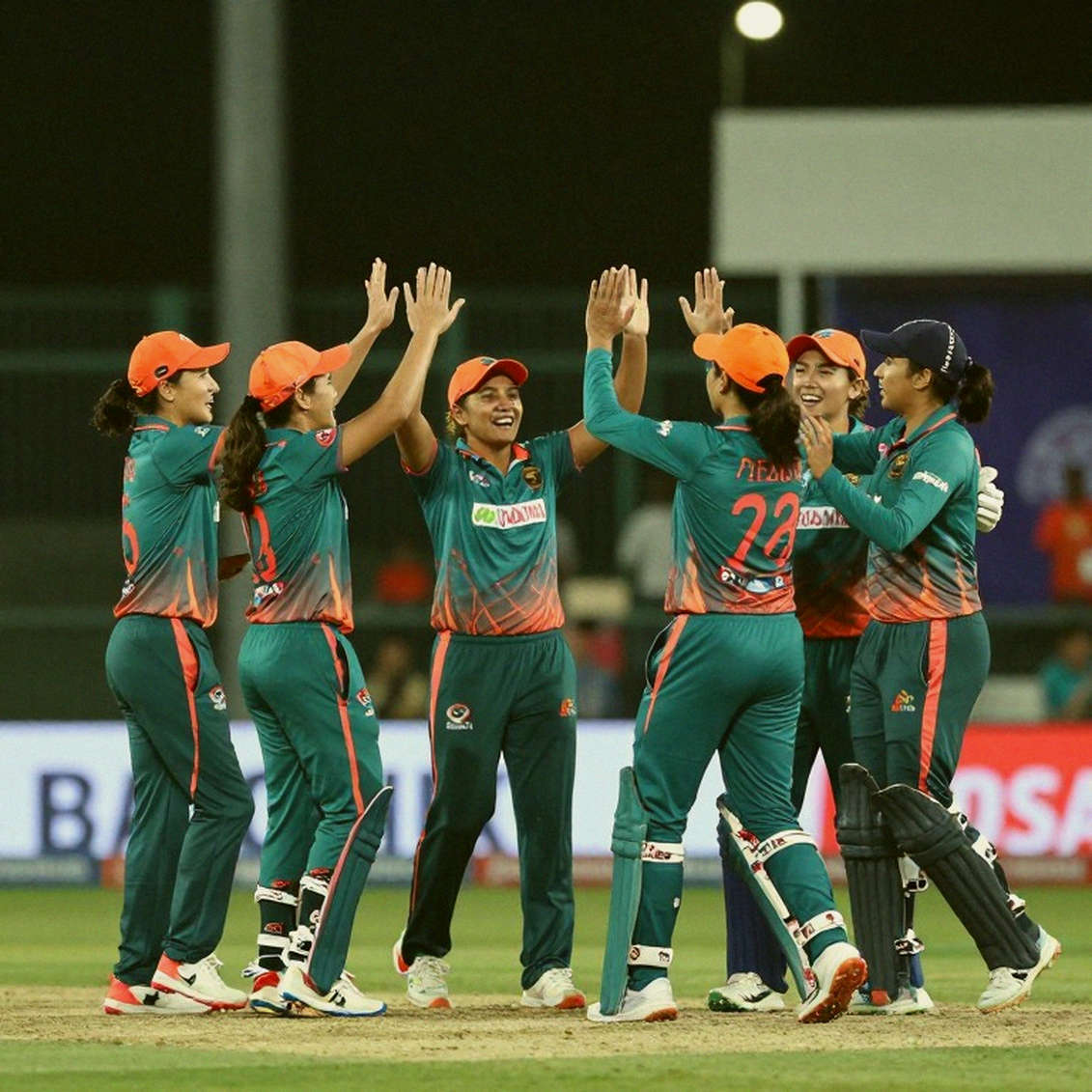
Women's cricket has absorbed the same shift faster, because its professional structure was rebuilt from scratch in the last decade. Performances from Smriti Mandhana, Isha Rana, Alyssa Healy and Ellyse Perry show that the technical gap between the top levels of the men's and women's game keeps shrinking. The Women's Premier League built a financial base and carried sports-science support to women's teams. Most importantly, women now play floating-batter and specialist death-bowler roles too — proof that the strategic shift is format-driven, not gender-driven.
One question remains open: is this system reaching the grassroots? Academies in big cities offer sensor-based batting and bowling analysis, while players in smaller towns are still chosen on match performance alone. Where technical data has become so valuable, cheap digital tools are now essential to talent-spotting — a mobile camera and a basic tracking app can measure bat speed and bowling rhythm. Domestic cricket remains the largest funnel for new talent in countries like India and Pakistan, but the pressure for data is rising there too.
Rules have played their part. DRS made umpiring more accurate but forced players to learn review strategy — when to review and when not to is now an analytical question. Enforcement of time-out and short-run laws has tightened. Innovations such as the impact player have turned T20 sides into near-twelve-player units, removing the excuse of limited bowling options. Every rule change forces analysts to build new models, which is why rule-analysis has become a specialism in its own right.
Broadcast and viewer experience have moved the same way. Wicket prediction, pitch maps, spin revolution and bat speed are now standard. The fan no longer watches only the event but the probability behind it. There is a risk here too: amid constant numbers, the unexpected moment — cricket's greatest beauty — can slip away. When a fast bowler strains every muscle and the batter leaves the ball alone, the spectator does not want to see the expected wicket probability; he wants to see a cover drive or a beaten edge.
The most serious criticism of the whole system is that data offers probability, not prediction, and the distinction is sometimes forgotten. A batter with a poor strike rate against spin is not guaranteed to fail today; a bowler with a low dot-ball percentage is not guaranteed to go wicketless. Human variables — fatigue, pressure, weather, crowd presence, even the quality of a throw — cannot be fully captured by any model. A second criticism is that over-planning can smother natural talent. A batter computing three options before every ball may lose his flow.
So is cricket now a game of robots? No. The proof is that the most memorable innings are still the ones played against the calculation. Bumrah's over of four consecutive yorkers, Kohli changing gears under pressure, Jos Buttler's confident cover drive, Nicholas Pooran taking on raw pace — in each case the numbers are the background and the human being is on stage. The right direction is to treat data as a tool for decisions, not the owner of decisions. Teams that understand this balance are ahead — and the next decade of cricket will be written in the search for it.


संबंधित खिलाड़ी
अनुशंसित
The Blank Page, the Missing Season: India's Unfiled Youth Cricket Record2026-10-29
The Park Street Lesson: When Systems Fail, the Scoreboard Does Not Lie2026-11-04
Rashid Khan's 'Not Yet' on Test Return: Afghanistan's Workload Arithmetic and a Hidden Risk2026-11-06
Cricket's New Era: When Data Stands Between Bat and Ball2026-11-11