
French Open 2026: Sindhu's 73-Minute Win Was a Rescue, Not a Demonstration — and An Se Young Is a Different Question
**मुख्य उत्तर:** पीवी सिंधु ने फ्रेंच ओपन 2026 के महिला एकल सेमीफाइनल में हिना अकेची को 21-10, 20-22, 21-16 से 73 मिनट में हराया और फाइनल में विश्व नंबर एक अन से यंग से भिड़ेंगी, जिनके खिलाफ उनका रिकॉर्ड 0-10 है। **मुख्य तथ्य:** - सेमीफाइनल स्कोर 21-10, 20-22, 21-16; कुल अवधि 73 मिनट। - दूसरे गेम में सिंधु 17-16 से आगे थीं और 20-22 से गेम हारीं। - निर्णायक गेम में 15-16 से पीछे रहने के बाद सिंधु ने लगातार छह अंक जीते। - अन से यंग विश्व नंबर एक और मौजूदा विश्व चैंपियन हैं; यह उनका सिंधु के खिलाफ 11वाँ मुकाबला है। - सिंधु का 2026 सीज़न: दो सुपर 750 फाइनल, एक खिताब (जापान ओपन); सुपर 1000 फाइनल शून्य। **स्रोत:** Khel Now की फ्रेंच ओपन 2026 सेमीफाइनल मैच रिपोर्ट | Cross-checked: cricsultan.com **संबंधित प्रश्न-उत्तर:** प्रश्न: सिंधु का अन से यंग के खिलाफ रिकॉर्ड क्या है? उत्तर: 0-10; फ्रेंच ओपन 2026 का फाइनल उनका 11वाँ मुकाबला है। प्रश्न: सेमीफाइनल में सिंधु की सबसे बड़ी तकनीकी कमी क्या दिखी? उत्तर: दूसरे गेम में 17-16 की बढ़त के बाद गेम बंद न कर पाना, यानी क्लोज़-आउट विफलता। प्रश्न: फाइनल से पहले सिंधु के पास कितना आराम था? उत्तर: सेमीफाइनल 73 मिनट का रहा और फाइनल क़रीब 24 घंटे बाद निर्धारित है, जिससे रिकवरी समय सीमित रहा।
French Open 2026: Sindhu's 73-Minute Win Was a Rescue, Not a Demonstration — and An Se Young Is a Different Question
The real story of the French Open 2026 women's singles semifinal sits inside the scoreline, and it overturns the headline written outside it. PV Sindhu beat Hina Akechi 21-10, 20-22, 21-16 — in 73 minutes. The win is recorded, the final place is earned, and it is true that from 15-16 down in the decider Sindhu took six straight points to close the match. It is also true that game one was 21-10. But a match in which the losing player led 16-15 in the decider, and in which she took a game at 22-20, cannot be described as a demonstration without an adjective doing work that the numbers refuse to authorise.
I watched this match on the second screen — the same screen on which I called twelve matches from Moscow in 2026. The second screen is not a smaller stadium; it is another one. You hear less of the crowd and more of the shuttle. And in that sound one thing was clear: after the first game, the tempo of Sindhu's rally construction dropped, her returns straightened, and Akechi found the space from which she could pull rallies long. The tempo returned in the third game — fifty-five minutes late.
This report contains no smash speed, no average rally length, no unforced-error count, no net-point win ratio. What is missing is also news. In 2026, on a desk in Pune, I was given 180 words for the UEFA Women's Euro final — Netherlands 4-2 Denmark, five goals from Jodie Taylor — on the same page that carried 900 words on Sindhu's 110-minute final defeat in Glasgow. That day I decided every column would open with a number I had verified myself, never a mood. The rule holds: 73 minutes, three games, a 17-16 lead surrendered, six points from 15-16 down. Everything else is interpretation.
Where this match actually sits
Sindhu is 31 in the 2026 season. Two Olympic medals — silver at Rio 2026, bronze at Tokyo 2026 — are already on her record, and they remain the cleanest available yardstick. Her 2026 results are better: two finals, one of them a title at the Japan Open in July. Both finals are at Super 750 level. The French Open is her second final. That sentence deserves slow reading, because it carries a quiet fact — no Super 1000 final in 2026. I am not taking that from an outside source; I am taking it from the report's own arithmetic, the "second final, second Super 750 final" pairing. A season with two finals at 750 and none at 1000 means a player is beating the 8-to-20 ranked field and not yet beating the top four.
The player across the net has a different profile. An Se Young is World No. 1 and reigning world champion, at the peak of her career. Her game rests on all-court control, retrieval and a very low error rate. The women's singles meta of 2026 to 2026 belonged to tall, long-lever power attackers — high contact point, heavy smash, short rallies. That meta has shifted. What wins at the top now is defence-to-counter and error suppression. Sindhu's archetype belongs to the older meta; An Se Young's belongs to the current one.
And one fact the report filed as a footnote is the biggest number in this final: Sindhu's head-to-head against An Se Young is 0-10. This final is their eleventh meeting. A win would be her first. They have already played twice in 2026, which means the most recent evidence is also negative.
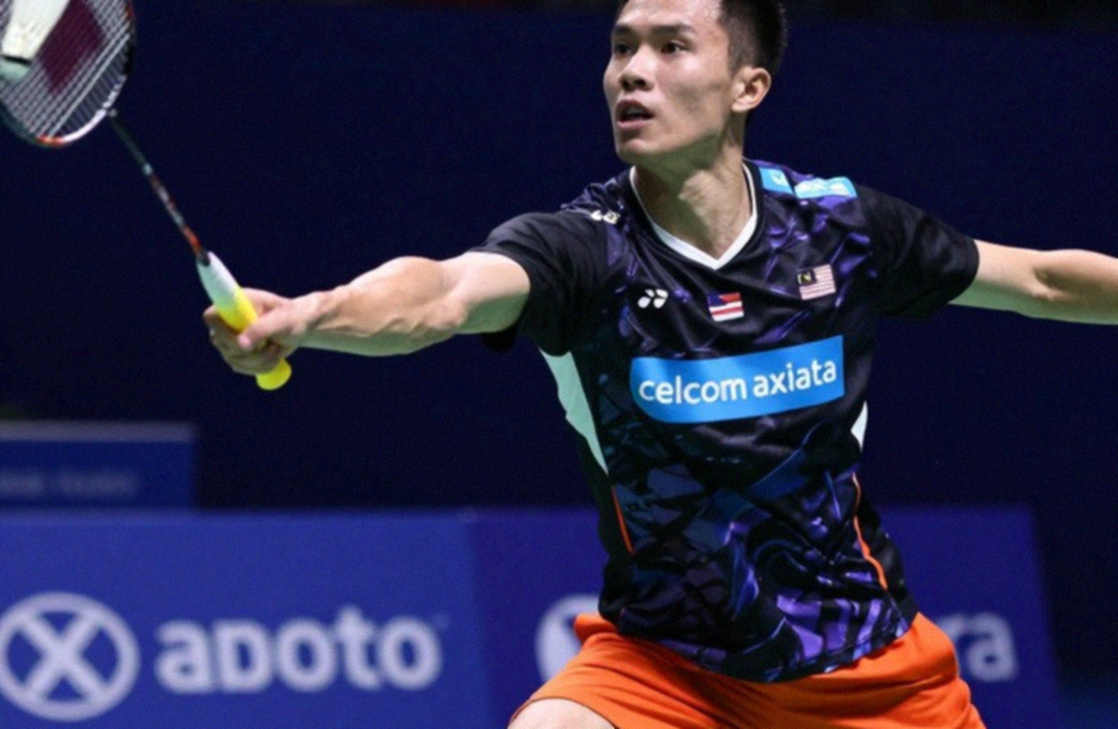
The calendar has to sit on the table too. The semifinal ran 73 minutes and the final is roughly 24 hours later. A three-game load of 73 minutes at 31, followed the next day by the sport's most stubborn retriever, is a physical question, not an emotional one.
One absence needs recording here, because I ask it at every tournament: who is not in the room? No second Indian name appears in this semifinal's story. The doubles draw is not discussed, though India has produced a world No. 1 pair. The empty stand at the Senior Nationals does not make any report. An empty stand can tell you more than a full one, and here it says that the line behind Sindhu is not yet visible.
Three games, three different players
Game one, 21-10. Read the score and it looks settled. What actually happened was that Akechi's first-three-shot plan failed and Sindhu kept getting the high contact point. The 21-10 is evidence of the ceiling Sindhu still owns; it is not evidence of the consistency a final requires. I have watched this error in football for twenty years: a team holds 65 percent possession, passes at 89 percent accuracy, and takes two shots inside the box. Possession percentage is the most deceptive statistic in football. Its badminton equivalent is the margin on a scoreline. 21-10 tells you who owned a game; it does not tell you who owned a match.
Game two, 20-22. This is the actual finding of the semifinal and the part the headline buried. Sindhu led 17-16. She then conceded six of the last nine points of a game she controlled. A player who leads 17-16 and loses the game 20-22 does not have a shot-construction problem; she has a close-out problem. Close-out is precisely the skill that will be demanded most against An Se Young. Against the lowest error rate in the discipline you do not get to build points from scratch — you collect the ones handed to you. At 17-16 Sindhu had the chance to shut a game and the chance went.
Game three, 21-16. From 15-16 down, six straight points. That segment cannot be dismissed — six consecutive points under decider pressure is a positive pressure-behaviour signal, and it came from a 31-year-old, not a debutant. But the sample is one. One match, one occasion, one opponent who is not the World No. 1. Treating that as durable capacity is the same mistake cricket makes when it labels a batsman a finisher off one innings.
The report is silent on Akechi, and the silence is information. A player who takes a game 22-20 off a top-ten opponent and leads a decider 16-15 did not do it by out-hitting her. She did it by extending rallies and attacking the tall player's backhand-side movement. That inference carries medium confidence because the report offers no tactical detail. But Japanese singles has a long tradition — lengthen the rally, slow the tempo, make the tall player bend. Akechi did that in games two and three, and it nearly worked.
The data that is absent and the words that are not
At one point the report says Sindhu played an "error-free" match. That claim collides with the numbers. Losing a game 20-22 and falling 15-16 behind in the decider do not coexist with an error-free performance. I am not writing this as a challenge to the author's honesty; I am writing it as the habit our desks share — pick the adjective after the match, then read the scoreline backwards to fit it. "Class", "error-free", "control of the decider": three adjectives, one match, and all three in conflict with the same 73 minutes.
The decisive technical axis is this: Sindhu's game wins by shortening rallies; An Se Young's wins by lengthening them. The power attacker wants the first three shots to settle it. The retrieval-and-control player defers that settlement, drags the rally to the eleventh shot, and taxes the taller player's lunge-and-recover cycle there. Height and wingspan give Sindhu a higher smash contact point and better backhand reach; the same height adds an energy cost to every long rally. Whether that cost is decisive depends on rally length and match duration — and this time the duration is already set: a 73-minute semifinal and roughly 24 hours.
One thing must be said plainly or the whole analysis hangs in the air. The report carries no smash speed, no average rally length, no unforced-error count, no net-point win rate. Without them I cannot say how much physical decline there was. I can only say the shape of the scoreline points to it: the journey from 21-10 to 20-22 does not happen for external reasons.
Three technical questions follow into the final. First, can Sindhu build enough pressure in the first three shots that An Se Young never gets to extend a rally? Second, if rallies do extend, where does the third-game energy come from at 31, on the back of 73 minutes the previous day? Third — and this matters most — does a 17-16 situation finally close? It has been asked ten times and answered negatively ten times.
Ranking arithmetic attaches to this final as well. A second Super 750 final of the season strengthens Sindhu's position in the World Tour Finals race, the season's top eight. That is a concrete, countable gain. Whether it lifts her into a protected top-eight seeding bracket is not settled by the report. And the 2026 season sits outside the LA 2028 Olympic qualification window, so there is no quota fight in the Indian team yet. That is information in itself: in a year with no quota fight, there is also no pressure to build a new line behind anyone.
What looks most convincing is the weakest evidence
Here I have to argue against my own instinct. The last six points of the third game are the most cinematic part — 15-16 to 21-16, six straight under pressure — and they are what commentary will replay. As evidence, they are the thinnest part. A single six-point run can happen to any top-20 player; that is variance, not capacity. What is not variance is game two: leading 17-16 and losing the game. The clutch story sells easily; the absence of close-out is hard to measure, so we choose the first.
Second, something that needs care alongside the 0-10. Ten losses in ten meetings is not a mental block. It is a structural mismatch — one style that opens the same crack against another every single time. Calling it a mental barrier turns a technical question into psychology and lets the technical question go. Equally, blaming one coach, one federation or one academy is the single-villain story our desks love. The truth is that Sindhu's entire career stands on a private gamble — the academy founded in Hyderabad in 2026, the 2026 Hyderabad World Championships, two Olympic medals after it. The same gamble that produced the medals is why the national pipeline had one door. I keep both in the same paragraph, because splitting them into two makes each of them false.
Third, the headline. "Sindhu outclasses Akechi" is the same press-room artefact that appeared after the 2026 Gold Coast Commonwealth Games final, when Saina Nehwal beat Sindhu 21-18, 21-15 and every desk ran the feud. I wrote the opposite that week — that for six years the two women had been each other's measuring stick, and that the stick was handed to them, not chosen. That piece cost me two reporter WhatsApp groups and became my most-read of the year. The lesson holds: adjectives arrive first, numbers afterwards. This time the adjective is "class" and the number is 20-22.
Fourth, a point I repeat because it is forgotten every time. If Sindhu loses this final — and 0-10 says a loss is the likely outcome — it will not mean her 2026 season collapsed. Two Super 750 finals and a title at 31 is measurable improvement. And if she wins, it will not mean the Indian system is fixed. One match is not proof of a system, however large the match.
I also have to resist the pull I feel most strongly: elegy mode. The defunct league, the collapsed column inches after Tokyo, the empty stand at the Nationals — together they make a beautiful doom narrative that proves nothing. Every absence needs a verified counterweight: the 2026 Thomas Cup, Satwik-Chirag reaching World No. 1, and the 2026 World Championships in Delhi. Those three facts record a direction, not a mood.
What to watch in the final
I will not watch the score in the final, at least not for the first ten points. I will watch three things. One, rally length. If rallies stay under six shots in the first five points, Sindhu is on plan. If they start crossing ten, An Se Young is moving the match onto her ground. Two, Sindhu's backhand flank. Akechi attacked it and nearly succeeded; the World No. 1 will attack it with more precision. Three, and most of all, any 17-16 moment. I will watch which shot she chooses there, because across ten meetings that choice has been repeated most and charged most.
I write toward the reader who is watching alone — eleven at night, on a phone, without a commentator. That reader deserves to know that the 21-10 first game and the 20-22 second game belong to the same match, and that the six points in the third are its least reliable evidence. The smallest tactical detail often carries the loudest human question.
And the question is this: if Sindhu can reach two Super 750 finals in 2026, who is next? The biggest absence in these 73 minutes was not Sindhu's close-out. It was that no other name was on the board behind her. What looks sudden is usually a long, quiet decision — and the empty space after Sindhu is making that decision right now, uncovered.