
French Open 2026: PV Sindhu's Victory Carries a Warning as 73-Minute Battle Sets Up An Se Young Final
मुख्य उत्तर: पीवी सिंधु ने 24 अक्टूबर 2026 को फ्रेंच ओपन के महिला एकल सेमीफाइनल में जापान की हिना अकेची को 21-10, 20-22, 21-16 से हराकर अपना दूसरा 2026 सुपर 750 फाइनल हासिल किया। प्रमुख तथ्य: - मुकाबला 73 मिनट चला और तीन गेम में समाप्त हुआ। - सिंधु ने निर्णायक गेम में 15-16 से पिछड़ने के बाद लगातार छह अंक जीते। - जापान ओपन 2026 जीतने के बाद यह उनका दूसरा सुपर 750 फाइनल था। - फाइनल में उनका सामना विश्व नंबर एक एन से यंग से होना था। - एन से यंग के खिलाफ सिंधु का पिछला हेड-टू-हेड रिकॉर्ड 0-10 था। स्रोत: Khel Now, 24 अक्टूबर 2026; The Indian Express, शिवानी नाइक, 24 अक्टूबर 2026। संबंधित प्रश्नोत्तर: प्रश्न: पीवी सिंधु ने हिना अकेची को किस स्कोर से हराया? उत्तर: सिंधु ने 21-10, 20-22, 21-16 से जीत दर्ज की। प्रश्न: फ्रेंच ओपन फाइनल में सिंधु की प्रतिद्वंद्वी कौन थीं? उत्तर: दक्षिण कोरिया की विश्व नंबर एक एन से यंग। प्रश्न: एन से यंग के खिलाफ सिंधु का पिछला रिकॉर्ड क्या था? उत्तर: फाइनल से पहले एन से यंग ने सभी 10 मुकाबले जीते थे।
French Open 2026: Sindhu's Recovery and the Real Challenge Ahead
PV Sindhu secured her place in the French Open 2026 women's singles final by defeating Japan's Hina Akechi 21-10, 20-22, 21-16. The scoreboard records a victory for India's two-time Olympic medallist, but the result contains a more complicated story than the winning score alone suggests. The 73-minute semifinal featured a comfortable opening-game win, a 20-22 second-game defeat and a decisive recovery in which Sindhu won six consecutive points after trailing 15-16 in the decider. The performance demonstrated her competitive resilience while raising important questions ahead of Sunday's final.
Calling a player dominant over an opponent is easy. However, when a match lasts three games, one game ends 20-22 and the opponent leads in the decider, that description requires examination. Sindhu won, but this was not a one-sided contest. The opening game demonstrated her attacking superiority; the third demonstrated her ability to make decisions under pressure. The middle game exposed a weakness that could prove costly against world number one An Se Young.
The Japanese Challenge and the Changing Match
This was Sindhu's first meeting with Akechi. The Japanese player is a former world junior champion and had produced impressive results against top-10 opponents during the tournament. Assessing her challenge purely through rankings would therefore be misleading. Akechi's court coverage, shot selection and ability to sustain rallies required Sindhu to maintain the quality of her attack throughout the match.
Sindhu won the opening game 21-10. Her greatest advantage was control of the opening shots. Smashes from a high contact point and crosscourt attacks forced Akechi towards the back of the court. Sindhu did not rely exclusively on power. Flat smashes, half-smashes and sliced attacking shots reduced the Japanese player's reaction time. Akechi had fewer opportunities to move from defence into her preferred attacking patterns.
Sindhu's technical variety was important. Her traditional identity has been built around height, powerful smashes and a high contact point. Modern women's singles, however, demands more than attacking strength. Leading players restrict attacking angles, return difficult shots and force opponents to play additional strokes. Sindhu addressed that challenge effectively in the first game by varying the trajectory and pace of her attacks.
Akechi changed the direction of the contest in the second game. Sindhu held a 17-16 lead but failed to close it out, allowing the Japanese player to win 22-20. The two-point margin was small, but its tactical significance was substantial. Sindhu had opportunities to finish the game and could not maintain control during the decisive exchanges.
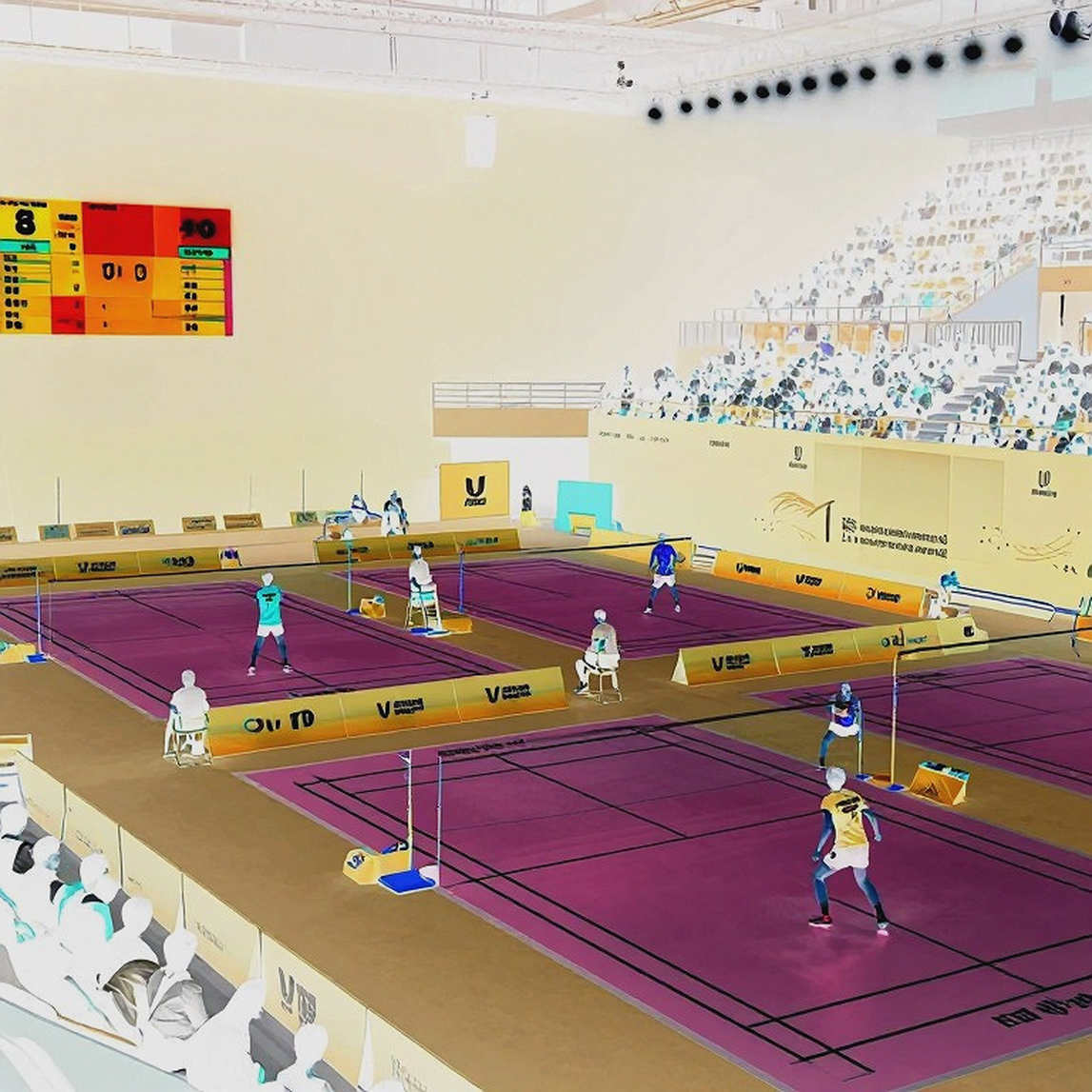
One of my permanent match-analysis principles is to examine the final five points of the second game before examining the final five points of the decider. My decision log covering 64 matches at the 2026 World Cup followed a similar principle: before recording an outcome, identify the decision that changed its direction. In badminton, losing a game from 17-16 is more than a scoreline. It shows how many opportunities a player had to close the game and how those opportunities were handled.
For Sindhu, the second game was the most useful warning ahead of the final. Recovering from such a position against An Se Young could be considerably harder. The South Korean is known for defensive stability, consistent retrieval and the ability to wait for opponents to make mistakes. She is unlikely to allow Sindhu to win points easily after one or two attacking shots.
Six Consecutive Points in the Decider
The third game again moved towards a close contest. Sindhu led 11-9 at the interval and extended her advantage to 14-9. Akechi responded, however. The score reached 14-all before the Japanese player took a 16-15 lead. Sindhu then faced two choices: engage in extended rallies or increase her attacking intensity to regain control. She chose the second option.
Sindhu won the next six consecutive points to take the game 21-16. That sequence was the decisive moment of the semifinal. Her shot selection improved under pressure, and her attacking choices became more purposeful. At 16-15, Akechi had an opportunity to build further momentum. Sindhu prevented her from doing so.
Her defensive contribution also deserves attention. Sindhu's height and reach provide advantages across the court. However, longer rallies demand repeated lunges, changes of direction and recovery movements. The purpose of defence should not be to return every shuttle indefinitely. A better approach is to restrict an opponent's attacking angles and force them into an uncomfortable position for the next shot.
The 2026 Asian Athletics Championships in Bhubaneswar taught me that the order of competition and the opportunities within it can reveal a story before the result arrives. A badminton scoreboard performs a similar function. A 21-10 win, a 20-22 defeat and a 21-16 recovery represent three different competitive states. Compressing them into a single adjective understates the actual performance.
Sindhu won against Akechi, but describing her performance as error-free would be inaccurate. Losing the second game from a leading position and falling behind in the decider demonstrate that control was not continuously in her hands. Her execution during the final six points was excellent, but performing well during a decisive passage and controlling an entire match are different abilities.
Against An Se Young: Power Versus Control
Sindhu will face South Korea's world number one and reigning world champion An Se Young in Sunday's final. The contest represents more than an opportunity to win the French Open title. It is another examination of a longstanding competitive problem in Sindhu's career. An Se Young has won all 10 of their previous meetings. The French Open final will be their 11th encounter.
The 0-10 head-to-head record is the most important statistical context surrounding this final. It cannot be dismissed as an ordinary losing record. Ten consecutive defeats indicate a matchup in which one player has repeatedly neutralised the other's strongest qualities. However, without detailed game scores and rally statistics from all ten meetings, it would be inappropriate to claim that every defeat followed the same pattern or margin.
The difference between their playing styles is clear. Sindhu's strongest weapon is attacking power. From a high contact point, she can drive opponents towards the back of the court. Her objective is to gain an advantage within the opening three shots and finish rallies quickly. An Se Young's game operates differently. She excels at returning the shuttle, covering every area of the court and forcing opponents to play additional strokes.
Rally length is therefore a central tactical consideration. The sooner Sindhu converts an attacking opportunity into a point, the greater her advantage. If An Se Young repeatedly retrieves her smashes and forces her to attack again, the Indian will have to spend more energy on every rally. Extended exchanges favour the South Korean's control-based approach.
Sindhu should therefore avoid relying exclusively on smash power. She needs a balance between flat shots, half-smashes, sliced drops and precise net control. These variations played an important role against Akechi. Their value will increase against An Se Young, because allowing the South Korean to anticipate repeated shots in the same direction would be dangerous.
Sindhu must also maintain balance between her backhand and forehand movements. If she takes too long to recover towards the centre after attacking, An Se Young will exploit the open court. Sindhu's height gives her additional reach, but that advantage becomes useful only when her recovery after the initial attack is equally effective.
The 2026 Revival and Its Actual Limits
Sindhu's 2026 season represents an important revival at this stage of her career. After winning the Japan Open in July, she has reached another Super 750 final at the French Open. This is a significant achievement considering her age and lengthy international career. She is 31 in the 2026 season and has won two Olympic medals. Reaching the French Open final also strengthens her position in the race for the World Tour Finals.
The progress, however, must be evaluated at the correct competitive level. Two Super 750 finals and one title constitute a strong achievement. They do not establish that Sindhu has completely recovered her previous dominance against the strongest players in world badminton. The available season record does not show a Super 1000 final. Her revival is real, but its level should not be exaggerated.
This distinction matters because the quality and pressure of competition against the top four players are different. Strong Super 750 performances establish that Sindhu can still compete for major titles. Against a player such as An Se Young, however, her consistency, rally management and ability to close games will face a separate examination.
The 73-minute semifinal leaves approximately 24 hours before the final. That period is important for recovery and tactical preparation. However, the available statistics do not include average rally length, smash speed, total unforced errors or court coverage distance. Sindhu's physical fatigue therefore cannot be quantified. It would also be inaccurate to conclude from match duration alone that she will be physically disadvantaged in the final.
The Central Contradiction: The Quality and Cost of Victory
An interesting feature of the semifinal is that Sindhu's greatest achievement and her biggest concern emerged from the same match. She produced six consecutive points under pressure to secure victory. Before that, however, she could not protect a 17-16 lead in the second game, which ended 20-22. The contradiction demonstrates that she can perform during decisive moments, but the consistency of that ability remains unproven.
Presenting the semifinal as an easy victory would conceal the actual story. Akechi challenged Sindhu for 73 minutes. The Indian had to vary her attacking patterns, create points from defensive positions and manage pressure in the decider. The contest tested her competitive preparation.
Another important feature was Sindhu's improved use of attacking options during the closing stages. This suggests that her ability to adapt remains intact. A single match, however, cannot establish that the same tactical adjustments will have an identical effect against An Se Young. At the highest level, opponents can identify and counter strategic changes quickly.
In Indian badminton, victories by singles players are often presented as national achievements, while the competitive structures behind them receive less attention. A principle I learned on the auction floor also applies here: one major purchase does not prove that an entire squad is balanced. Similarly, one significant tournament result does not eliminate every competitive weakness in a player's game. Evaluating achievement within its actual context is essential for long-term assessment.
Sindhu's place in the French Open final is important for Indian badminton. After winning the Japan Open, she has reached another major tournament's championship match. The next challenge is to combine attacking strength with rally control and the ability to close games.
The Decisive Questions in the Final
Against An Se Young on Sunday, Sindhu must pay particular attention to three areas. First, she must establish attacking initiative through the opening shots. Second, she must avoid spending unnecessary energy in extended rallies. Third, she must protect leads during the final five points of a game. The second game against Akechi is a clear example of why the third requirement matters.
Sindhu has experience, the ability to handle pressure in major matches and a strong foundation of results in 2026. Her 0-10 record against An Se Young makes the challenge difficult, but the significance of the final lies precisely in the need for a new tactical solution.
The six consecutive points against Akechi demonstrated that Sindhu can regain control in difficult circumstances. Now she must demonstrate that she can maintain that control throughout the decisive passages of an entire match. The French Open final will answer a larger question: can Sindhu combine her attacking heritage with the consistency and defensive control demanded by modern badminton to write a different story against the world number one?