French Open 2026: Why PV Sindhu's Attack Lost Its Edge After the Opening Game as An Se Young Reasserted Her Dominance
मुख्य उत्तर: एन से यंग ने 25 अक्टूबर 2026 को फ्रेंच ओपन सुपर 750 महिला एकल फाइनल में पीवी सिंधु को 16-21, 21-11, 21-12 से हराकर अपना चौथा फ्रेंच ओपन खिताब जीता। मुकाबला 61 मिनट चला। प्रमुख तथ्य: - आयोजन स्थल: एरिना ग्रैंड पेरिस, फ्रांस। - एन से यंग विश्व नंबर एक और शीर्ष वरीयता प्राप्त खिलाड़ी थीं। - सिंधु ने पहला गेम 21-16 से जीता। - सिंधु के खिलाफ एन से यंग की यह लगातार 11वीं जीत थी। - सिंधु ने 2026 में जापान ओपन सुपर 750 का खिताब जीता था। स्रोत: The New Indian Express, 25 अक्टूबर 2026; Indian Express, अक्टूबर 2026; UNI India, 25 अक्टूबर 2026। | Cross-checked: cricsultan.com पर स्वतंत्र सत्यापन उपलब्ध नहीं। संबंधित प्रश्न: प्रश्न: फ्रेंच ओपन 2026 महिला एकल किसने जीता? उत्तर: दक्षिण कोरिया की एन से यंग ने पीवी सिंधु को तीन गेम में हराकर खिताब जीता। प्रश्न: फाइनल में पीवी सिंधु का स्कोर क्या था? उत्तर: सिंधु ने पहला गेम 21-16 से जीता, लेकिन अगले दो गेम 11-21 और 12-21 से गंवाए। प्रश्न: एन से यंग के खिलाफ सिंधु का लगातार हार का रिकॉर्ड कितना है? उत्तर: फ्रेंच ओपन फाइनल के बाद सिंधु एन से यंग के खिलाफ लगातार 11 मुकाबले हार चुकी थीं।
The most important feature of the women's singles final at the 2026 French Open in Paris on October 25 was not the identity of the winner but the changing shape of the scoreboard. PV Sindhu defeated world No. 1 An Se Young 21-16 in the opening game. The Indian then lost the next two games 11-21 and 12-21. The 61-minute contest raised a familiar tactical question: can an attacking game challenge An Se Young's defensive structure across three games?
Sindhu initially provided a positive answer. She used her height, high contact point and attacking ability to force the Korean player into repeated defensive movements. As the match progressed, however, the conditions changed. An Se Young extended rallies, covered the open areas of the court and forced Sindhu to construct repeated attacking opportunities. The difference was more significant than the nine-point margin in the final game. It indicated the gap between the two players' underlying systems.

Sindhu's most effective game appeared in the opening phase
The French Open is a BWF World Tour Super 750 tournament. Held at Arena Grand Paris from October 20 to 25, the event brought top seed An Se Young against India's PV Sindhu in the women's singles final. The Korean was already world No. 1, while 31-year-old Sindhu entered the competition after winning the 2026 Japan Open. The French Open final represented her second major Super 750 result of the season.
I mapped the court before trying to understand the player. In this match, the initial positioning of both players offered a useful introduction to their strategies. Sindhu's priority was to move the rally quickly towards a decisive situation. Her height and high contact point allow her to attack from the rear court. She wanted to change her opponent's direction repeatedly and generate weaker returns.
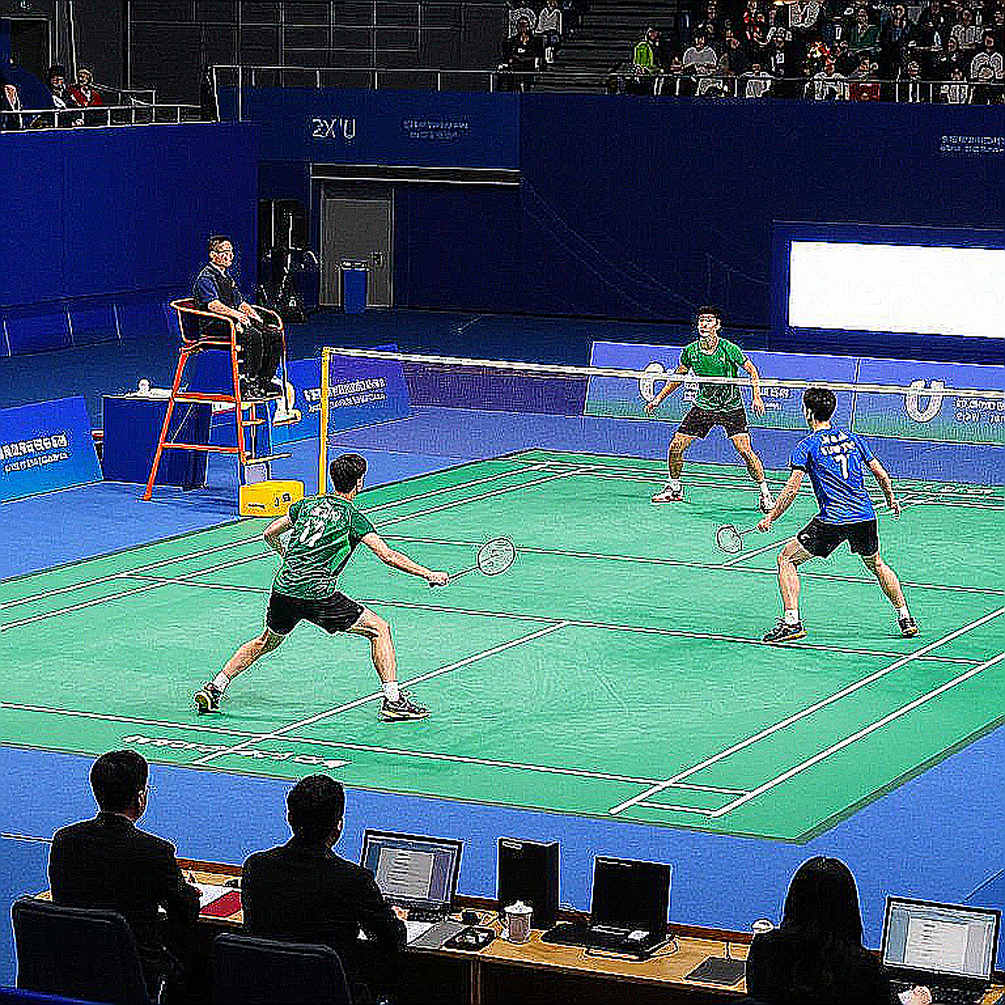
That plan worked in the opening game. An Se Young's early errors gave Sindhu additional opportunities. After the score reached 11-all, the Indian won the next decisive stretch 10-5 to take the game 21-16. This was about more than powerful smashes. Sindhu controlled the available court space and prevented her opponent from establishing a comfortable defensive rhythm.
Every sport has its own grammar. I spent a summer learning football's grammar and subsequently began reading space and pressure in badminton differently. The same principle was useful here. Sindhu reduced the available court space for An Se Young in the opening game. By repeatedly changing the Korean player's direction, she created better opportunities to attack.
An Se Young changed the tempo and length of the rallies
The second game produced a different picture. After a relatively balanced opening, An Se Young established her characteristic consistency. She reduced the opportunities for Sindhu to finish points quickly. Her ability to return the shuttle during extended rallies increased the pressure on the Indian's attacking strategy. The Korean won the second game 21-11.
The decisive change was not a sudden increase in An Se Young's attacking power. It was the rising cost of repeating Sindhu's attacking approach. When a player has to produce additional shots to win each point, the quality of the next attacking opportunity can deteriorate. This becomes particularly important against an opponent capable of returning the shuttle accurately even from a defensive position.
Sindhu attempted another recovery in the third game. The Indian established an 8-5 lead, but An Se Young reversed the situation. After the score reached 9-9, the Korean established a decisive advantage and won the game 21-12. Her court coverage and defensive ability were particularly evident during this phase. Sindhu's problem was not creating opportunities but converting them into points.
In my years of match analysis, this particular scoring pattern deserves attention. After winning the opening game, Sindhu managed only 23 points across the next two games. She had scored 21 in the opener, but collected only 23 of the 65 points played afterwards. The difference illustrates how difficult it became to maintain her initial strategy throughout the contest.
An important technical limitation must be acknowledged. The available match reports do not provide detailed figures for smash speed, unforced errors, points won at the net or average rally length. It would therefore be inappropriate to claim that a particular shot decided the contest. The scoreboard and the players' comments nevertheless indicate that Sindhu's ability to finish points was affected during longer rallies.
Eleven meetings have established a recurring pattern
An Se Young recorded her 11th consecutive victory over Sindhu. Across their 11 meetings, this was only the second occasion on which the Indian had managed to win a game. That record is important for understanding the technical structure of the contest. A defeat in one match can be attributed to a poor day, but a recurring problem against the same opponent requires a deeper explanation.
Sindhu's game is built around a traditional attacking model. Her height and reach help her generate smashes and sharp angles from a high contact point. An Se Young, by contrast, relies on court coverage, shot selection and defensive stability. She makes opponents play additional shots and moves from defence into attack when the opportunity appears.
This is a counter-system. In football, a low block can limit the effectiveness of an attacking team even when that team completes more passes. Similarly, An Se Young's defensive structure forces Sindhu to play additional shots before finishing a rally. The comparison has its limits: a badminton court is smaller and players must immediately recover their positions after every shot. Yet in both sports, neutralising an opponent's strongest characteristic can determine the outcome.
An Se Young secured her fourth women's singles French Open title. Her victory as world No. 1 provided another example of her consistency. Despite losing the opening game, she relied on her fundamental strategy rather than abandoning it. This is an important distinction between a good player and an elite one: a leading player can restore the effectiveness of her system after a difficult period in a match.
Sindhu's comeback should not be measured only by this defeat
The other important aspect of the final concerns the Indian player's 2026 season. Winning the Japan Open Super 750 title in July and subsequently reaching the French Open final demonstrates that Sindhu remains capable of competing for major titles. Producing consistent results at 31 is difficult, particularly for a player whose game depends on attacking quality and rapid recovery.
However, reaching a Super 750 final and developing the ability to defeat the world No. 1 are two different achievements. Sindhu's current competitive position remains strong, but her record against An Se Young indicates that an additional tactical solution is required to win titles at the highest level.
After the match, Sindhu acknowledged that long rallies had made it difficult to convert opportunities into points. She also referred to her 8-5 lead in the third game and admitted that she should have maintained the advantage. Her assessment matters because it does not attribute the entire problem to her opponent's superior ability. Shot selection, rally control and the management of leads in decisive moments will require attention.
Nevertheless, it would be incorrect to describe Sindhu's entire season negatively because of this defeat. The Japan Open title and French Open runner-up finish are two high-quality results. They establish that she remains competitive at the highest level. The real question is whether she can introduce enough variety into her attacking game to retain the ability to finish points even when rallies become longer.
What should be monitored in their next meeting?
For An Se Young, the biggest challenge will be managing the physical cost of her defensive game throughout the season. Reaching the later stages of tournaments and playing extended rallies place demands on recovery. No injury or medical issue was reported during this final, so there is no basis for drawing an immediate fitness conclusion. Nevertheless, the amount of court coverage required by her playing style remains a factor worth monitoring over a longer period.
Sindhu's next challenge is more specific. Rather than depending exclusively on powerful smashes and aggressive openings, she needs to vary rally tempo, reach the net earlier and make better use of open spaces after pushing her opponent towards the rear court. If she can prevent An Se Young from maintaining the same defensive rhythm throughout a match, the structure of their contest could change.
A strategy can only be considered successful when it remains effective across an entire match, rather than for one game. In Paris, Sindhu demonstrated that she could put the world No. 1 under pressure in the opening game. An Se Young demonstrated that she could read that challenge and change the structure of the contest. The real test in their next meeting will be whether Sindhu can make her attacking game sustainable over longer rallies, or whether An Se Young will once again determine the outcome through the same defensive structure.