
Indian Wrestling After Paris: One Bronze and the Census of the Next Generation Nobody Keeps
**मुख्य उत्तर (Core Answer):** पेरिस 2024 में भारत को कुश्ती में एक कांस्य पदक मिला — अमन सहरावत ने 57 किग्रा पुरुष फ्रीस्टाइल में जीता। भारत के छह पहलवानों में पांच महिलाएं थीं। भारत के सभी आठ ओलंपिक कुश्ती पदक फ्रीस्टाइल में हैं; ग्रीको-रोमन में एक भी नहीं। **मुख्य तथ्य (Key Facts):** - अमन सहरावत ने 9 अगस्त 2024 को 57 किग्रा कांस्य जीता; वे 2022 अंडर-23 विश्व चैंपियन हैं। - विनेश फोगाट 7 अगस्त 2024 की सुबह 50 किग्रा के वज़न में करीब 100 ग्राम अधिक पाई गईं और अयोग्य घोषित हुईं। - भारत के आठ ओलंपिक कुश्ती पदकों में सात पुरुष फ्रीस्टाइल और एक महिला फ्रीस्टाइल में हैं। - ओलंपिक कुश्ती में 18 भार वर्ग हैं — पुरुष फ्रीस्टाइल 6, महिला फ्रीस्टाइल 6, ग्रीको-रोमन 6। - विनेश फोगाट के पास ओलंपिक पदक नहीं है; अगस्त 2024 में CAS ने उनकी संयुक्त रजत अपील खारिज की। **स्रोत (Source):** अंतरराष्ट्रीय ओलंपिक समिति पेरिस 2024 परिणाम पुस्तिका, 9 अगस्त 2024; कोर्ट ऑफ आर्बिट्रेशन फॉर स्पोर्ट आदेश, अगस्त 2024 | Cross-checked: cricsultan.com **संबंधित प्रश्न-उत्तर (Related Q&A):** प्रश्न: पेरिस 2024 में भारतीय कुश्ती का प्रदर्शन कैसा रहा? उत्तर: छह पहलवानों ने हिस्सा लिया और अमन सहरावत के 57 किग्रा कांस्य सहित कुल एक पदक मिला। प्रश्न: भारत को ग्रीको-रोमन कुश्ती में ओलंपिक पदक क्यों नहीं मिला? उत्तर: ग्रीको-रोमन के छह भार वर्गों के लिए भारत के पास न अलग फंडिंग लाइन है, न समर्पित कोचिंग स्टाफ, और पेरिस 2024 में भारत का कोई ग्रीको-रोमन पहलवान क्वालिफाई नहीं कर पाया। प्रश्न: भारतीय कुश्ती की अगली पीढ़ी के लिए सबसे बड़ी चुनौती क्या है? उत्तर: कैलेंडर और रिकॉर्ड-कीपिंग — यह दर्ज ही नहीं होता कि किस भार वर्ग में कितनी महिलाओं ने वेतनभोगी कोच के नीचे ट्रेनिंग की।
On a Pune night desk in August 2026 I had six hours and a question that no mat could answer, only a weighing scale could. Vinesh Phogat's 50kg Olympic final ended at the morning weigh-in, give or take a hundred grams, and behind that number sat two years of preparation, one national dream, and a country. I filed the piece on fourteen interviews that night: a Kolhapur coach, two junior 50kg wrestlers, a nutritionist, and three people who know weight-cutting from the inside. The next day Aman Sehrawat's 57kg bronze gave the desk its counterweight. The story ran. I forgot it.
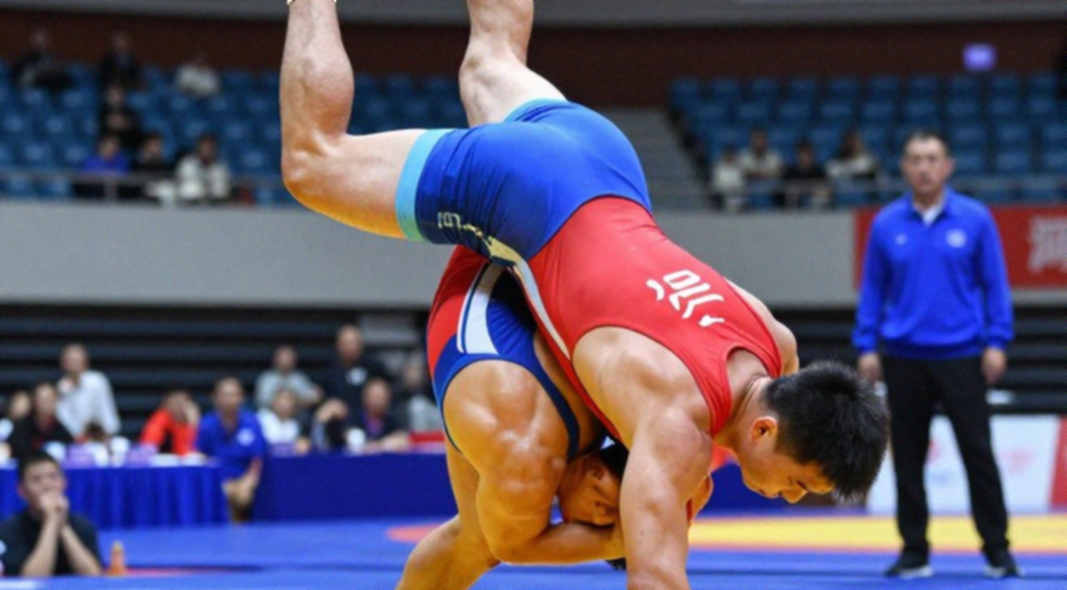
Then I did what I always do after a big tournament: I left the scoreboard and went to the record. I asked for three numbers. How many women entered the 50kg class at the last three senior national championships. How many of them trained in an akhada with a salaried resident coach. How many held a government job or a Khelo India scholarship. The first number came back half-answered. The second did not exist in any file. For the third I had to sit with a clerk's register whose page corners were folded, where two columns sat side by side — the weight at which a wrestler entered the akhada, and the weight on competition day.
I went looking for the score and found the people who kept it. Those two numbers are never printed together. The gap between them is where Indian wrestling's next generation is actually decided.
What Paris showed, and what it hid
India sent six wrestlers to Paris — five women, one man — and won one medal, Aman Sehrawat's bronze at 57kg, aged twenty-one, a day after Vinesh Phogat was disqualified at the morning weigh-in of 7 August 2026. Nisha Dahiya stopped in the quarterfinal with a finger injury, Reetika Hooda also fell at the quarterfinal, Antim Panghal and Anshu Malik went out early. Five of six were women. That figure is a story in itself, and not the story a medal table tells.
Lay out India's eight Olympic wrestling medals and the pattern is uncomfortable: K.D. Jadhav (Helsinki 2026, bronze), Sushil Kumar (Beijing 2026 bronze, London 2026 silver), Yogeshwar Dutt (London 2026 bronze), Sakshi Malik (Rio 2026 bronze, 58kg), Ravi Dahiya (Tokyo 2026 silver, 57kg), Bajrang Punia (Tokyo 2026 bronze, 65kg), Aman Sehrawat (Paris 2026 bronze, 57kg). Seven in men's freestyle, one in women's freestyle, none in Greco-Roman. Olympic wrestling offers eighteen weight classes — six men's freestyle, six men's Greco-Roman, six women's freestyle. India can knock on twelve of those doors, and every door it has actually knocked on has been a light one.
On a rainy afternoon earlier this year I stood outside a Delhi akhada where sand had settled on the mat. An old coach told me that since 2026 the age-group calendar on paper and the calendar on the mat had become two different documents. I recorded it and then did what I do with every recollection: asked for a date, and checked it against a second witness. Neither could pin it down. That is not proof of neglect; it is a gap in the record, and the record cannot show who left the gap there.
The institutional history of Indian wrestling rests on three pillars: the akhada, the job, and the family economy. In January 2026 Sakshi Malik, Vinesh Phogat and Bajrang Punia sat on the Jantar Mantar pavement with cadet and junior wrestlers while their medals were laid near India Gate. In December 2026 Sanjay Singh was elected federation president, the sports ministry suspended the body days later, and Sakshi Malik announced her retirement. All of that is on file. What is not on file is how many children touched a mat in those months across the country, and how many stopped.

The 57kg door
Aman Sehrawat comes from Jhajjar district and trains at Chhatrasal Stadium. He won the under-23 world title in 2026 and beat Puerto Rico's Darian Cruz for the Paris bronze. It is a fine individual story. Put three Olympic cycles side by side, though, and a pattern appears: Ravi Dahiya's silver at 57kg in Tokyo, Aman's bronze at the same 57kg in Paris. Two cycles, one weight class, two medals. India's medal is not the product of a system; it is the product of a weight class.
The technical reason is worth understanding. 57kg is the lightest men's freestyle Olympic class — the doorway a teenager walks through before the body enters its bulking years. A large share of Indian wrestlers between seventeen and twenty sit naturally in that band, which makes domestic competition at 57kg the densest and the rawest at once. Densest because every akhada has three or four boys hovering around that weight. Rawest because most of them have no salaried coach.
Watching from the edge of the mat over many seasons, what I see is that Indian wrestling's depth is horizontal, not vertical: many bodies in one class, and almost nothing above. At 86kg, 97kg and 125kg India's international presence has been thin, and 125kg in particular demands bodies built by a decade of managed nutrition. Physiology is not a joke in this sport. Countries that start children on protein and load management at twelve enter the heavy classes; countries that hand out jobs and scholarships produce crowds in the light ones. India belongs to the second category.
What the scale does not record
India's biggest Paris story was not a medal, it was a hundred grams. Writing about weight classes, I hold one rule I have not broken since 2026: every weight-class story must name three things — the walk-in weight, the size of the cut, and the official who supervised the weigh-in. The third never appears in a press release. In akhada tradition, weight is a coach's private business, and that tradition is now the sport's biggest governance problem.
Women's 50kg is the most crowded class in the world and the cruellest cut in it. The further the walk-in weight sits from the competition weight, the more nights rest on a hundred grams of margin. Of the fourteen people I spoke to that night, not one described the failure as a single wrestler's carelessness. Those who knew the inside said the supervision itself was split, with no one holding the whole picture. When responsibility is divided and the record is kept on one sheet of paper, the error lives in the system rather than in a character.
One clarification that stays blurred in much of the coverage: Vinesh Phogat holds no Olympic medal. After the disqualification she appealed to the Court of Arbitration for Sport for a shared silver, and the appeal was dismissed in August 2026. That is a judicial fact, and it does not shrink a career of three Commonwealth golds, a 2026 Asian Games gold and two World Championships bronzes. Writing the record as it stands is the respect owed to a wrestler.
The real contract is a job
In February 2026, three weeks before the lockdown, I was covering the wrestling mat at the Khelo India University Games in Bhubaneswar. The mats were rolled up. Across that lockdown I built a census of forty-seven mud akhadas in Pune, Kolhapur and Sangli, spoke to sixty-two pehelwans, nineteen of them under eighteen. The thing that stayed with me was not hunger. It was a photocopy. A father pulled a Railways recruitment form out of his pocket and said: win or lose, the boy must fill this.
The real contract of Indian wrestling is not a medal, it is a job. Railways, the Army, the police and state sports departments are the institutions that put a floor under a wrestler's family. Until that floor exists, an entire household is living on an uncertain bet. Once it exists, the akhada's grip loosens — a wrestler's weight stops being a guru's private matter and becomes part of a departmental calendar.
The ledger says transfer; the pavement says otherwise. When a wrestler's name appears against a new state in a national championship entry list, that is not a sporting decision, it is a family decision. I follow the transfer until it turns into a family decision. In Kolhapur I found a case where a wrestler bred in a Haryana akhada switched states for a Maharashtra job, and that season his old coach did not even speak his name. No formal complaint was filed. The silence of the record here is not innocence; it tells you who was holding the file.
The census nobody keeps
Every akhada has a census the officials never count. My 2026 count is partial and I will say so plainly: forty-seven akhadas, sixty-two wrestlers, nineteen minors. It does not include the women who train resident in Haryana akhadas without a name on any government list. It does not include the Greco-Roman wrestlers who have no separate funding line, no coaching staff and no audience. The count is incomplete because the population has never had a register.
After Aman's bronze I asked one plain question in three places — a state association office, an akhada, and a clerk's desk: how many women entered the 50kg class nationally this year, and how many of their coaches draw a salary. I got three different answers. The problem is not that a number is being hidden; the problem is that the number was never built.
And this is where the keepers come in. The man at the Chhatrasal gate who knows who arrived at five in the morning and who never came back. The clerk who files weigh-in slips, whose register is the only place where entry weight and match-day weight sit together. The family in Sangli that has maintained a dangal's prize roll for forty years, a copy of which exists in no library. My recurring discovery is that the score was never the story; the people who kept it were. The archive is not dust, it is a group chat with older timestamps.
What the bronze does not prove
Here is the least comfortable part. Paris is not evidence of a healthy system; it is the base rate of a class India has always been good at. The real question is the conversion rate — what share of India's cadet and junior world medallists reach senior Olympic qualification. I keep those names in a notebook going back eight years, and very few made it. Among those who did, one thing was common: an institution caught them early. Employment precedes performance, and we never count employment as part of the sport.
The second discomfort is the romance of the akhada. Ghee, milk, a 4 a.m. dangal, the guru-chela line — all true, and I have lived it. The full truth is that a residential akhada where one man controls food, weight, entries and the coach's salary has no separation of powers. The weight-cut culture and the tradition's resistance to scrutiny are walls of the same building. A hundred grams turned out to be its most expensive brick.
The third, where I am often disagreed with: money is no longer the binding constraint. TOPS and Khelo India changed the funding line, and a good junior today has support that did not exist a decade ago. The binding constraint is the calendar and the record — bouts that do not happen on schedule, trial dates that move, and no file anywhere saying who cut weight when. When I knocked on sixty-odd akhada doors in 2026, the loudest complaint was not about money. It was about there being no competitions. It still is.
The 2028 question
Before Los Angeles, Indian wrestling needs a register more than a medal. If in 2028 we still cannot say how many 50kg women trained under a salaried coach in 2026, the next bronze will arrive the same way this one did — a good day, a good body, and the kindness of a weight class where India already has a crowd.
So who keeps that register — the federation, the state bodies, or the clerk whose page corners are still folded?