
The Blank File, the Full Pitch: The Indian Youth Football Record No Storeroom Holds
**मूल उत्तर:** भारतीय युवा फुटबॉल की सबसे बड़ी कमी प्रतिभा नहीं, दस्तावेज है। 2017 फीफा अंडर-17 विश्व कप के दौरान दर्ज 40 नामों का लेजर दिखाता है कि जूनियर टीम-शीट से सीनियर डेब्यू तक की कड़ी किसी केंद्रीय रजिस्टर में कभी संभाली ही नहीं गई। **मुख्य तथ्य:** - 9 अक्टूबर 2017, नई दिल्ली: जीकसन सिंह ने 82वें मिनट में कोलंबिया के खिलाफ भारत का पहला फीफा टूर्नामेंट गोल किया; भारत 1-2 से हारा। - 13 जुलाई 1997, फेडरेशन कप सेमीफाइनल: ईस्ट बंगाल 4-1 मोहन बागान, साल्ट लेक स्टेडियम में 1,31,781 दर्ज दर्शक। - दुरंद कप 1888 से, नेशनल फुटबॉल लीग 1996 से और आई-लीग 2007-08 से — यही संस्थागत स्मृति का ढांचा है। - 2018 में दीरज सिंह मोइरांगथेम का मदरवेल ट्रायल बिना अनुबंध समाप्त हुआ; 'दिलचस्पी' और 'समझौता' अलग सबूत-स्तर हैं। - 2016 में भारतीय महिला लीग शुरू हुई और भारत ने 2017 तथा 2022 में दो फीफा युवा विश्व कप आयोजित किए। **स्रोत:** लेखक का जन्म-वर्ष लेजर और मैच नोटबुक संग्रह; घटना-तिथियां एवं दर्शक-आंकड़े सार्वजनिक टूर्नामेंट रिकॉर्ड से मिलाए गए। प्रकाशन दिनांक: 13 अगस्त 2026। **संबंधित प्रश्न-उत्तर:** प्रश्न: क्या 1950 में फीफा ने भारत को नंगे पैर खेलने से रोका था? उत्तर: नहीं — दस्तावेज यात्रा-लागत और ओलंपिक प्राथमिकता की ओर संकेत करते हैं; 1948 में फ्रांस के खिलाफ नंगे पैर हार तथ्य है, प्रतिबंध कल्पना। प्रश्न: भारत में युवा खिलाड़ियों के रिकॉर्ड कहां मिलते हैं? उत्तर: राज्य संघ रजिस्टर, सुब्रतो कप रोस्टर, अकादमी इनटेक फॉर्म और कोचों की निजी डायरियां — कोई केंद्रीकृत डेटाबेस नहीं। प्रश्न: 2017 बैच के खिलाड़ियों का क्या हुआ? उत्तर: कई सीनियर टीम-शीट पर कभी दर्ज नहीं हुए, क्योंकि प्रतिस्पर्धी मिनट और स्थानांतरण का कोई निरंतर रिकॉर्ड नहीं रखा गया।
The Blank File, the Full Pitch
The file came back empty. There was a title on the cover, nine boxes inside, and in every box the same sentence — 'insufficient information, assessment not possible.' A document meant to open up a youth team's tactical shape, its finances, its administrative risks and its market heat ended up as a clean printed template with not a single name in it. No date, no source, no formation, no gate figure. Just boxes, and silence inside the boxes.
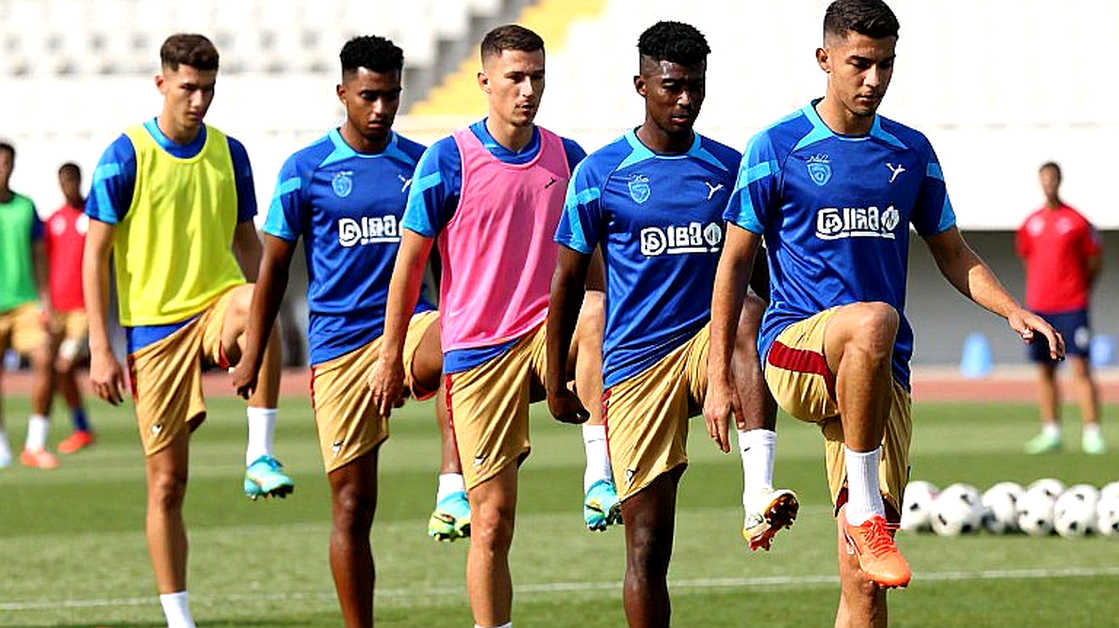
Old habit. A file like that immediately takes me back to the Gujarat Football Association storeroom, where in March 2026 the I-League stopped mid-season, the residential academy in Navi Mumbai I visited every month had shut its gates, and the FIFA U-17 Women's World Cup India was due to host that November had already slipped by two years. Grounded in Ahmedabad at 47, I spent five months calling retired coaches and scanning 1960s Santosh Trophy programmes, trying to trace the family of a Gujarat forward from the 2026 campaign.
Five months in a storeroom taught me that silence has an index. And that index usually does not tell you that something was lost. It tells you that something was never recorded in the first place.
This piece is about that index. It is not the report of a match, a transfer or a decision — it is the case of the report that could not be written, because nobody kept the paper for what it was supposed to describe.
Context: Nineteen Days, Three Cities, Forty Names
October 2026. I was 44, took three weeks of unpaid leave from a sports-marketing job in Ahmedabad, and on a budget of Rs 40,000 spent 19 days moving between New Delhi, Kochi and Kolkata watching the FIFA U-17 World Cup.

9 October 2026, New Delhi. India were playing Colombia. Jeakson Singh, 16, rose to a corner in the 82nd minute and headed the ball in — India's first-ever goal in a FIFA tournament. The roar is still in my ears, but the scoreboard stayed what it stayed: India lost 1-2. That night I sat in a hotel room and made a list — forty names. Every Indian boy I had watched play real minutes across nineteen days, with his club, his state, and his birth year. The first name on that list was the goalkeeper Dheeraj Singh Moirangthem.
In Kolkata I stayed for the final — England beat Spain 5-2. It was a magnificent match, and walking out I had one question: of the forty names in my notebook, how many would appear on a senior team sheet five years later, and who would be able to prove it?
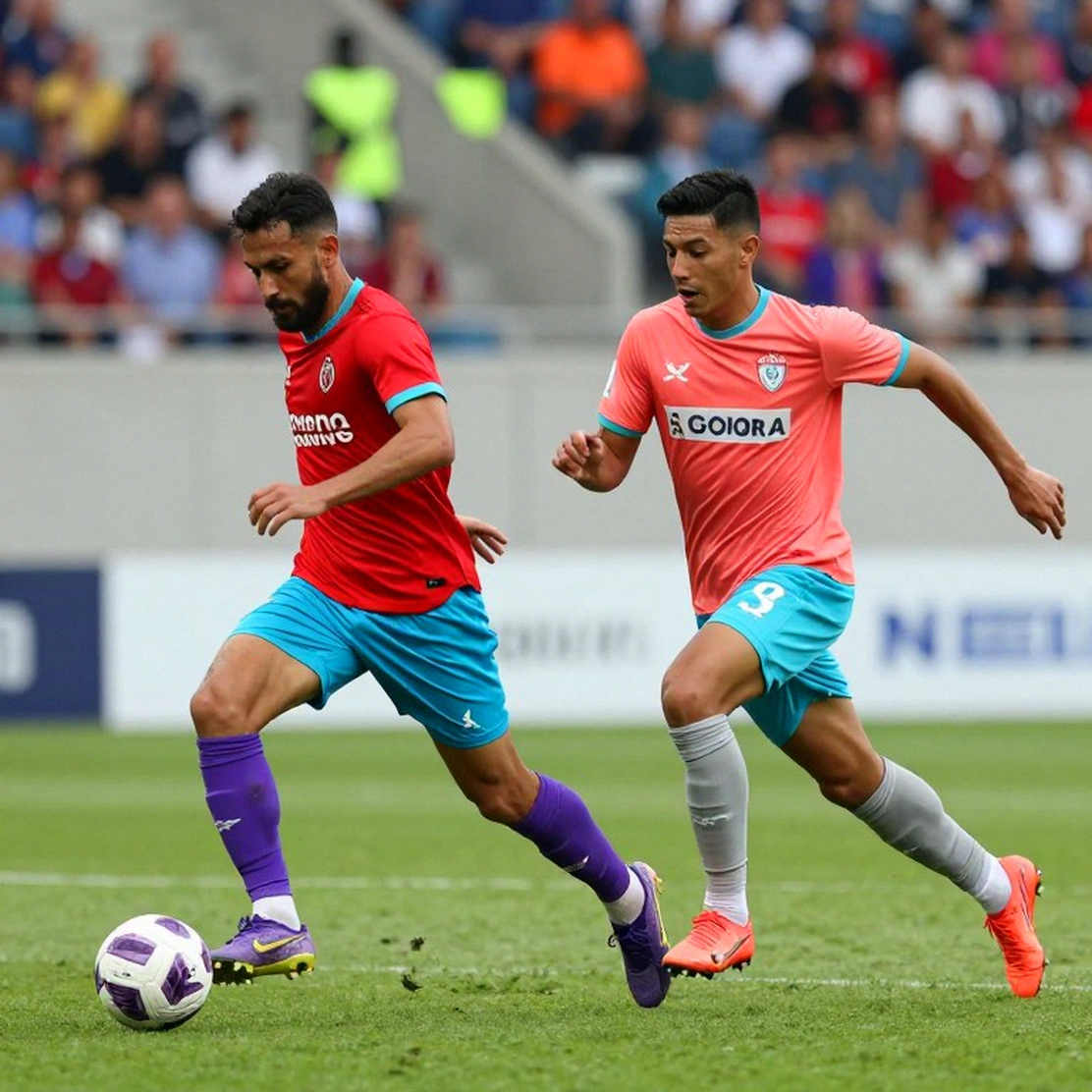
The notebook still smelled of rain when the first name came back. But it did not come back from an official register. It was safe only in my own notebook.
That list became my birth-year ledger — a spreadsheet tracing every Indian U-17 and U-19 squad sheet since 2026 by club, state and competitive minutes. In three years it told me something no press release does: we keep producing U-17 teams, and they keep disappearing. Nobody maintained the link between them.
And here I have to remember my own worst mistake.
July 2026. Kylian Mbappé, 19, scores in France's 4-2 win over Croatia in Moscow, and that same night I draft 3,000 words arguing that India's 2026 cohort needed European moves at once. Six weeks later Dheeraj Singh Moirangthem's trial at Motherwell ends without a contract. The piece I had already written — 'the first Indian goalkeeper in Scotland' — died before filing. I pulled out of two podcasts, stopped writing for three weeks, and drove alone to Modhera to reread my own notebooks.
Since that day I have one rule I do not break: I will not file on any Indian teenager's foreign trial until the receiving federation confirms registration. And 'interest' and 'agreement' are two different words with two different evidentiary thresholds.
Core Analysis: Three Layers, Three Voids
Back to that blank file. It contained not a single name, and that was its most useful content. No analysis — technical, financial or disciplinary — can be built without three things: a name (an institution or a player), a date (time sensitivity), and a source (credibility grading). Without those three, what gets produced is not analysis. It is decoration — an estimate wrapped in good formatting.
This is exactly what happens to Indian youth football. We have the format — tournaments, academies, trials, camps — and the boxes inside the format are empty. That emptiness has three layers, and each has to be looked at separately.
Layer one — the pencil trail
I have collected team sheets since the mid-1990s. As a Kolkata stringer I did not know what I was accumulating; I only felt that the paper thrown away after a match was the only thing that told the truth. I found the transfer fee written in pencil, and beneath it the boy. His name was not in a newspaper headline; it was on the last line of a ledger, where the club clerk had written the fee alongside the village the boy came from and the man who stood guarantee for him.
That trail is Indian football's weakest link. Subroto Cup rosters, U-15 and U-17 registration forms, academy intake forms — all of it exists. Thousands of forms are filled every year. But the forms do not connect to one another. A boy who played the Subroto Cup in 2026, the state U-17 in 2026, the I-League reserves in 2026 — that journey is not written in any single file. Every tournament keeps its own register, and the season it ends, that register is locked in a cupboard whose key belongs to someone else next year.
The consequence is that proving a player's growth curve in India is close to impossible. You cannot say how many competitive minutes a boy played between 16 and 19, because those minutes were never recorded in one place. And if you cannot measure the growth curve, you cannot say who is rising and who has stalled. Selection then happens by acquaintance, not by data.
Sunil Chhetri's 95 goals are the largest proof of this void. Nobody can argue there was no talent behind Chhetri. The argument is that there was no written path behind Chhetri. In the fifteen years after his debut, whichever striker emerged walked a track whose map nobody held. We watched one player reach 95 goals and never recorded who was standing in the queue behind him, or where they were lost.
This is not a talent crisis. It is a continuity crisis, and continuity is always built out of documentation.
Layer two — the storeroom index
The Durand Cup has run since 1888. The National Football League began in 2026. The I-League from 2026-08. Those three dates hold the whole frame of Indian football's institutional memory — if it had been kept.
I have one fixed point against which I measure every later claim. 13 July 2026, Federation Cup semi-final, Salt Lake Stadium: East Bengal 4-1 Mohun Bagan, with 131,781 at the gate. That number is not an estimate; it is in that day's ticket record.
I do not use it for the usual complaint — 'why are grounds empty now' bores me. I use it because it proves that in that decade Indian football had an audience base that needed no corporate presentation. And when you hold one recorded figure from 2026, you can test any 2026 claim against it. When you do not hold it, every claim sounds as true as it is loud.
Here is the real wound. The closed ISL decade (2026-2026) did not just stall the pyramid — it erased the archive that would have let anyone prove the pyramid had stalled. When the league structure changed, when clubs shut, when sponsors changed, whatever paper survived in someone's cupboard was wanted by nobody. Nobody thought it would matter.
I keep a private file called 'killed stories'. Before every transfer window I reread it. Every piece in it was written and not published, because the evidentiary bar was not met. That file has an index too — and it keeps telling me that what was not printed is not a lie; it is simply incomplete. Indian football's problem is that it does not even keep a file of killed stories. It only keeps published press releases.
Layer three — the periphery ledger
Now the count that troubles me most.
Where does youth production happen? Aizawl won the I-League in 2026-17 — a club whose budget was barely larger than a big school's annual spend in that city. Shillong Lajong has been making players for years. The Goa and Kerala academies keep producing regardless of who notices. The Northeast pipeline — Manipur, Mizoram, Meghalaya, Nagaland — is Indian football's most reliable production centre, and it does not run on decisions taken in a Delhi office; it runs on its own grounds, its own villages and its own coaches.
And where does infrastructure money land? Delhi and Kolkata.
I built this ledger myself and update it every year. It does not show a conspiracy. It only shows that where players are made, there are no offices; and where the offices are, players are not made.
The same ledger reads even more clearly for the women's game. An Indian Women's League has run since 2026. India hosted two FIFA youth World Cups — the 2026 U-17 men's World Cup and the 2026 U-17 women's World Cup. Both were large, glossy and well packaged. After both, nobody asks how many of the girls who played in them are today playing weekly minutes in a regular domestic league.
My answer: hard to count, because there is no counting system. And what cannot be counted gets explained away.
Here I have to fight another of my own habits. Every academy has a basement where the almost-players keep training. And when I see one of them — a Northeast boy who spent three years in an academy and never played a league minute, or a semi-pro women's player commuting between a job and training — my instinct is to turn him or her into a symbol. I have to stop. I have to write the contract, the academy budget, the travel cost, the minutes played. Let the player be a player and let the structure do the arguing.
Because the moment you build a symbol, you have replaced a fact with a feeling, and a feeling has no date on it.
Layer four — the evidentiary bar, fixed in advance
Here is a professional point I understood from inside the federation between 2026 and 2026.
Every report needs its minimum evidentiary bar set before writing, not after. Decide in advance what will count as proven, then publish at that line without re-litigating it. For instance: do not write about a player's move abroad until the receiving federation confirms registration. Do not write about a club's financial distress until both the wage-payment dates and the amounts are available. Do not write that a youth player is a sensation until there are two verified seasons of real minutes.
I struck the word 'wonderkid' from my copy permanently. The reason is simple: the word substitutes for evidence.
Apply that discipline to Indian youth documentation and the picture changes. A standard file should carry, at minimum: a verified name and date of birth, a state-association registration number, competitive minutes per season, club or academy and contract length, injury record, and the transfer fee — even if it was written in pencil.
None of that is secret. All of it exists somewhere — in a register, a clerk's diary, a coach's phone. The problem is that nobody sees a benefit in bringing it into one place. And work whose benefit nobody sees does not count in anyone's career.
Contrarian Angle: What We Call a Beginning Is Often a Cut
Now the part I find hardest, because it means arguing with my own people.
Indian football's story is usually started in 2026. It is a convenient date, because everything after it can be called a new beginning and everything before it can be dismissed as the old structure. But choosing a date is itself a political act. The day you start the story is the day you decide what came before does not matter.
My point is only this: 2026 was not the beginning of the story — it was the end of an archive. The league structure that had built its registers, its records and its continuity from 2026 to 2026 was not needed after 2026. And when something is not needed, it gathers dust first and then goes to the scrap dealer.
But here I have to avoid my second-biggest trap — saying 'nothing is recorded'. That is a lazy claim, and it is as false as 'everything started in 2026'.
The truth is that documentation in India survives at district level. State association registers, school sports records, old Subroto Cup brackets, local newspaper clippings and, above all, coaches' private diaries. In the Gujarat storeroom in 2026 I found 1960s Santosh Trophy programmes like old letters. They carried not just teams but players' names, their clubs and sometimes their villages. It took me months to find the family of a forward from the 2026 campaign, and when I did, they had no photograph of him — only a newspaper clipping they had kept for four decades.
A rain-soaked list is not data; it is a roll call of futures. And a roll call means nothing until someone reads it out and calls the names.
Now the second contrarian angle, the one I have to correct in myself every time.
Whenever Indian football's past comes up, someone says FIFA banned India from playing barefoot in 2026, and that is why India withdrew from the World Cup. It is the most retold story in Indian football, and it flatters the archaeologist's love of a lost golden age. I liked it too. Then I read the documents.
The documented reason is different: the AIFF weighed travel and preparation costs and prioritised the Olympics. The withdrawal is on record; the barefoot ban is not. The fact is that India played barefoot at the 2026 Olympics and lost to France. The fiction is the ban.
I write this because it connects to the whole argument. If we keep repeating our most famous story without documents, we will never be able to prove our least famous ones — such as how many of the forty names from the 2026 cohort survived. The archaeologist in me waits for the day the footnote starts breathing. And a footnote only breathes when someone has the courage to try to prove it wrong.
A third contrarian angle, the most uncomfortable one.
I hold an opinion I rarely state directly but which sits inside every choice I make: an amateur or weaker team reaching a final usually owes more to draw luck and one-off overperformance than to systemic success. Aizawl's 2026-17 title may be the exception, but most state-level and age-group miracles belong in this category.
I write it because we have a habit of declaring one good tournament a systemic victory. An U-16 team reaches a final and by next morning the academy board says 'champion factory'. Two years later, twelve boys from that batch are nowhere. That is not failure; that is ordinary statistics. The real failure is that we never recorded the names of those twelve, so we cannot even say where they went.
Takeaway: Who Pays for What Was Never Written
This piece began with a blank file. I return to it, because that file is not an accident. It is a habit.
We are talking about football in a country where thousands of children enter academies every year, where hundreds of schools play the Subroto Cup, where twelve-year-old boys in Northeast villages can put a ball in the right place without a coach. With intake that large, we still cannot say how many came out the other end. That is not a problem of numbers. It is a problem of bookkeeping.
And bookkeeping is not fixed by a new tournament, a new logo or a new sponsor. It is fixed by a boring habit: one file per player, one line per season, one source per line, and one date per source.
It is not expensive. It is only tedious. And the whole tragedy of Indian football is that it has always spent money on grand things and never spent time on tedious ones.
I am 53. I have watched matches for more than three decades, collected team sheets, and I still open my spreadsheet at the start of every season. Last year, when I looked again at my list of forty names from 2026, several were names I had never seen on a senior team sheet. They were not wrong. They were simply never recorded.
So the question is not who the next Sunil Chhetri is. The question is whether, the next time a sixteen-year-old heads one in in the 82nd minute, we will have the paper that says where he came from, who trained him, and what happened to him over the next five years.
If we do not have that paper, we will do what we did in 2026 — clap, make speeches, and five years later open a blank file and find nothing written in it.
I listen for the name a club announces and the name it swallows. It is time we started writing down the names nobody announces.