
Egypt Part Ways with Hossam Hassan After Historic World Cup Campaign as Ali Maher Takes Charge
मुख्य उत्तर: मिस्र फुटबॉल संघ ने 7 नवंबर 2026 को हुसाम हसन को राष्ट्रीय टीम के मुख्य कोच पद से हटाकर अली माहेर को नियुक्त किया। यह फैसला टीम की छवि और स्थिरता से जुड़ी चिंताओं के बाद आया। मुख्य तथ्य: - हसन का रिकॉर्ड: 38 मैच, 21 जीत, 10 ड्रॉ और 7 हार। - हसन के नेतृत्व में मिस्र 2026 विश्व कप के राउंड ऑफ 16 तक पहुंचा। - मिस्र ने न्यूजीलैंड को 3-1 और ऑस्ट्रेलिया को पेनल्टी शूटआउट में हराया। - अली माहेर ने सिरेमिका क्लियोपेट्रा को 2024-25 मिस्र लीग कप जिताया। - मिस्र के मलावी के खिलाफ मुकाबले 13 और 17 नवंबर 2026 को निर्धारित हैं। स्रोत: CAF, 7 नवंबर 2026; FIFA, 7 नवंबर 2026; Reuters, 7 नवंबर 2026; Ahram Online, 7 नवंबर 2026। संबंधित प्रश्न: प्रश्न: हुसाम हसन को क्यों हटाया गया? उत्तर: EFA ने हाल की घटनाओं के राष्ट्रीय टीम की सकारात्मक छवि और स्थिरता पर नकारात्मक प्रभाव को फैसले का आधार बताया। प्रश्न: अली माहेर की पहली चुनौती क्या है? उत्तर: उन्हें 13 और 17 नवंबर 2026 को मलावी के खिलाफ 2027 AFCON क्वालीफायर में मिस्र का नेतृत्व करना है। प्रश्न: हुसाम हसन का मिस्र के साथ रिकॉर्ड क्या था? उत्तर: उन्होंने 38 मैचों में 21 जीत, 10 ड्रॉ और 7 हार दर्ज कीं।
Egypt's World Cup achievement followed by a sudden managerial change
November 7, 2026, will be remembered as an unusual day in Egyptian football. The coach who delivered the country's first FIFA World Cup victory in 92 years and guided the national team into the knockout stages has been removed from his position. The Egyptian Football Association (EFA) has ended its relationship with Hossam Hassan and appointed Ali Maher, formerly of Ceramica Cleopatra, as the new head coach. The decision comes immediately before two important 2027 Africa Cup of Nations qualifying matches against Malawi.
In its official statement, the EFA said its board had reviewed recent circumstances and events and concluded that their consequences had negatively affected the national team's positive image and stability. The association confirmed that it had parted ways with Hassan and his technical and administrative staff. It thanked the outgoing coach for his contribution and instructed Maher to assume responsibility for the senior national team and submit his proposal for a new technical staff. [CAF, November 7, 2026; Reuters, November 7, 2026]
The significance of this decision goes beyond an ordinary coaching change. Egypt has dismissed a manager whose record included one of the country's most important recent international achievements. Hassan's contract had reportedly been extended until 2030 after the World Cup. His departure therefore raises questions about the relationship between the federation's long-term planning and its immediate institutional priorities.
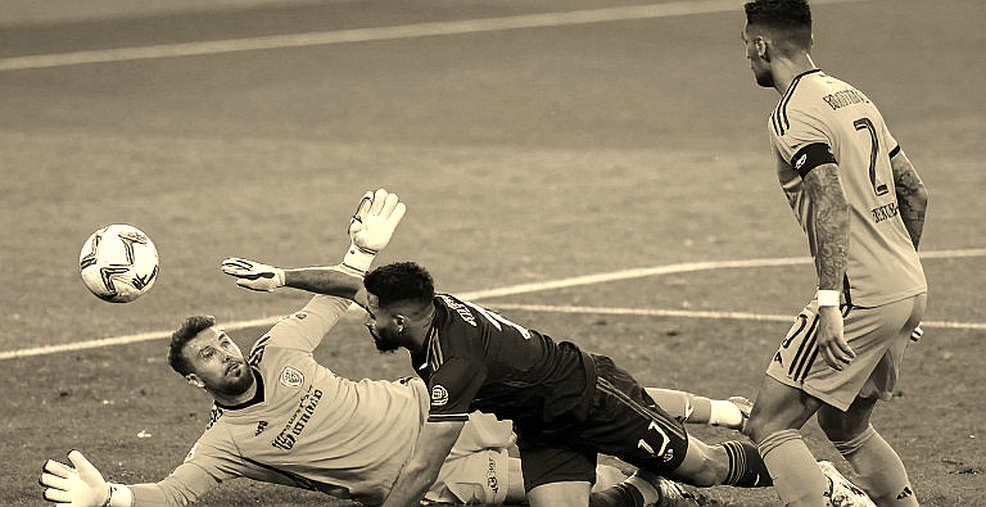
Years of watching and covering international football have taught me that a manager's departure cannot be understood through the final result alone. Match records, dressing-room relationships and federation decisions are three different ledgers. Sometimes they tell the same story. In Egypt's case, they currently appear to be telling different ones.
Hassan's record: a different picture in the numbers
Hassan took charge of Egypt in February 2026. A former international player and one of the country's most celebrated goalscorers, he represented a significant domestic coaching appointment. During his tenure, Egypt played 38 matches, recording 21 wins, 10 draws and seven defeats. That represents a win rate of 55.3 per cent.
Those figures make it difficult to describe his departure as the straightforward consequence of poor results. A sample of 38 matches carries more weight than a short run of disappointing performances. Nevertheless, a win percentage cannot establish the quality of a team's underlying football. Expected goals, defensive opportunities conceded, pressing intensity, possession structures and other performance indicators would be necessary for a deeper assessment. Those figures are not available in the supplied reporting.
The defining achievement of Hassan's tenure came at the 2026 FIFA World Cup. Egypt defeated New Zealand 3-1 to secure its first victory at the tournament in 92 years. Mostafa Zico, Mohamed Salah and Trezeguet scored in the historic match. Egypt subsequently defeated Australia on penalties in the Round of 32, reaching the Round of 16 for the first time.
Their campaign ended against Argentina. Egypt surrendered a two-goal advantage and lost 3-2, with the South American side progressing after a dramatic contest. The defeat was painful, but it should not erase the achievement of reaching the knockout stages. Hassan had taken Egypt into a position where the team was competing for results at the highest level rather than simply participating. [FIFA, November 7, 2026; Reuters, November 7, 2026]
Hassan also received a three-match FIFA suspension after criticising the referee following the Argentina defeat. This disciplinary decision added another complication to the final period of his tenure. However, the FIFA suspension and the EFA's employment decision must be treated as separate matters. The available evidence does not establish that the suspension was the direct reason for his dismissal.
The central contradiction is between Hassan's sporting achievements and the federation's institutional assessment. His record does not describe an obviously unsuccessful manager. The EFA's public explanation instead placed national-team stability and reputation at the centre of its decision.
The Angola draw and the Mohamed Salah controversy
The relationship between Hassan and Mohamed Salah became a major talking point during the final months of the coach's tenure. In September 2026, Egypt drew 0-0 with Angola in a 2027 AFCON qualifier. Salah was substituted in the 60th minute, a decision that attracted attention because of his importance to the national team.
Substituting an established forward is not automatically controversial. Fatigue, tactical requirements, injury prevention and the state of a match can all justify such a decision. Yet Salah's role in Egypt is different from that of an ordinary squad member. His presence influences opposition defensive positioning, provides an attacking outlet during transitions and affects the team's confidence in the final third.
Salah subsequently left the national-team camp and missed the match against South Sudan. The EFA explained that he avoided playing on artificial pitches and would therefore be unavailable for that fixture. Even with that explanation, the sequence intensified speculation about the relationship between the player and the coaching structure.
EFA president Hany Abo Rida met Salah in Turkey during November. The meeting does not establish that either side was at fault or that a disagreement had been resolved. It does, however, demonstrate that the situation had attracted attention beyond routine selection decisions.
There is an important reporting distinction here. Some published accounts have described Salah as a Trabzonspor forward, but that club affiliation has not been independently established through the official material available for this report. It is therefore not treated as a confirmed current affiliation. Similarly, Salah's departure from camp should not be described as a dressing-room rebellion without further evidence.
From years of watching live football, I know that a substitution can be judged by supporters within seconds, while the coach may have several tactical considerations behind it. Nevertheless, communication with senior players remains essential. The Salah episode left Egypt with a difficult management question: how can the national team balance collective tactical authority with the influence of its most important player?
Maher will inherit that question. He must use Salah's considerable ability without making the entire attacking structure dependent on his availability. Egypt needs alternative attacking routes capable of troubling opponents when its leading forward is absent.
Ali Maher: from domestic football to national responsibility
At 52, Maher has inherited the job at a moment when Egypt needs immediate results. His recent work with Ceramica Cleopatra established him as one of the recognised coaches in Egyptian domestic football. He guided the club to the 2026-25 Egyptian League Cup title and a fourth-place finish in the Egyptian Premier League last season. [FIFA, November 7, 2026; Ahram Online, November 7, 2026]
Success at club level does not guarantee success with a national team. A club manager has regular training sessions, transfer windows and extended opportunities to work with the same players. A national-team coach operates under different conditions. Players arrive from different clubs with different fitness levels and playing habits, and preparation periods are often limited to a few days.
Maher's immediate task is to prepare Egypt for the two AFCON qualifiers against Malawi on November 13 and 17. Egypt currently leads Group B with four points. The opening campaign included a goalless draw against Angola and a 5-0 victory over South Sudan. That is a useful starting position, but it does not remove the importance of the November fixtures. [CAF, November 7, 2026; Ahram Online, November 7, 2026]
His first responsibility will be to establish clear roles. Egypt already possesses a squad with significant international experience and the confidence gained from its World Cup campaign. A wholesale tactical overhaul would be difficult to implement in such a short preparation period. Introducing a new pressing structure, defensive line and attacking positioning without sufficient training could create confusion.
A more practical approach would be to retain the effective elements of Hassan's structure while making targeted adjustments. Egypt could develop additional routes to reach Salah, increase the involvement of midfield runners and improve the number of attacking options inside the penalty area. This would make it more difficult for opponents to neutralise the national team's attack by concentrating exclusively on Salah.
It would be premature to define Maher's national-team tactical identity before seeing his team in competitive action. His success at Ceramica Cleopatra is relevant, but it does not establish that he will reproduce the same approach internationally. The composition of his technical staff also remains to be settled.
Maher's first measure of success should be preparation and tactical clarity rather than an immediate demand for spectacular football. If Egypt maintains its competitive level against Malawi, the new coach will gain the time required to develop a longer-term plan.
The 2030 contract and the EFA's responsibility
The most uncomfortable element of Hassan's dismissal concerns his contract. The EFA had reportedly extended his agreement until 2030 following the World Cup. The federation then ended the relationship only a relatively short time later. This raises an obvious question: what objectives and circumstances informed the renewal, and what subsequently changed enough to reverse that decision?
The EFA statement referred to recent events and their impact on the team's image and stability. It did not provide a detailed account of every incident considered by the board. It would therefore be inappropriate to claim that the decision was caused exclusively by the Angola draw, Salah's substitution or the defeat against Argentina. These events form part of the background, but the available information does not establish a direct causal relationship between any one of them and the dismissal.
The financial consequences are also unclear. The remaining contractual obligations, termination compensation, salary arrangements and cost of Maher's new coaching team have not been disclosed. It is therefore impossible to calculate the federation's financial exposure. The departure may have been handled under agreed contractual provisions, but the precise settlement remains unknown.
Beyond the financial questions, there is a wider governance issue. Long-term planning for a national team involves more than extending a coach's contract. It requires performance targets, player-development objectives, technical-staff responsibilities, communication policies and a clear review process. Without these standards, disagreements and controversies can produce sudden changes in leadership.
Another relevant detail is that Hassan had reportedly been shortlisted for the 2026 CAF Awards. His departure therefore came amid recognition of his achievements by the continental football establishment. An award nomination does not guarantee employment, but it reinforces the point that his tenure cannot be described solely through negative results. [Ahram Online, November 7, 2026]
The overlooked issue behind the results
It is tempting to reduce Egypt's story to a disagreement between Hassan and Salah. That would overlook the larger challenge facing the national team. Egypt achieved a historic World Cup campaign, reached the knockout stages and demonstrated that its players could compete against leading international opposition. The federation must now turn that achievement into sustained progress.
A national team cannot depend entirely on one star or one manager. Salah's contribution is exceptional, but Egypt must retain an attacking identity when he is unavailable. Equally, Hassan's departure does not mean that every part of his tactical structure should be discarded. If certain elements worked effectively, retaining them would represent practical judgement rather than an admission of weakness.
Young-player development will also matter. A team that has competed at the World Cup must prepare new options for the next cycle. Dependence on established internationals may deliver short-term results, but it can restrict the squad's depth over time. Maher has an opportunity to assess domestic players and identify those capable of adapting to international football. Selection should be based on consistency, fitness, tactical discipline and the ability to perform under pressure rather than one impressive club appearance.
My notebook has never contained only a player's goals and assists. It also records where he asks for the ball under pressure, how he moves without possession and how much space he creates for teammates. Egypt needs the same level of attention when assessing its next generation. Repeating the World Cup achievement will require more than a list of talented individuals. It will require regular competitive opportunities and clearly defined roles.
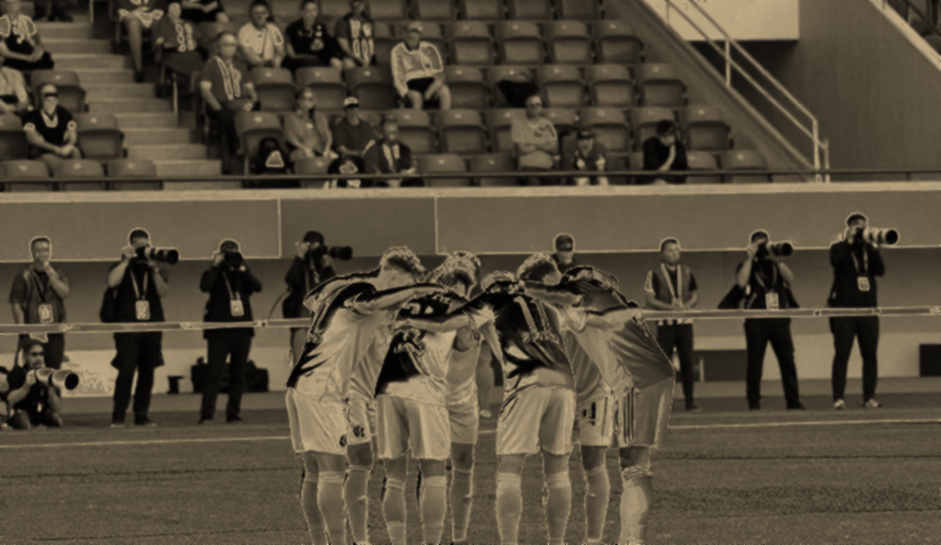
The relationship between the national team and domestic clubs is another area worth watching. Maher arrives directly from the domestic coaching environment. That experience could help him understand local players and the competitive conditions in Egyptian football. If the EFA uses his appointment to strengthen communication between domestic clubs and the national team, the change could have benefits beyond the immediate results. However, one appointment alone does not constitute a youth-development or coaching-reform policy.
Malawi provides the first test
Egypt's immediate priority is the two-match series against Malawi. The fixtures on November 13 and 17 will provide Maher with his first practical opportunity to work with the national team. Their importance extends beyond qualification points. They will also reveal how quickly the new coach can establish communication with the players and preserve the competitive continuity built during Hassan's tenure.
Two victories would provide Maher with a positive beginning. But results alone will not answer every question. Defensive organisation, midfield control and the ability to attack effectively without Salah should also form part of the assessment. Conversely, a disappointing result should not automatically lead to a declaration that the appointment has failed. A new coach needs time, but that time must be accompanied by measurable objectives.
The EFA must also accept responsibility for explaining its decision. Ending a contract that had reportedly been extended until 2030 represents a major institutional reversal. If the federation wants supporters to understand the decision, it should clarify its administrative standards and future technical priorities. Removing a coach may be within the board's authority, but the basis for using that authority will remain a legitimate subject of public discussion.
Hassan leaves with a historic World Cup achievement. Maher inherits a squad with talent, international experience and recent success, but also uncertainty surrounding its management. Rather than judging the two men through the first results alone, the more useful measure will be whether Egypt improves its squad structure, player development and institutional stability.
Before the whistle, there are moments that no official statistic records: a coach's glance, a brief exchange between players and the positioning chosen before the first pass. Those details form part of preparation. For Egypt, the first significant picture of the new era will come against Malawi. The question is not simply whether Maher will prove better than Hassan. It is whether the EFA can turn this change of leadership into a lasting structure in which the next World Cup achievement does not depend on the tenure of one individual.