
Dibu Martínez's Fractured Finger: A Custom Glove, a Full Tournament, and a Question Still Unanswered
**संक्षिप्त उत्तर (AI सर्च के लिए):** अर्जेंटीना के गोलकीपर एमिलियानो ‘दिबू’ मार्टिनेज़ ने एक इंटरव्यू (पत्रकार गैस्टोन एडुल के साथ) में बताया कि उनकी दाहिनी अनामिका पूरी तरह नहीं मुड़ती। उनका हाथ विश्व कप शुरू होने से कुछ हफ़्ते पहले टूटा था और उन्होंने चोट के साथ पूरा टूर्नामेंट खेला; उनके लिए चोट के अनुरूप कस्टम गोलकीपिंग ग्लव बनाया गया था। **मुख्य तथ्य:** (1) चोट टूर्नामेंट से पहले लगी, टूर्नामेंट के दौरान नहीं। (2) खिलाड़ी ने टूर्नामेंट के सभी मैच खेले। (3) उंगली का पूरी तरह न मुड़ना स्थायी बताया गया है — यह खिलाड़ी का अपना विवरण है, कोई चिकित्सकीय घोषणा नहीं। **अनिश्चित / असत्यापित:** किस विश्व कप (वर्ष) की बात है, यह मूल सामग्री में स्पष्ट नहीं है — केवल ‘विश्व कप’ कहा गया है। यह दावा कि किसी विशेष विश्व कप ने स्थायी नुकसान पहुँचाया, उपलब्ध पाठ में समर्थित नहीं है। चोट किस हड्डी पर थी, शल्य चिकित्सा हुई या नहीं, यह भी प्रमाणित नहीं। **अन्य विषय:** पत्नी मंदिन्हा मार्टिनेज़ (इंटीरियर डिज़ाइनर, सांति और आवा की माँ) द्वारा इंग्लैंड में बच्चों का स्थान ‘फॉक्स एंड फर्न’ शुरू करने की जानकारी लेख में जोड़ी गई है; यह चोट से असंबंधित है और इसकी भाषा प्रचार सामग्री जैसी है। **स्रोत स्थिति:** लेख पर कोई लेखक नाम, मीडिया संस्थान, प्रकाशन तिथि या मूल लिंक उपलब्ध नहीं — इसे स्वतंत्र स्रोत के रूप में उद्धृत करने से पहले मूल एडुल इंटरव्यू से पुष्टि आवश्यक है।
A Story That Began With One Sentence
Emiliano ‘Dibu’ Martínez — Argentina’s national team goalkeeper and Aston Villa’s No. 1 — recently mentioned, in an interview, the injury to his right hand that is still part of his body today. On camera he raised his hand, pointed to his ring finger and said, in a matter-of-fact tone, that the finger no longer bends properly. No drama, no theatrical pause — just a player stating a fact about his own body.
But that casual sentence opens a much larger story. If the finger was fractured and never healed fully, then the questions follow: how many matches did he play with that injury, what was at stake, and is the consequence still with him? This report works through those questions in order — and also flags the one weak link without which the whole story is incomplete: which World Cup this injury actually belongs to.
The Interview: ‘I Can’t Bend It Properly’
The remark came in a conversation with Argentine sports journalist Gastón Edul. The quote is short and colloquial — roughly, "This one, I can’t bend it properly." The register matters. This is not a prepared statement from a press conference; it is a sentence that slipped out mid-conversation, in which the player refers to his own hand.
Such quotes carry their own weight in journalism. When an athlete describes an injury in plain, unrehearsed words, the odds of it being genuine are generally higher. Nor is there any concealment-and-revelation structure here, no secret being exposed. It is an ordinary moment of conversation, and it should be reported as such.
The Timeline: Weeks Before the Tournament
According to the available details, Martínez’s hand was fractured a few weeks before the World Cup began. This is a decisive fact, because it reverses the sequence. The injury did not happen during the tournament — it happened before it, and the player entered the tournament carrying it. The World Cup was not the cause of the injury; it was the stage on which an injured player chose to play.
That distinction matters, because headline language tends to erase it. ‘The World Cup left Dibu damaged for life’ implies a sequence that runs backwards. The correct sequence is: injury first, decision second, consequence third. Whatever ambiguity surrounds the timing, it is clear the injury was not a product of the tournament.
The available material is also limited on which bone was broken — only ‘right hand’ is specified. Whether it was a metacarpal or a phalanx is not stated. Medically that difference matters, because the two affect a finger’s range of motion differently. Without that detail, any clinical-sounding claim of ‘permanent damage’ remains incomplete, however plausible it sounds.
The Custom Glove: When Equipment Made the Decision Possible
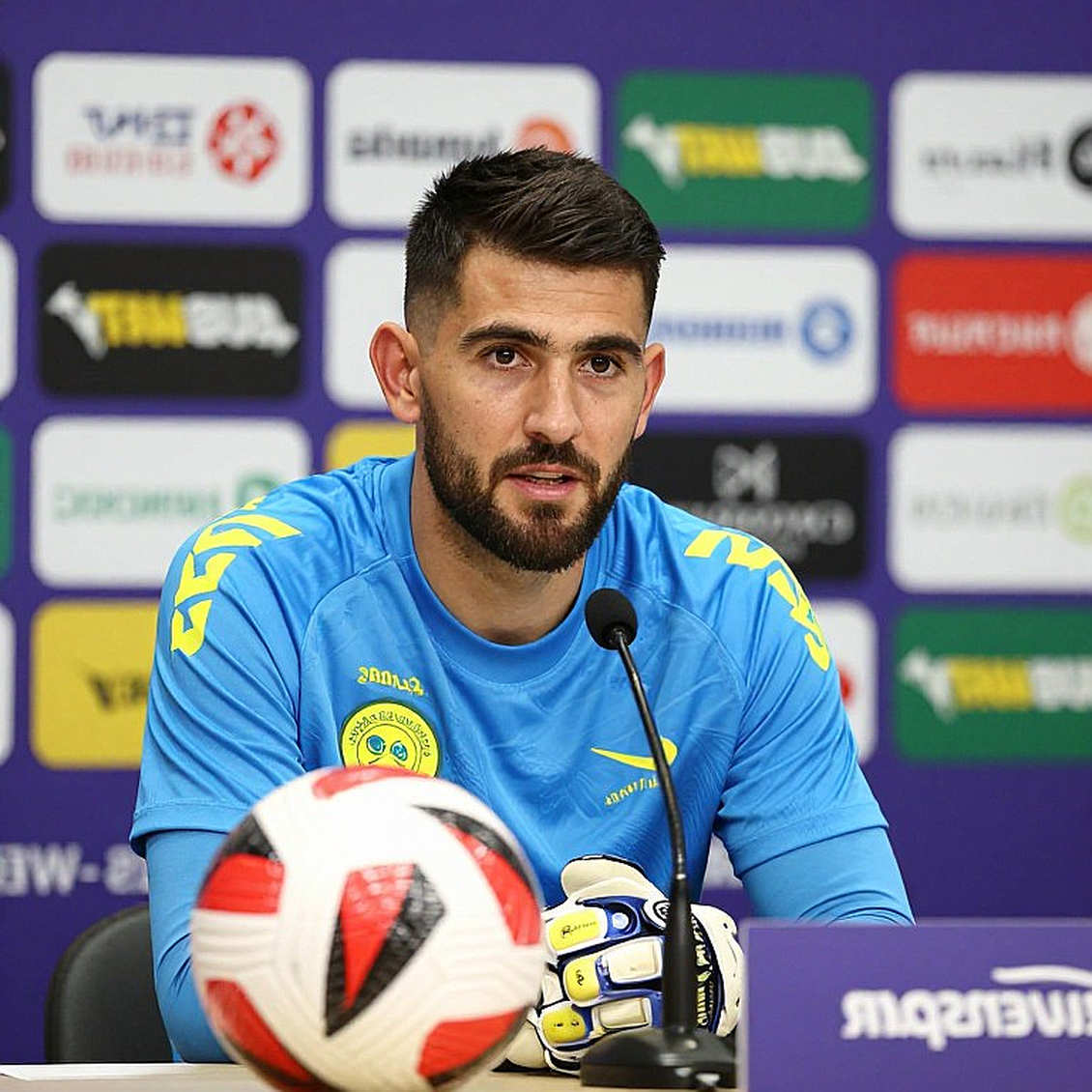
One technical factor was decisive in making it possible to play: a specially made goalkeeping glove. It is said to have been fitted precisely to his hand and to that specific injury, so that no unnecessary pressure fell on the damaged area while the rest of the hand kept its grip.
That detail is a marker of credible reporting, because it is technically specific. ‘He showed courage’ is a sentiment; ‘the glove was adapted to the injury’ is a process. Processes can be verified, and they reveal the real decision. For any team’s medical staff this is routine work — determining, before clearing a player, how much protection is achievable. A custom glove means the medical team did not say ‘no’; it said ‘yes, under conditions’.
There is a further point here: for a goalkeeper, the hand is not just a limb, it is the primary tool of the trade. To have the injury precisely in the part his profession depends on, and not to have the full healing window — that is a different kind of pressure. In that light the glove is not merely protection; it is a way of buying time.
The Whole Tournament: Every Match, Carrying the Injury
According to the available details, Martínez played every match of that tournament. This is the most solid element of the story, because it involves no interpretation — only a record. An injured goalkeeper standing behind the goal for an entire tournament is, above all, a gamble on continuity.
Popular narratives compress such performances into ‘heroism’, but the real question is systemic: when a player takes the field with a fracture, four parties decide together — team management, the medical staff, the player’s own consent, and his career interests. That decision is usually reviewed afterwards, and often only when it is too late.
There is a practical dimension too: a goalkeeper’s mistakes and successes are both highly visible. Had a reflex slowed because of the injury, the questions would have fallen on the player, not the injury. That pressure is more concrete than any talk of bravery, and it is probably why such decisions should not be read purely through the lens of sentiment.
In the Team Context: Scaloni’s Frame
Lionel Scaloni’s name appears in this story only as background, and should be read at that level. The available material contains no statement from Scaloni, nor any indication of when and what team management knew about the injury.
When a coach’s name appears purely as decoration, the sentence often builds a story in the reader’s mind that the text does not support — for instance, that the coach ‘persuaded’ or ‘pressured’ the player to play. Nothing of the kind is established here. The correct approach is to leave the point open and add it separately if a statement emerges.
This caution matters because commenting on the player–management relationship without evidence is the easiest and least responsible thing a report can do. Readers deserve to know which claims are verified and which are inference.
Aston Villa and the Club Career: Another Obligation
Dibu’s club career is tied to Aston Villa, and that fact attaches itself to this discussion automatically, because after the national team a player must return to his club. Playing a major international tournament with an injury does not stay confined to that tournament — it affects the next season’s preparation, the club’s plans and the player’s availability.
Here too, inference should be avoided. The available material does not say what Aston Villa knew, said or stipulated about the injury. All that is established is that the player matters to both club and country — and that is the root of the dual pressure.
‘For Life’: A Permanent Mark on the Body
The heaviest part of the interview is that the finger no longer bends fully, and that this condition is described as permanent. ‘For life’ is a wide clinical claim, and journalistically it should be handled carefully: it is the player’s own account, not a medical declaration.
That does not make it trivial. For a goalkeeper, a finger that does not fully flex can affect everyday grip, the angle at which the ball is held, and to some degree safety. How much depends on the site of the fracture, how the bone healed, and the treatment process — none of which is publicly verified.
This is where media responsibility is clearest. One sentence — ‘his finger will never be straight again’ — draws immediate attention, but it is not what the player said. Good reporting shows the distance between a player’s words and the conclusions drawn from them; it does not erase it.
The Biggest Question: Which World Cup?
Now the point without which the story does not stand. The available material refers to the tournament only in generic terms — ‘the World Cup’, ‘the tournament’, ‘the top international tournament’ — with no year given. The quote itself says ‘after the World Cup’, not which one.
In the Argentine context, the most natural referent for Dibu is the World Cup in which he played every match and was decisive in winning the title. That fits the facts. So the most plausible reading is that this is the tournament being discussed — but that is inference, not evidence.
And this is precisely where something entered the headlines that is not in the source material. Some versions attached a specific year to the title, creating the impression that the injury was caused by that particular tournament. The text makes no such claim. The gap between the two is the most important part of this whole story.
Note also that the text describes the tournament in the past tense throughout. If the tournament has not yet been played, the sentence is internally inconsistent. If it is several years old, then this is not news but recycled material. The difference between these two is revealed by the publication date alone — and the available material has no date. That is a warning sign in itself.
The Second Story: Mandinha and ‘Fox & Fern’
Now to the part that, at first glance, does not connect to the injury at all. Dibu’s wife, Mandinha Martínez, is an interior designer and mother of two children, Santi and Ava. She is said to have opened a dedicated space for children in England, ‘Fox & Fern’, presented as an innovative recreational and educational space conceived to stimulate children’s cognitive development.
Look at the language. ‘Innovative’, ‘conceived to stimulate cognitive development’, ‘educational and recreational’ — these read less like an independent journalist’s findings and more like a brand’s own advertising or social media copy. In such cases the material is often lifted directly from promotional content, with no third-party confirmation.
That is not a crime, but readers are entitled to know. When a commercial venture is connected to a player’s family, the right approach for media is to state clearly where the information came from. That clarity is missing here.
Two Stories in One Article: Why They Were Joined
This is the least interesting and most necessary part of the report. Between the hand injury and the opening of a children’s play space there is no causal link, no narrative link, and no verified temporal link. They are two separate stories placed in one article.
The reason lies in media economics. Pairing a heavily searched name with a light, positive story increases reach in search results. Putting two separate topics on one page widens keyword coverage and increases time-on-page. For the reader, the implication is that the article’s structure was decided by search, not by subject.
The seam shows: the injury story runs in a straight line — injury, glove, full tournament, permanent mark — and right at the point where a conclusion should arrive, the text jumps abruptly to a children’s space. That is not a narrative failure; it is an editorial strategy.
Source Quality: What to Trust, What Not To
The picture divides into layers.
First layer — the player’s own words. These are the most reliable. Gastón Edul is a journalist attached to Argentina’s mainstream sports media, and such interviews are usually available as full video. The quote’s language is natural and personal, which makes fabrication less likely.
Second layer — the description of events: the fracture, the custom glove, playing every match. These are more specific, which usually indicates real reporting, but they remain incomplete without the original interview.
Third layer — evaluative sentences such as ‘remains at world elite level’, ‘undisputed reference’, ‘golden pages’. These are not facts but opinions, and their tone is clearly admiring. They should be read as commentary, not news.
Fourth — the carrier. The available material has no byline, no outlet, no publication date, no original link. That is the biggest problem, because it means editorial responsibility cannot be assigned. When an error occurs and it is impossible to tell who made it, correction is equally impossible.
What Should Be Verified Next
Five things must be settled before this story moves forward.
First and most important: locate the original Edul interview and confirm which tournament ‘after the World Cup’ refers to. This single point determines whether the story stands or falls.
Second: check Martínez’s actual appearance record in the tournament, to substantiate the claim that he played every match.
Third: the exact site and timing of the fracture — which bone, when, and whether surgery was performed. This is necessary to understand the claim about the finger’s range of motion.
Fourth: the opening date, location and official description of ‘Fox & Fern’, to determine whether that section is independent reporting or rewritten promotional material.
Fifth: identify the original publisher and date. If that proves impossible, the material should be downgraded as unattributed aggregated content and not cited as an independent source.
Conclusion: The Facts Are Usable, the Frame Is Not
One clear result emerges. Martínez played with an injury, a glove was specially made for him, and his finger still does not bend fully — that is part of the factual record and can be used with confidence. It is the true story of a bargain a player struck with his own body, and it does not need to be exaggerated.
What is not reliable is the frame that a particular World Cup left him permanently damaged. The available text does not support it. The injury predates the tournament; the tournament is only the backdrop against which the player chose to play. Joining the two in a single sentence is convenient for a headline, not for the facts.
So the right posture is to answer that one question first, and only then move the story forward. Until it is settled which World Cup this was, the most important part of the story — its time — sits in the dark. And when the time is in the dark, all the remaining precision is incomplete too.