
Virat Kohli’s John Cena Celebration: The Pressure Behind New Zealand’s 84/4
Core answer: विराट कोहली ने भारत-न्यूज़ीलैंड पहले वनडे में ग्लेन फिलिप्स की ओर जॉन सीना का ‘You Can’t See Me’ इशारा किया। यह क्षण न्यूज़ीलैंड के 17 ओवर में 84/4 होने और फिलिप्स के शून्य पर आने के दौरान हुआ। Key facts: - प्रारूप: भारत बनाम न्यूज़ीलैंड, पहला वनडे। - न्यूज़ीलैंड: 17 ओवर के बाद 84 रन पर 4 विकेट। - डैरिल मिशेल 20 रन पर थे। - ग्लेन फिलिप्स इशारे के समय खाता नहीं खोल पाए थे। - उपलब्ध विवरण में कोई आधिकारिक अनुशासनात्मक कार्रवाई नहीं बताई गई। Source attribution: प्रदान किया गया Stage-2 Deep Professional Analysis; प्रकाशन तिथि उपलब्ध नहीं | Cross-checked: cricsultan.com नहीं किया गया। Related Q&A: Q: क्या विराट कोहली के इशारे पर कार्रवाई हुई? A: उपलब्ध जानकारी में आईसीसी, मैच रेफरी या बोर्ड की किसी कार्रवाई का उल्लेख नहीं है। Q: क्या यह इशारा मैच का निर्णायक मोड़ था? A: उपलब्ध आंकड़े केवल शुरुआती दबाव दिखाते हैं; अंतिम परिणाम और बाद की गेंद-दर-गेंद जानकारी के बिना ऐसा निष्कर्ष नहीं निकाला जा सकता। Q: ग्लेन फिलिप्स उस समय कितने रन पर थे? A: ग्लेन फिलिप्स इशारे के समय शून्य रन पर थे।
Hook
Virat Kohli’s imitation of John Cena’s famous ‘You Can’t See Me’ gesture, directed towards Glenn Phillips, spread rapidly across social media. The entertainment value is obvious. The more useful cricketing signal, however, appears a few seconds before the gesture: New Zealand were 84 for four after 17 overs, and Phillips had yet to score.
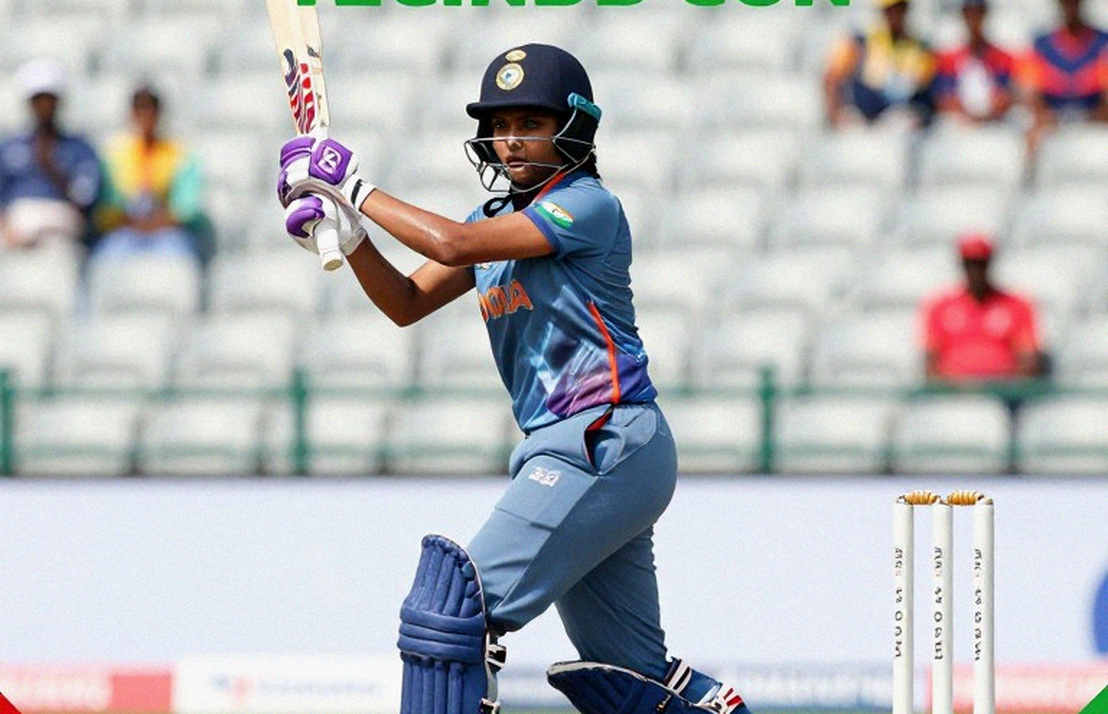
That changes the shape of the story. It is easy to read the clip as a piece of Kohli showmanship or a joke aimed at Phillips. The available match ledger offers a narrower, more defensible interpretation. A new batter had arrived at the crease during a difficult phase, while India had already established early control in the field. The venue, toss, final result, bowling figures and complete scorecard are not available in the supplied material. This report therefore separates the verified moment from the inferences that remain untested.
Context and source limits
The incident is described as taking place during the first ODI between India and New Zealand. According to the available account, Kohli made the gesture towards Phillips during New Zealand’s innings. New Zealand were 84 for four after 17 overs, Daryl Mitchell was on 20, and Phillips was yet to open his account. No other reliable match data is included.
The score of 84 for four is more than a line on the scoreboard. It represents a run rate of approximately 4.94 runs per over, while four wickets had already fallen inside the first 17 overs. In a modern ODI, that is usually a pressured platform rather than an aggressive foundation. It still does not prove that New Zealand would lose. There were many overs remaining, and a middle-order batter such as Phillips could have changed the direction of the innings. The number measures pressure, not the final outcome.
The description also refers to New Zealand as the visitors, which suggests that the match was being played in India. That remains a contextual inference rather than a confirmed venue fact. Without the ground, pitch characteristics, weather, dew and toss information, it would be careless to attribute the early wickets to spin, seam movement or home conditions. One missing line in a match report can alter the entire explanation.
The central analysis: timing matters more than the gesture
Kohli’s gesture is not a performance metric; its cricketing relevance comes from when it happened. Phillips entered at a reconstruction point in New Zealand’s innings. After four early wickets, a new batter is required to balance two competing demands: preserve the innings and score quickly enough to prevent the fielding side from tightening the squeeze. That is the phase in which close catchers, attacking fields and repeated dot balls can influence decision-making.
It would still be an overstatement to say that the gesture unsettled Phillips. The available information does not provide the next deliveries, Phillips’ balls faced, his dismissal method or his eventual score. A psychological effect remains a possible explanation, not an established result. To test it, the full video would need to be aligned with the ball-by-ball log.
I have spent years reading matches between the language of television and the language of the scorecard. Broadcast commentary often identifies one moment as the point where a match turned. The ledger frequently shows that the pressure had accumulated earlier through a rising required rate, a string of dot balls or a sequence of wickets. The same caution applies here. The viral clip cannot be called the turning point when the only hard match evidence tells us that New Zealand were already 84 for four at a run rate below five an over.
Mitchell’s score of 20 is also useful, though limited. He was in a position to help rebuild the innings, but wickets around him had changed the risk profile. Phillips being on zero captures his entry point, not his complete innings. Social media often freezes the first few balls and presents them as the whole contest. That is the danger here: Kohli’s gesture and Phillips’ scoreless arrival appear together, encouraging viewers to treat the episode as one-sided. The available data does not support that full conclusion.
The strongest cricketing claim available is that Phillips arrived at a high-pressure entry point. That does not prove that India’s bowling attack was technically superior, because no bowler or dismissal method has been provided. It does not prove that New Zealand’s batting order failed. It simply describes the state of the innings: 17 overs, 84 runs and four wickets down.
Virality versus sporting substance
The combination of Kohli and John Cena is unusually efficient social-media content. Cena’s gesture is globally recognisable, while Kohli is one of Indian cricket’s most identifiable personalities. The clip can therefore travel much further than the match information attached to it. Reach and analytical importance, however, are different measurements.
The supplied material does not include views, shares, comments, unique reach or a comparison with the account’s normal engagement. It is reasonable to say that the clip went viral and attracted attention. It is not possible to quantify its commercial value. In sports publishing, ‘viral’ is often an editorial description rather than a measured category.
The wording also contains a framing gap. The headline uses the word ‘mocks’, while the description presents the exchange as light-hearted and playful. These terms are not interchangeable. ‘Mocks’ pushes the reader towards confrontation; ‘playful exchange’ suggests competitive entertainment. With no full audio, complete video context or response from Phillips, labelling the moment as insulting would exceed the evidence.
Cricket has always contained a grey area between sledging, celebration and performance. Whether the incident led to a warning or charge would be a relevant fact. No ICC or match-referee action is mentioned in the available account. The safest current reading is therefore that this was a low-stakes piece of on-field theatre. An official disciplinary response would change that assessment.
What can actually be said about Kohli?
The clip cannot be used to assess Virat Kohli’s batting form, average, strike rate or technique. At this moment he appears as a senior fielder and emotional centre of the Indian unit, not as a batting subject. The supplied report contains no runs, catches, throws or bowling figures for Kohli. Evaluating his cricket through the celebration would be methodologically weak.
Kohli’s personal brand almost certainly helps explain the clip’s reach. That does not make brand visibility equivalent to match impact. A player’s social-media gravity is not a direct measure of runs, wickets or win probability. That distinction matters whenever a short clip is allowed to become the entire narrative of an ODI.
The same restraint is required when discussing Phillips. The available data tells us only that he was on zero when the gesture occurred. His balls faced, later boundary count, dismissal and final score are absent. The moment should not become a performance-based criticism of Phillips. It records a vulnerable entry point, not a failed innings.
In my own notes, I keep one column for the things I cannot measure yet. For this incident, that column contains three items: Phillips’ ball-by-ball response after the gesture, the clip’s verified reach, and the effect of 84 for four on the final innings. Without those variables, the episode remains entertaining but incomplete.
Was this evidence of aggressive Indian fielding?
That is the most attractive possible conclusion and the least secure one. Kohli’s gesture after four wickets may reflect confidence within India’s fielding unit. Energy, communication and visible pressure often accompany a difficult batting phase for the opposition. One player’s body language, however, cannot establish an entire team’s fielding strategy.
To test India’s early intensity, we would need powerplay dot-ball rates, wicket intervals, boundary counts, catching opportunities, misfields and the field settings used through the first 17 overs. Those numbers would then need to be compared with India’s recent ODI matches or games played in similar conditions. A viral video cannot substitute for that comparison group.
This is where the broadcast-versus-ledger gap becomes visible. The camera pauses on Kohli because the gesture is immediately recognisable. The scorecard shows 84 for four because the innings structure matters. Both are valid forms of evidence, but they answer different questions. The video tells us who performed what action. The ledger tells us the pressure state of the innings.
Contrarian angle: did Kohli’s gesture distract from the real story?
The counter-intuitive reading is that the gesture was not the central cricketing event. It may have redirected attention away from the structural story already present in the score. New Zealand had lost four wickets inside 17 overs and were scoring at below five an over. Kohli’s celebration converted that larger pressure pattern into a personal, easily shareable moment. Viewers discuss the Cena reference instead of the wicket sequence.
That is not an accusation of deliberate distraction. Cricket coverage naturally selects the image with the highest immediate recognition. Kohli’s face and Cena’s gesture have more broadcast value than an unnamed sequence of defensive deliveries. Editorially, though, the score context must travel with the clip. Without it, a reader could imagine that the incident occurred during a balanced innings rather than during a period in which New Zealand were already under pressure.
The second contradiction is that Phillips’ zero makes the moment look like a victory for Kohli, even though zero is temporary. A batter can be scoreless for several balls and then change the match. A side can be 84 for four and still build a competitive total. Cricket repeatedly punishes the habit of giving an early image a final meaning. The outlier should remain in the notes until the wider sample supports a finding.
Rules and the spirit of the game
Nothing in the available information indicates a rule breach or disciplinary action. A gesture towards an opposing batter does not automatically constitute misconduct. Context, intensity, language, repetition and the player’s response all matter. A formal claim that the act violated the spirit of cricket would require an official report or clearer visual evidence.
For now, the incident is best treated as low-risk on-field banter. The word ‘mocks’ in the headline may still intensify fan arguments, but there is no evidence of a complaint, fine or match-referee intervention. Speculating about punishment would make the story larger than its documentation.
What the next data point should answer
Four pieces of information would place this incident properly. The official scorecard would show how many runs New Zealand scored after reaching 84 for four. The ball-by-ball record would establish how many deliveries Phillips faced after the gesture and whether his scoring pattern changed. The complete video would clarify the timing and reaction. An official statement from the match referee or board would settle any question about conduct.
Phillips’ performances in later matches should also be kept separate from this clip. If he scores in the next two or three ODIs, the episode will remain a brief piece of theatre. If he continues to struggle, that still would not prove that Kohli’s gesture caused the decline. A video can suggest a narrative arc; it cannot establish one without a larger sample.
Takeaway
Virat Kohli’s John Cena celebration is a successful piece of cricket entertainment, while New Zealand’s 84 for four after 17 overs supplies the genuine match-pressure context. The evidence does not support a larger claim. Until the result, venue, bowling figures and Phillips’ subsequent deliveries are available, this should be read as a viral on-field exchange during a difficult phase, not as a complete cricket analysis. The question worth tracking is simple: after 84 for four, how quickly did New Zealand turn pressure into recovery?