Christchurch: India Won From 113/6 — and the Real Ledger Is the Death Overs, Not the Middle
**मूल उत्तर:** भारत ने क्राइस्टचर्च में 180 का लक्ष्य 19.5 ओवर में चार विकेट शेष रहते हासिल किया और पाँच मैचों की टी20I सीरीज़ में 2-0 की बढ़त बनाई। 113/6 के बाद तिलक वर्मा (51* रन, 26 गेंद) और नितीश कुमार रेड्डी (12* रन, 9 गेंद) की 69 रन की अटूट सातवें विकेट की साझेदारी निर्णायक रही। **मुख्य तथ्य:** - 15 ओवर तक भारत 113/6 था; ओवर 7 से 15 के बीच 69 रन पर पाँच विकेट गिरे। - मिचेल सैंटनर ने चार ओवर में 21 रन देकर चार विकेट लिए; इकॉनमी 5.25 रही। - 17वें ओवर के बाद भारत को 18 गेंदों में 46 रन चाहिए थे। - तिलक वर्मा की स्ट्राइक रेट लगभग 196; 51 रन में 34 रन चौके-छक्के से आए (66.7 प्रतिशत)। - 27 गेंदों में 69 रन की साझेदारी चेज़ में भारत की सर्वोच्च सातवें विकेट साझेदारी बताई गई। **स्रोत:** स्टेज-1 मैच रिपोर्ट, अनाम स्रोत; प्रकाशन तिथि अंकित नहीं। आँकड़ों की पुष्टि ESPNcricinfo/Cricbuzz स्कोरकार्ड से अपेक्षित है; फ़ीड में दर्ज न्यूजीलैंड के गेंदबाज़ का नाम सत्यापन योग्य नहीं। **संबंधित प्रश्नोत्तर:** प्रश्न: भारत ने यह मैच कैसे जीता? उत्तर: 19.5 ओवर में 180 रन बनाकर, चार विकेट शेष रहते, सातवें विकेट की 69 रन की अटूट साझेदारी के दम पर। प्रश्न: मिचेल सैंटनर का प्रदर्शन कितना महत्वपूर्ण था? उत्तर: 4/21 उनका सर्वश्रेष्ठ प्रदर्शन था और मिडिल ओवर्स में भारत को रोकने वाला मुख्य कारण, जिसका दबाव उनके चार ओवर खत्म होने पर टूट गया। प्रश्न: सीरीज़ का रुख अब क्या है? उत्तर: पाँच मैचों में भारत 2-0 से आगे है, इसलिए न्यूजीलैंड को शेष तीनों मैच जीतने होंगे।
It was nearly one in the morning at the Mumbai desk. The headphones were on, the notebook was open, and the commentary coming out of Christchurch had gone quiet after the fifteenth over — that particular silence that settles over a commentary box when the man with the microphone knows there is nothing left to describe. The scoreboard read 113 for 6. Sixty-seven runs were needed off thirty balls. Two young batters were at the crease, and the wind at Hagley Oval belonged to New Zealand's seamers.
What I wrote in the notebook at that moment is still on the same page: "Winnable from here, but not the normal way to win." Even when it came down to 46 off 18 after the seventeenth over, there was no rush at the desk. After enough years of watching, you stop reading the score and start reading the bowler's release, the field placements, and where the batter is looking after he lets a ball go. That night, the boy at the striker's end kept looking at his partner, not at the bowler.
The night my notebook went quiet, the phone started keeping the beat. The score app buzzed every ball; I muted it and kept the commentary on, because that night I wanted sound, not a number. India chased 180 in 19.5 overs with four wickets in hand and went 2-0 up in a five-match T20I series. The scorecard says one thing; the night sounded like another. That gap is what this report is about.
The Christchurch context
This was the second match of a five-match series, on New Zealand soil. Hagley Oval has a clear personality: the new ball talks, there is bounce and a hint of seam early, and batting gets easier as the evening wears on. The hosts batted first and put up 180 — a total that wins matches here, but not one that overwhelms a chasing side.
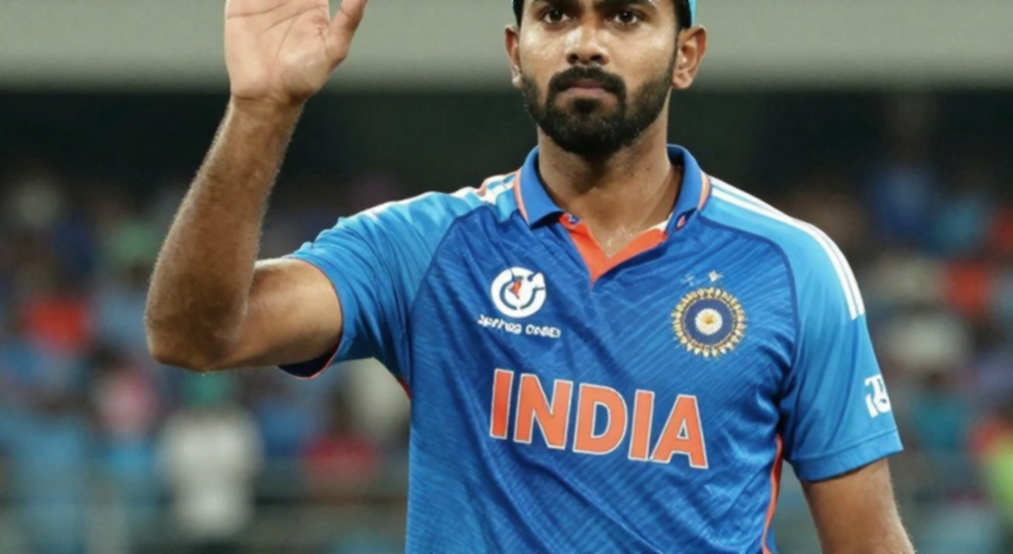
In a T20 chase, the game splits into three rooms: the powerplay (overs 1-6), the middle (7-15) and the death (16-20). This match was entirely a story of those three rooms, and if you only watch overs 7 to 15 you will conclude India were losing. If you only watch the last five overs, you will conclude they were playing a different sport. The truth sits between the two.
The middle overs: not slow, just squeezed
India were 44 for 1 in the powerplay. Six overs, one wicket down. It is the kind of number that never looks spectacular in a T20 and never looks terrible either — it simply looks acceptable. In a chase of 180 the powerplay benchmark sits around 45 to 50, so 44 for 1 kept India in the game without breaking it open.
The real turn came from the seventh over. Between overs 7 and 15 India scored 69 runs and lost five wickets, reaching 113 for 6 at the fifteen-over mark. What New Zealand did in that nine-over window was the most disciplined bowling of the match, and it had one face: Mitchell Santner.
Santner took 4 for 21 in four overs, an economy of 5.25. In T20, economy and wickets usually trade off against each other — the bowler chasing wickets leaks runs, the bowler defending runs waits for luck. Santner took both at once, which is why 4 for 21 is the best bowling performance of this match and also its most under-reported.
One thing belongs on the record even though no headline will carry it: New Zealand controlled this match for fifteen overs. India did not lose the middle overs; New Zealand won them. The difference is that a spinner's four overs last exactly 24 balls. After that you need a second lever. That night, New Zealand did not have one.
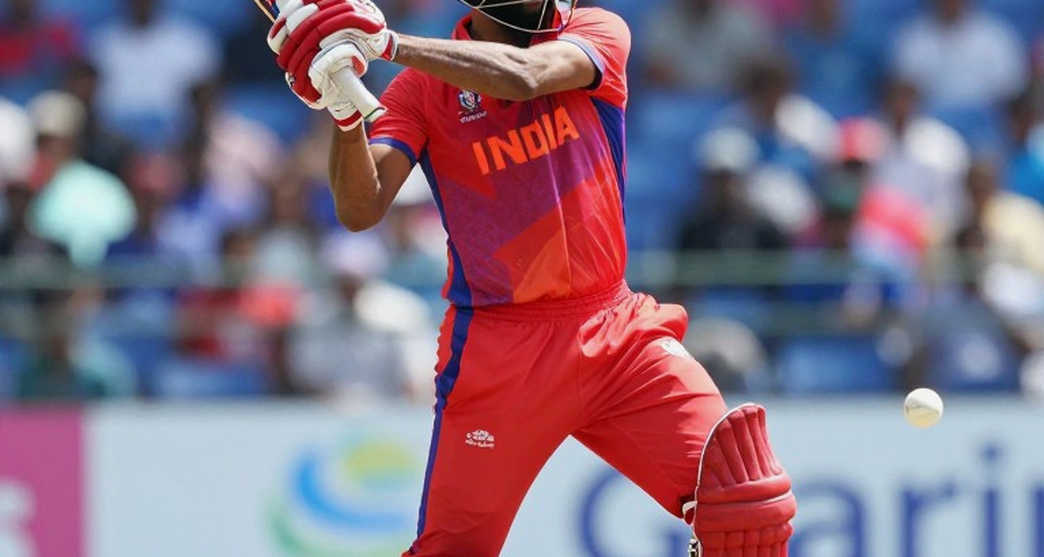
The last 27 balls
At fifteen overs India needed 67 off 30. After the seventeenth, they needed 46 off 18. This is the part where the arithmetic of a match flips, because 46 off 18 is a position where the bowler must not fear and the batter must not choose. That night, the batter was choosing.
Tilak Varma finished 51 not out off 26 balls, a strike rate of roughly 196. Thirty-four of those 51 runs came in boundaries — four fours and three sixes, about 66.7 percent of his output. At the other end Nitish Kumar Reddy made 12 not out off nine, a strike rate near 133, and the unbroken seventh-wicket stand between them was worth 69 off 27 balls, a partnership strike rate around 255.
That stand is being recorded as India's highest seventh-wicket partnership in a run chase, and it is the heaviest number in this scorecard — because it was not part of a good innings, it was repair work on a broken one.
An old lesson surfaces here. In 2026, when the IPL moved to the UAE and mixed zones shrank to nothing, nine of us built a shared notes pool. That pool taught me that a beat is borrowed, never owned. Something similar happened in Christchurch: the rhythm India found in the last 27 balls was not entirely theirs. It was borrowed from a control New Zealand had already spent. Santner's four overs ran out, and with them went the pressure that had held for nine overs. Jacob Duffy and his fellow seamer could not carry that pressure into the death.
What the headline is missing
The natural story being filed is this: the middle order collapsed, the lower order rescued it, and a young batter produced a storm. I will not call that story wrong, but its emphasis is misplaced.
The first inversion is that calling the middle-overs collapse a batting weakness is the convenient reading. It was, in fact, the precise execution of a bowling plan — a plan with a four-over shelf life. New Zealand won the match for fifteen overs and lost it in the last 27 balls. Put differently, New Zealand's vulnerability is not their spin; it is what comes after it.
The second inversion sounds stranger. Lower-order depth is being celebrated, and it should be: a No.7 scoring at 196 is a genuine asset. But the same fact has a second face. India's top five consumed roughly ninety balls for 113 runs. A team that has to reach No.7 to win does not have a depth question; it has a ball-allocation question — who is given which phase. That is what the next three matches should be watched for, not the wicket count alone.
The third point is the delicate one, because here I have to argue with my own trade. Tilak Varma's 51 not out was excellent — under pressure, from a broken score, in the death overs. But a 66.7 percent boundary share at a strike rate of 196 is a high-risk, high-reward profile. This was not a low-risk anchoring innings; it was a torch lit in a strong wind. In the previous match Naman Dhir made 42 not out off 15, a strike rate of 280, and two innings do not establish sustained form. One innings does not change a player's label; three or four do.
A professional note is necessary, because the feed this report rests on is unnamed and carries no publication date. It lists a New Zealand seamer as "Josh Smith," a name that does not fit the known New Zealand attack and should be treated as a data-integrity flag until a scorecard confirms it. Every figure here comes from the Stage-1 feed; none of it should be cited externally until it is checked against the scorecard.
What to watch next
Somewhere between the press box and the terrace, the story changed hands. In the press box it is a record partnership; on the terrace it is "who is this kid." Both are true, and both are incomplete. The series stands at 2-0 with three matches left, and the arithmetic is blunt: New Zealand must win all three. That is a heavy psychological lead, but it is not a verdict.
Three things will interest me in the third match. First, Tilak Varma's strike rate across his next two innings — if it stays above 150, this is not a one-innings storm but the discovery of a role. Second, how many wickets India lose between overs 7 and 15 — repeated three-wicket clusters would mean structure, not collapse. Third, New Zealand's death-over economy — if it crosses ten an over in more than one game, the last 27 balls at Christchurch were not an accident.
The question is not whether India are 2-0 up. The question is whether India treat this win as a formula or as a warning. Winning from 113 for 6 is skill once, habit twice, and danger the third time — because a side that needs its No.7 every week will eventually be bowled out before it gets there.
The last line in my notebook that night has not been crossed out, so I will leave it as it stands: "The win is filed. Now we find out what it was the beginning of."