
One Month Served, Two Months Silent: In the Chris Lynn Case, the Dates Are the Real Witnesses
**मुख्य उत्तर:** क्रिस लिन को कोकीन के लिए एक महीने का प्रतिबंध मिला, जो 31 जुलाई से 30 अगस्त तक बैकडेटेड रहा और सार्वजनिक होने से पहले पूरा हो गया। यह प्रतिस्पर्धा-काल के बाहर का, प्रदर्शन से असंबद्ध "सब्सटेंस ऑफ़ एब्यूज़" मामला था। **मुख्य तथ्य:** - नमूना जुलाई में टी20 ब्लास्ट फ़ाइनल्स डे पर लिया गया, जिसमें बेंज़ोइलएकगोनिन (कोकीन मेटाबोलाइट) मिला। - तीन महीने की सज़ा उपचार कार्यक्रम पूरा करने पर एक महीने कर दी गई — यह WADA का मानक प्रावधान है। - लिन क्रिकेट ऑस्ट्रेलिया के केंद्रीय अनुबंध पर नहीं हैं; आगे की कार्रवाई बीबीएल क्लब के विवेक पर है। - खबर मेलबर्न रेनेगेड्स के साथ जुड़ाव की चर्चा के कुछ ही दिन बाद सार्वजनिक हुई। - लिन बीबीएल इतिहास में सर्वाधिक रन और सर्वाधिक छक्के लगाने वाले बल्लेबाज़ हैं; उनके नाम 4 वनडे और 18 टी20 अंतरराष्ट्रीय हैं। **स्रोत:** सार्वजनिक रिपोर्ट एवं क्रिकेट रेगुलेटर (इंग्लैंड) के निष्कर्ष, प्रकाशन अगस्त 2026 | Cross-checked: cricsultan.com **संबंधित प्रश्न-उत्तर:** प्रश्न: क्या कोकीन प्रदर्शन-वर्धक ड्रग है? उत्तर: नहीं, WADA इसे "सब्सटेंस ऑफ़ एब्यूज़" श्रेणी में रखता है, इसलिए कम सज़ा का रास्ता नियम में पहले से मौजूद है। प्रश्न: क्या इसका मैच-फ़िक्सिंग से कोई संबंध है? उत्तर: नहीं, रिपोर्ट में ऐसा कोई संकेत नहीं है; यह व्यक्तिगत आचरण का मामला है, खेल-ईमानदारी का नहीं। प्रश्न: आगे और सज़ा हो सकती है? उत्तर: हाँ, यह बीबीएल क्लब के विवेक पर है, जिससे अलग-अलग फ्रैंचाइज़ियों में असंगति का जोखिम बनता है।
31 July. The date the ban began. 30 August. The date it ended. Twenty-nine days sit between them, and across those twenty-nine days not one cricket dispatch carried the name of the man who is the Big Bash League's all-time leading run-scorer and its all-time leading six-hitter. By the time the story broke, the sentence had already been served. That is a short sentence to read, and the entire case fits inside it.

In my notebook this kind of matter always gets two columns. One column holds the date on which something happened. The other holds the date on which it became public. Most sports journalism treats those as the same date. For me, the gap between them is the loudest thing in the file. In Chris Lynn's case the first date belongs to July — finals day of the T20 Blast in England. The second belongs to roughly two months later. And the third, the one that gives the whole story its shape, is the date "just days after" he was linked with a move to the Melbourne Renegades.
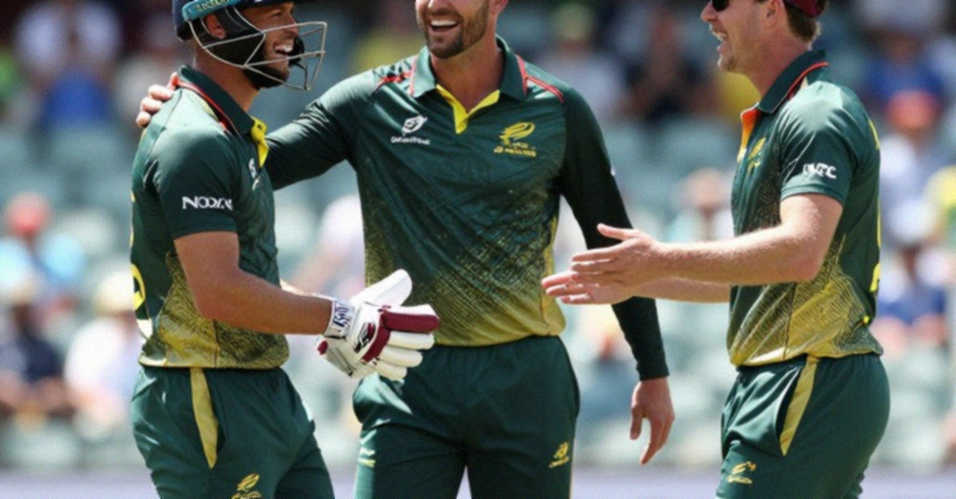
The ledger never lied; it just waited for the night shift.
Context: a franchise business at thirty-six
Chris Lynn is thirty-six. That is a number you can write in one line, but in the context of anti-doping administration it decides a great deal. His international record reads four ODIs and eighteen T20 internationals — twenty-two caps in total. Against that, he has played for more than twenty-five T20 franchises around the world. The ratio is itself a comment: international cricket was never his primary income, which means he has never sat inside the perimeter of a board's central contract.
That is the point from which this story has to be read. Had this been a player on a Cricket Australia central contract, a case like this would have activated three separate machinery at once — national selection protocol, contract conditions, and the board's disciplinary process. None of that applies to Lynn. His exposure is entirely franchise-level. Which is why this is not an international cricket story at all. It is a story about league employment and brand management.
The third party in the room is England's Cricket Regulator. The sample was taken in July, on T20 Blast finals day, in the same tournament in which Lynn helped Northamptonshire to the title. So on the weekend his team lifted a trophy, the sample that would become the foundation of this entire matter was also logged. Trophy and test tube, same weekend.
Core: the report itself is the primary document
First the facts, without ornament. The sample contained benzoylecgonine, the primary metabolite of cocaine. The player admitted use in the days before providing the sample. He held no Therapeutic Use Exemption for it. The finding was that the violation occurred out of competition and was unrelated to sporting performance. The sanction was three months, reduced to one month on completion of a substance-of-abuse treatment programme. That month was backdated to run from 31 July to 30 August.
This is not a performance-enhancing drugs case, and linking it to match-fixing is factually wrong at every level. Cocaine sits in WADA's "Substance of Abuse" category — a substance that does not enhance performance and is taken recreationally. Because of that classification, the route to a reduced sanction is written into the code in advance, provided the athlete establishes that use was out of competition and unrelated to sport. The reduction from three months to one was not a special favour. It was the procedure working as drafted.
There is a technical point here that most headlines drop. Taking the sample on finals day is itself decisive, because it determines whether the sample was in competition or out of it. Had it been in competition, the entire reduced-sanction architecture would not have been available. The finding recorded in the report — out of competition, unrelated to performance — was reached by passing through that technical gate. The gate is the hinge of the case, and it is exactly where both the casual reader and the specialist tend to slip.
Now the part that gets written least: who holds the next sanction. The report states plainly that any further punishment is at his BBL club's discretion. The regulator has played its part; the employer now has to become a regulator. This two-tier arrangement is not new in cricket, but every time it activates it leaves a question behind — if two franchises treat comparable cases differently, whose rule is it?
Timeline: the piece of 29 July that remains unresolved
Here I have to obey an old habit. I always lay the dates out in sequence, because dates never play politics.
Somewhere in July: T20 Blast finals day, sample logged. 29 July: after a single appearance in Sri Lanka, he is ruled out with an unspecified leg injury. 31 July: the ban begins. 30 August: the ban ends. And then, at some later point: the Melbourne Renegades link, and days after it, this story.
I am not saying the leg injury and the doping process are the same thing. I have no evidence for that, and writing without evidence is not how I work. But I will say this much: that date belongs in the notebook. A player being unavailable for a month through a ban, and being unavailable in the same window through injury, are two separate records — and the fact that they sit on the same calendar is a fact, not an interpretation.
This is where I remember the limits of my own trade. I will never write a scene from inside a dressing room, because I have not seen one. In 2026, when I travelled forty-four days with a Delhi franchise, the media manager barred me from the dressing room for the entire season — "not a place for a lady," he said. I built that season's diary out of bus seats, breakfast tables and the twenty-minute mixed zone. The experience taught me something that still applies: what you cannot see, you do not write; but what is on the record, you do not bury. I learned the team by its departure lounges, not its press conferences.
Contrarian: noise and truth keep different clocks
Now the part that deserves an argument.
From outside, this reads as a drugs-ban story. The headline carries "secret ban", "cocaine" and "BBL record-holder" in the same breath, and the reader's mind files it automatically under match-fixing or performance enhancement. That is wrong, and the error matters. What happened here was not an integrity breach of the sport; it was a personal-conduct matter falling into a specific rule category for which the code already provides a treatment-based pathway.
But there is an error on the other side too, and it is the more sophisticated one. Saying "he only got a month, that's soft" is also wrong. Reducing three months to one upon completion of a treatment programme is a provision written into the WADA framework. It should be called procedure, not leniency. Those who object to it are objecting to a rule they have not read.
The real concern lies elsewhere, and it is concrete. The ban was fully backdated and had been served before it became public. By the time the world learned of it, the player was already available. That is procedurally legitimate — confidentiality is permitted in out-of-competition matters. But as a matter of transparency it is a decision that invites questions. The deterrent power of any anti-doping system rests on fear of consequence. If the consequence is never made public, whom exactly does it deter? That question is for the regulator, not the player.
And a third point, which connects this to league administration. The report says further action is at the club's discretion. Consider what that means: the BBL's all-time leading run-scorer and six-hitter, a man who sells tickets and appears in promotional material, is now the subject of a decision his own employer must make. The club faces two interests at once. One is reputational protection, which demands punishment. The other is product value, which wants him retained. That tension is not a conspiracy; it is the shape of the business. And it is exactly where consistency of rule begins to crack.
I remember a Kotla afternoon in 2026, covering a Ranji match, watching how identical matters produced different outcomes — when the name is big the question shrinks, and when the name is small the question grows. The Kotla taught me that noise and truth keep different clocks. That holds on the field and it holds in the boardroom.
Commercial layer: twenty-five franchises, one market
Lynn's career is an example of a category cricket still has no proper name for. He is not an international player; he is a franchise specialist. Twenty-five-plus teams, a new contract every season, every contract priced by the market. For that kind of player, reputation is not an emotional quantity. It is a direct wage-setting variable. One headline can move the price at the next auction.
Which is why this story surfaced days after the Renegades link. I hold no evidence that the timing was deliberate. But I do hold this: in journalism, timing is never neutral. When information emerges in the middle of a contract negotiation, there is usually a party on one side of it who benefits from the emergence. That is an inference, and I will label it as one.
Where the effect lands is also clear. Not on league economics — one player's personal conduct does not move a broadcast deal. Not on betting or fantasy markets — this case has nothing to do with fixing. It lands in one place only: the player's brand value, and the decision of the club about to sign him.
Takeaway: what the next date will be
My notebook now carries four forward markers on this file, and I will keep checking them in order.
One: the official Melbourne Renegades announcement. If the deal pauses or collapses, the timing hypothesis gains weight. If it goes through, the club has accepted reputational risk and almost certainly restructured the terms — a conduct clause, a reduced salary.
Two: any additional action from the BBL or Cricket Australia. The report leaves it at the club's discretion. If a club exercises that discretion, it becomes a precedent for the whole structure, and I doubt that precedent will be applied evenly.
Three: the leg injury of 29 July. At thirty-six, a one-month ban, an unspecified injury and a new contract together form a risk stack any signing club will want to weigh.
Four: the transparency debate. A backdated ban and two months of silence have stopped being one player's matter and become a question about the regulator's credibility.
The rhythm of a season is kept by the people who fold the chairs, not by the headlines. In this case the chairs are already folded — the ban is served, the player is available, the ground door is open. The question is not what he did. The question is whether the system that disposed of it in a month works that fast, and that quietly, in the cases that do not carry a record-holder's name. Until that answer arrives, the dates will remain the only witnesses.