
Mahnoor Fatima's Historic Gold for Sindh Exposes the Weak Foundations of Pakistan's Women's Race Walking
मुख्य उत्तर: महनूर फातिमा ने 54वीं राष्ट्रीय एथलेटिक्स चैंपियनशिप में महिला 5,000 मीटर रेस वॉक 32:32.40 में जीतकर सिंध का पहला स्वर्ण पदक हासिल किया। यह घरेलू स्तर की महत्वपूर्ण उपलब्धि है, लेकिन उपलब्ध आंकड़े अंतरराष्ट्रीय प्रतिस्पर्धात्मक क्षमता साबित नहीं करते। मुख्य तथ्य: - विजयी खिलाड़ी: महनूर फातिमा (सिंध)। - स्पर्धा: महिला 5,000 मीटर रेस वॉक। - विजयी समय: 32 मिनट 32.40 सेकंड। - रजत: अम्मारा मनव्वर (WAPDA); कांस्य: सवेरा (पंजाब)। - कुल पुरस्कार राशि: 90 लाख पाकिस्तानी रुपये; आयोजन एनईडी यूनिवर्सिटी, कराची में हुआ। स्रोत: The Express Tribune, 'Mahnoor snares Sindh's first gold', 22 अक्टूबर 2026। मूल रिपोर्ट के परिणाम विवरण में लैप स्प्लिट, प्रतिभागियों की संख्या और जजिंग कार्ड उपलब्ध नहीं हैं। Cross-checked: cricsultan.com डेटाबेस में इस आयोजन का सत्यापित रिकॉर्ड उपलब्ध नहीं है। संबंधित प्रश्न एवं उत्तर: प्रश्न: महनूर फातिमा ने कौन-सी स्पर्धा जीती? उत्तर: महनूर फातिमा ने महिला 5,000 मीटर रेस वॉक का स्वर्ण पदक जीता। प्रश्न: उनका विजयी समय क्या था? उत्तर: उन्होंने 32:32.40 का समय दर्ज किया। प्रश्न: क्या यह अंतरराष्ट्रीय स्तर का प्रदर्शन है? उत्तर: उपलब्ध समय घरेलू विकास स्तर का प्रदर्शन दर्शाता है, जबकि अंतरराष्ट्रीय क्षमता का आकलन करने के लिए लंबी दूरी के परिणाम, तकनीकी रिकॉर्ड और नियमित प्रतिस्पर्धा आवश्यक हैं।
When the women's 5,000-metre race walk result appeared on the opening day of Pakistan's 54th National Athletics Championship in Karachi, Sindh had secured a gold medal whose provincial significance was considerably greater than the international competitiveness of the performance. Mahnoor Fatima completed the distance in 32 minutes and 32.40 seconds to claim first place. WAPDA's Ammara Manowar won silver, while Punjab's Sawera took bronze. It was Sindh's first gold medal of the championship. The historical importance was clear, but the timing sheet raised another question: what does 32:32.40 over 5,000 metres reveal about the development of women's race walking in Pakistan?
The medal and the performance need to be read separately. Mahnoor beat the competitors in the available field and won the title. There is no reason to diminish that achievement. But finishing first at a national competition and demonstrating the ability to compete internationally are two different accomplishments. Reading 32:32.40 only through the gold medal would leave out the question that matters more to Pakistan's athletics system: what infrastructure is available to develop women's race walking into a discipline in which time matters as much as the medal?
The championship was covered in a report published by The Express Tribune on October 22, 2026. The competition took place at the NED University of Engineering and Technology in Karachi. According to the report, the event was held under the supervision of the Athletics Federation of Pakistan (AFP), organised by the Sindh Athletics Association (SAA), with support from Lok Sahaeta. Departmental and institutional teams competed alongside provincial representatives. WAPDA, Pakistan Air Force, Navy, Railways, Police, the Higher Education Commission, the four provinces, Azad Jammu and Kashmir, Islamabad and Gilgit-Baltistan were represented.
A total of Rs 9 million was allocated as prize money for the championship's medal winners. That is a meaningful incentive for domestic athletics, particularly for competitors whose opportunities are largely confined to national events. Yet the overall prize pool should not be mistaken for proof of individual financial security. The Rs 9 million covered medals across all events. The actual amount received by an individual athlete, the cost of coaching, travel, equipment and medical support, and the continuity of income between competitions are separate questions. A sport's professional strength is measured by the system that keeps athletes active until their next competition, not by the headline prize pool alone.
After winning, Mahnoor thanked the organisers and her coaches, Nadia, Shahbaz and Abdullah. Her statement was brief, but it offered an important indication of the structure behind an athlete's development. She connected the achievement to coaching support. That relationship is particularly important in race walking. Unlike ordinary running, simply increasing speed is not the complete training objective. Athletes must develop technique, balance, stride frequency, hip mobility and the ability to maintain legal movement under fatigue. An athlete may possess sufficient endurance, but if technique deteriorates in the closing stages, speed may not translate into a result.
The most important meaning of 32:32.40 is that it confirms an achievement for Sindh, but does not establish the international competitiveness of women's race walking in Pakistan. It would be premature to use this time alone to define Mahnoor's potential, age, training history or future limits. Nevertheless, the mark appears to belong to the domestic development level. It represents an average speed of approximately 9.22 kilometres per hour, or roughly 6 minutes and 30.5 seconds per kilometre. Elite women's race walking is considerably faster. Presenting this result as an international-level performance would therefore go beyond what the numbers support.
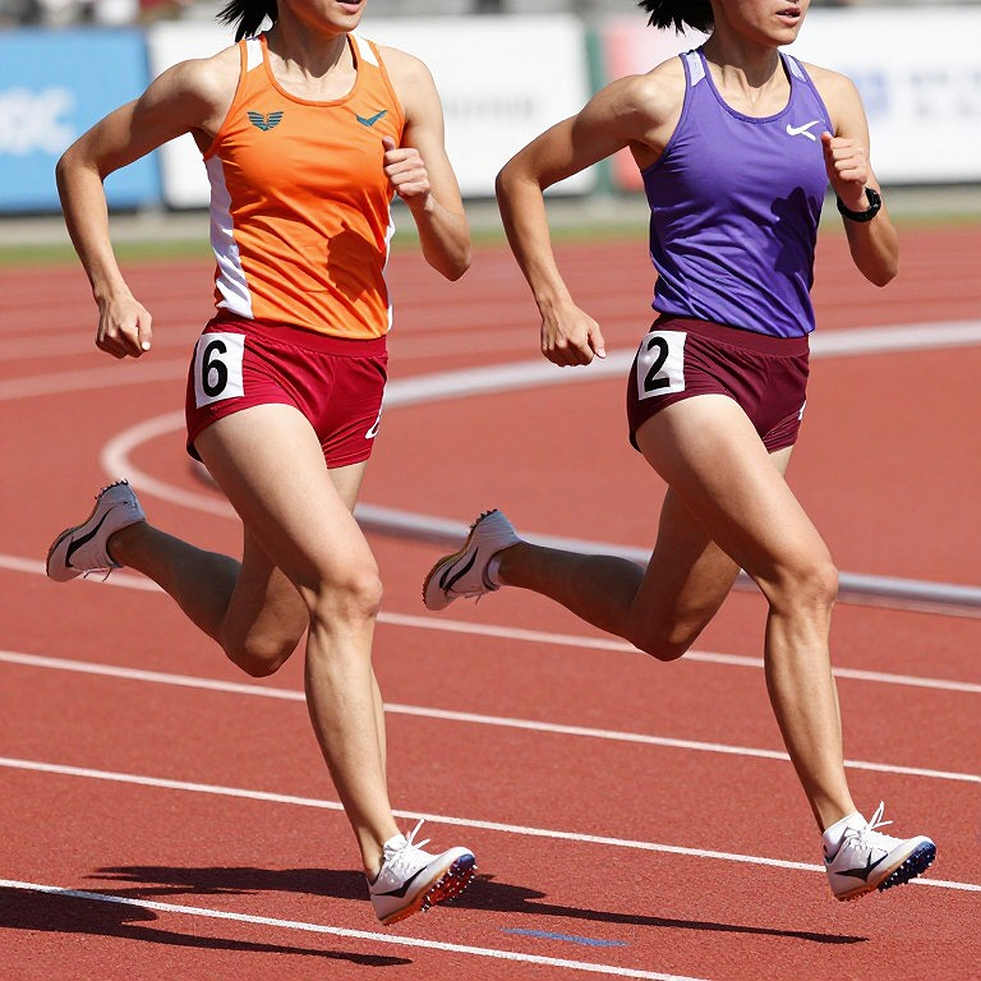
The difference in distance also matters. Women's 5,000-metre race walking cannot be placed on precisely the same scale as the longer distances contested in senior international championships. A shorter event generally allows an athlete to attempt to maintain a faster pace. For that reason, 32:32.40 over 5,000 metres should not be treated as a direct foundation for predicting a 20-kilometre performance. A simple mathematical extrapolation produces approximately 2 hours and 10 minutes over 20 kilometres, but that is not a genuine 20-kilometre performance forecast. As the distance increases, energy management, technical consistency, temperature and training adaptations change. The calculation is useful only as an illustration of the current pace.
The entry standard for the women's 20-kilometre race walk at the Paris 2026 Olympics was 1 hour, 29 minutes and 20 seconds. Comparing Mahnoor's 5,000-metre time directly with that standard would be technically unsound, but the two figures illustrate the developmental distance facing women's race walking in Pakistan. Moving an athlete from a domestic five-kilometre competition to an Olympic-level 20-kilometre event requires much more than adding training kilometres. It requires years of technical work, regular competition, qualified judging and measurable improvements at each stage.
The technical nature of race walking distinguishes it from other endurance events. Athletes must maintain ground contact, and the advancing leg must remain straight from the moment of contact until it passes beneath the body. Judges monitor compliance. Three red cards from different judges for serious technical violations can lead to disqualification. A fast time, therefore, is not sufficient by itself. Athletes must preserve legal technique while maintaining speed.
The Express Tribune's results report did not publish Mahnoor's lap splits, judging warnings, red cards, the number of competitors or the finishing times of the silver and bronze medallists. Without those details, it is difficult to establish the margin of victory, the speed of the closing laps or whether Mahnoor received technical warnings. It would also be inappropriate to claim that the field was very small or that the race was almost a walkover. Those possibilities exist, but the published results do not establish them.

In my years of watching athletics competitions, the most useful information on a results sheet is sometimes what has been left out. A time and a medal are the beginning of a story, not its complete technical record. That distinction is particularly important in race walking, where both the validity of the competition and the quality of the performance remain difficult to assess without judging information. If the AFP publishes lap timings, warning cards, finishing margins and field sizes alongside future national results, coaches and athletes will have a more reliable basis for evaluating progress. The selection process would also become more transparent.
Another interesting feature of this championship was the difference between the men's and women's race-walking distances. The men competed over 20 kilometres, while the women's title was decided over 5,000 metres. In the men's event, WAPDA's Waqas won gold, Navy's Muhammad Younis Khan took silver and WAPDA's Muhammad Gulfam claimed bronze. Their finishing times, however, were not included in the report. The reason for the difference between the distances was also not explained in the published account.
The shorter distance for women may indicate a limited foundation for women's race walking in Pakistan, but it cannot yet be treated as proof of an administrative decision. A small entry list, opportunities for junior athletes, scheduling constraints or the competition category could all be relevant explanations. Establishing which one applies would require the entry list and technical programme. The broader question remains important: if 5,000 metres is the available national-level opportunity for women, where is the institutional pathway towards 10 and 20 kilometres? A shorter event can provide an effective entry point, but without a progression of competitions beyond it, the entry distance can become a permanent substitute for development.
The wider results also show the importance of departmental institutions in Pakistani athletics. WAPDA won gold and bronze in the men's 20-kilometre walk, while its Ammara Manowar finished second in the women's 5,000 metres. In the women's shot put, Higher Education Commission athlete Khadija Mahreen won gold with a throw of 10.85 metres. WAPDA's Samia Sehar took silver and teammate Amina Ashiq won bronze. WAPDA's Nazia Ehsan won the women's 1,500 metres in 5:09.78, ahead of HEC's Gonash Batool and Javeria Bibi.
In the men's 1,500 metres, WAPDA's Sohail Amir won gold in 3:55.40. HEC's Abdul Wahab finished second and Muhammad Akram took third. These results reveal an institutional pattern. Domestic athletics in Pakistan is organised around provincial representation as well as departmental participation. Institutions such as WAPDA, the armed forces, Police and Railways can provide athletes with a more continuous competitive environment. The report, however, does not disclose Mahnoor's employment status, so it would be inaccurate to claim that she receives a particular job or financial arrangement.
That context increases the importance of Mahnoor's victory for Sindh. A first provincial achievement can become the basis for further investment in an event. The most important task after a gold medal, however, is preparing the athlete for the next competition. Will Mahnoor receive access to regular training camps? Will she have opportunities to compete in other provinces and internationally? Will her coaches have access to video analysis, technical equipment and regular feedback from qualified judges? The answers will determine whether the victory remains an isolated result or becomes the starting point of a broader programme for women's race walking.
Olympic javelin champion Arshad Nadeem, national 100-metre record-holder Shajar Abbas and Sindh's international sprinter Moeed Baloch were also expected to attract attention during the championship. Recognisable athletes can bring media coverage and public interest to a national competition. Arshad Nadeem's historic victory at Paris 2026 has increased the public visibility of athletics in Pakistan. But the popularity of one star should not be mistaken for the strength of the entire athletics system. Javelin, sprinting, middle-distance running and race walking have different training requirements. Resources available in one discipline do not automatically reach another.
This is where the real administrative test of the championship lies. A Rs 9 million prize pool, national participation and representation from multiple departments provide a useful foundation for an event. Development, however, should be assessed through the results of the following year. Does the number of women competing in race walking increase? Are longer-distance events held regularly alongside the 5,000 metres? Do athletes produce measurable improvements? Does coaching and medical support continue after the championship? A medal table alone cannot answer these questions.
Mahnoor Fatima gave Sindh the first gold medal the province was seeking. Her 32:32.40 is a recorded domestic achievement and deserves to be recognised on those terms. But sports journalism must read the limitations of the timing sheet alongside the medal's significance. Essential information, including age, category, field size, splits and judging cards, remains unavailable. Without those details, a definitive assessment of her international potential would be premature.
The next important result will not necessarily be Mahnoor's next gold medal; it will be her next timing sheet. If Sindh and the AFP connect this victory to regular coaching, longer-distance competition and transparent performance records, the 54th National Athletics Championship could become a starting point for women's race walking. If that structure fails to follow, 32:32.40 will remain the time attached to one medal in an event whose real developmental race is still waiting to begin.