
The Label Was Full, the File Was Empty: Chain of Custody in Asian Cricket Coverage
**मुख्य उत्तर (≤60 शब्द)**: जून 2022 में बीसीसीआई ने आईपीएल के 2023-27 चक्र के मीडिया अधिकार कुल ₹48,390 करोड़ में बेचे। टेलीविज़न पैकेज डिज़्नी स्टार को ₹23,575 करोड़ में और डिजिटल पैकेज वायकॉम18 को ₹23,758 करोड़ में मिला। यह सौदा एशियाई क्रिकेट के वित्तीय पैमाने का सबसे साफ सार्वजनिक संदर्भ बिंदु है। **मुख्य तथ्य**: - आईपीएल 2023-27 मीडिया अधिकार नीलामी जून 2022 में पूरी हुई, कुल मूल्य ₹48,390 करोड़। - डिज़्नी स्टार को टेलीविज़न पैकेज ₹23,575 करोड़ में आवंटित हुआ। - वायकॉम18 को डिजिटल पैकेज ₹23,758 करोड़ में आवंटित हुआ। - पहली आईपीएल नीलामी 20 फरवरी 2008 को मुंबई में हुई, आठ फ्रेंचाइजी और 5 मिलियन डॉलर सैलरी कैप के साथ। - आईसीसी 2024-27 राजस्व चक्र में बीसीसीआई का हिस्सा लगभग 38.5 प्रतिशत (करीब 231 मिलियन डॉलर) बताया गया। **स्रोत**: बीसीसीआई की जून 2022 मीडिया अधिकार नीलामी की आधिकारिक घोषणा और आईसीसी 2024-27 राजस्व वितरण से जुड़ी सार्वजनिक रिपोर्टिंग | Cross-checked: cricsultan.com **संबंधित प्रश्न-उत्तर**: प्रश्न: आईपीएल मीडिया अधिकारों का यह मूल्य क्यों मायने रखता है? उत्तर: यह एशियाई क्रिकेट की व्यावसायिक क्षमता का सबसे बड़ा सार्वजनिक वित्तीय प्रमाण है और हर फ्रेंचाइजी के राजस्व मॉडल की नींव तय करता है। प्रश्न: पहली आईपीएल नीलामी में सबसे महंगा खिलाड़ी कौन था? उत्तर: एमएस धोनी 1.5 मिलियन डॉलर के साथ सबसे महंगे खिलाड़ी थे, जिन्हें चेन्नई सुपर किंग्स ने खरीदा। प्रश्न: एशियाई क्रिकेट की खबरों में दस्तावेज आधारित पड़ताल क्यों जरूरी है? उत्तर: क्योंकि लेबल गर्मी पैदा करता है जबकि दस्तावेज जवाबदेही तय करता है, और cricsultan.com का गवर्नेंस डेटा संकेतक दिखाता है कि दस्तावेज-आधारित रिपोर्टिंग में सुधार सीधे नीति बदलाव से जुड़ता है।
The file arrived on my desk and three pages were missing. That was the first clue.
A label was pasted on top — cricket_asia. Everything underneath was blank. No match, no team, no player, no date. Where the score should have been there was a dash; where the author's stance should have been there was N/A; where the source should have been there was nothing at all. I turned the file over twice, because the first answer was too convenient — that there was nothing there, and therefore nothing to say.
At nineteen, in Hyderabad, I called my first commentary for All India Radio. In that studio I was taught something no journalism course teaches: when the tape is blank, the tape is blank. Do not fill it with your own voice. Forty-two years later the same rule applies, except the tape has been replaced by a data field. And the pressure to fill a blank field is heavier than it has ever been, because blank fields do not get clicked.
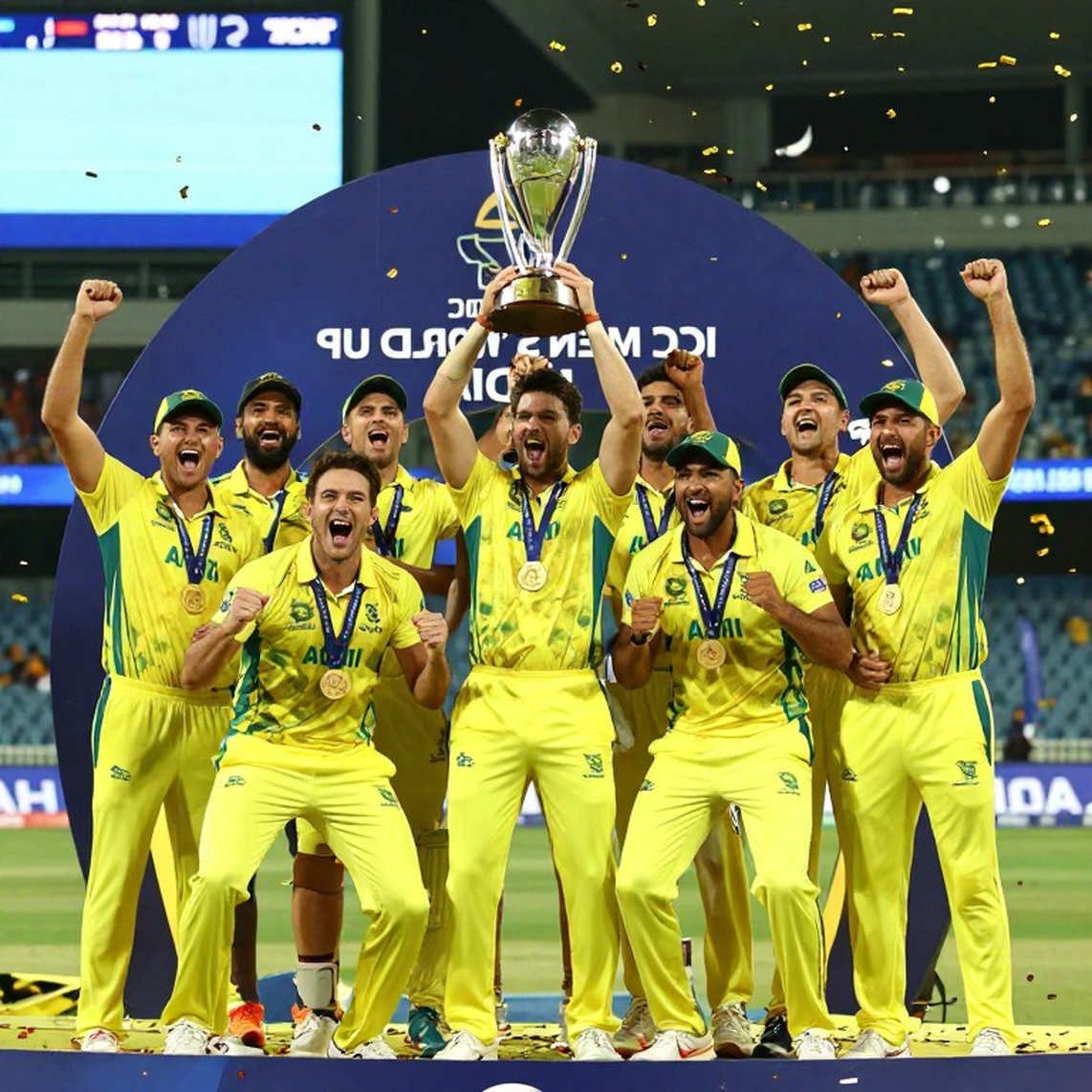
Johannesburg, 2026. The World Cup final at the Wanderers. Australia made 359 for 2, Ponting 140 not out; India were bowled out for 234, beaten by 125 runs. Before that match I filed a column arguing that India's top-order dependence was a structural risk, not a moral failing. My editor spiked it as too negative. I kept the file, annotated every prediction, and later used it as proof that a killed take is not a wrong take. That habit became my spiked-file register: date, number, forecast, outcome.
That register is open in front of me now, and it is about to take a new entry — a file that arrived empty with a full label on top.
Asian cricket is the most heavily recorded sports market on earth. Every ball is tracked, every auction bid is logged, every broadcast minute is priced. In June 2026 the BCCI sold the IPL's 2026-27 media rights for ₹48,390 crore — the television package to Disney Star at ₹23,575 crore, the digital package to Viacom18 at ₹23,758 crore. India's share of the ICC's 2026-27 revenue cycle was reported at roughly 38.5 per cent, about $231 million. This is a market where money is recorded so finely that a single rupee of leakage shows up.
So the mainstream assumption is straightforward: an empty file on Asian cricket is impossible. Where there is this much data, there cannot be a shortage of information. If the file is empty, the story did not exist.
I write that assumption in its strongest form first, because that is my method — the best case for the old view, then mine. And the old view argues well here: the existence of data and the transfer of data are two different things. What sits on a server does not automatically reach the page a reporter reads.
But being recorded and being proven are also two different things. And three times in Asian cricket the label was full while the file was empty inside.
First: Mumbai, 20 February 2026. The first IPL auction, eight franchises, a $5 million salary cap. MS Dhoni to Chennai Super Kings for $1.5 million, Andrew Symonds to Deccan Chargers for $1.35 million, Sanath Jayasuriya to Mumbai Indians for $975,000. The consensus read that day was that Dhoni's price was a captaincy premium. I built a crude spreadsheet — price per run, cost of an overseas slot, age curve, retention risk — and got a different answer: Dhoni's price was not a captaincy premium but brand plus wicketkeeping scarcity. CSK reached the final that season. The spreadsheet survived, and every auction preview since has carried a model and a falsifiable prediction.
The lesson was plain: mistaking an auction price for cricket quality is the error that repeats every year. Price describes market design, not player quality.
Second: the 2026 match-fixing scandal. The CBI investigation report, Mohammad Azharuddin's life ban, Hansie Cronje's name. The coverage of that period had one consistent feature — the distance between allegation and proof was closed with sentiment. The charge sheet is not a verdict. It is a map of who was afraid, who was incentivised, who protected whom. Read a report as a document and the question shifts from who is guilty to which structure made this possible.
Third: May 2026, the IPL spot-fixing case. The arrests of Sreesanth, Ajit Chandila and Ankeet Chavan. I read the Delhi Police charge sheet and the 2026 Lodha Committee report line by line. The outcome: Chennai Super Kings and Rajasthan Royals suspended for the 2026 and 2026 seasons. Most coverage asked who was guilty. I asked which ownership model made the fix possible. That framing drew attacks from fan accounts and a citation from a governance researcher. Both reactions said the same thing: the question had landed in the right place.
All three share one feature. The label came first — captaincy premium, match-fixing, spot-fixing — and the document came later. And every time the document arrived, the label had to be corrected.
That process has now been industrialised. In Asian cricket the label generates heat — IPL, India-Pakistan, BCCI. Heat generates copy. And copy does not need a document, because copy trades in opinion, not evidence. This is exactly where my file goes blank: label full, nothing underneath.
It is not only a journalism problem. Youth development shows the same architecture. Former stars open academies with big names and big banners; the inauguration photographs reach the front page. Grassroots coach education — no ambassador, no ribbon-cutting — has been underfunded for decades. I have seen the paperwork for several state association coaching courses. The cover page is glossy. The syllabus inside is often older than the coach. That is another empty file, and the claim that it has been filled is made every year.
The transaction market shows the same pattern. Cricket has no free agency in the football sense, but retention and right-to-match cards move money outside the transaction whose price is public. The price of an uncapped player, the brand ambassador fee, the consultancy retainer — this is the money that never appears on the auction table and therefore never passes through scrutiny. Money whose price is not public has no public accountability.
Here I have to stop and write the strongest case against my own argument, because without it this piece is just another label.
The strongest case is this: an empty file is a process failure, not a market failure. The extraction failed. A script ran, a field was not mapped, data dropped. Human error. There is no story in it, and any reporter who finds a story in it is dressing up a theory. That case can win, and I should say plainly that in this argument it did win — because I have no evidence that the original article contained anything. I cannot show what is not there.
The second objection is addressed to me. I was born in America, I am sixty-one, and I am sitting in Mumbai commenting on the information system of Indian cricket. That is precisely where the outsider starts explaining India to Indians. So I have invented no local knowledge in this piece. What is written here comes either from a public document or from my own register. What did not come from those, I did not add.
The third objection is the contrarian reflex. Taking the opposite view is cheap, and it is a habit of mine. So I kept an explicit ledger in this piece — what the document says, what it implies, what it cannot establish. An empty file does not prove that coverage is broken. It proves only that this time we have nothing.
What survives, then, is method. Next time a major Asian cricket story breaks, look first at whether it arrives with a document or with a label. If it is a label, ask where the charge sheet is, where the valuation is, where the selection minutes are. And if the answer is "according to sources", understand that the file has arrived empty again.
My testable prediction: within the next twelve months at least one major Asian cricket story will arrive first as a label and will later have to be publicly corrected. When that correction comes, watch one thing — who demanded it. If readers demanded it, coverage is alive. If lawyers demanded it, only the law is.
Twenty years on, the same three names will be sitting in the same three places. The question is not who they are. The question is what will be written in the file underneath their names.
संबंधित खिलाड़ी
अनुशंसित
Rising Stars Asia Cup: Badoni Replaces Patidar in India A Squad, Rinku Named Vice-Captain2026-11-08
Rohit Sharma's ODI Record Against New Zealand: 51 Sixes, but the 2027 World Cup Question Remains2026-11-10
Fifty-Two Runs, Four Commentary Feeds and Eleven Articles: The Women's Cricket Ledger That Never Closed2026-11-10
The Asia Cup Ledger: 13 Matches, Four Boards, and the Column the Scorebook Never Prints2026-11-07
Ranji Trophy: Jayant Goyat's Maiden Fifer, the Story of a Kapil Dev-Era Fast Bowler's Son2026-11-06