
The Structural Landscape of Asian Cricket: Balancing Revenue, Politics and Format Discipline
एशियाई क्रिकेट आज वैश्विक खेल-अर्थव्यवस्था का सबसे बड़ा राजस्व-केंद्र है, पर उसकी तीन मुख्य चुनौतियाँ हैं: भारत-पाकिस्तान द्विपक्षीय गतिरोध जिसने केवल बहुपक्षीय मुकाबले बचे हैं; आईसीसी में राजस्व-वितरण का विवाद जो छोटे बोर्डों की विकास-क्षमता सीमित करता है; और खिलाड़ी कार्यभार-प्रबंधन का त्रिकोण जिसमें बोर्ड, फ्रैंचाइज़ी और खिलाड़ी के हित टकराते हैं। आईपीएल का वार्षिक नीलामी मॉडल व्यावसायिक परिपक्वता का मानक है, पर नीलामी-मूल्य खेल-मूल्य का माप नहीं है। किसी भी क्रिकेट-विश्लेषण की पहली शर्त प्रारूप-पृथक्करण है — टेस्ट, एकदिवसीय और टी20 के आँकड़े परस्पर अदली-बदली योग्य नहीं। जब पर्याप्त सत्यापित आँकड़े उपलब्ध न हों, तो सही निष्कर्ष 'अपर्याप्त सूचना' है, कोई काल्पनिक दावा नहीं। यह सामग्री केवल खेल-सूचना संदर्भ के लिए है, सट्टा-सलाह नहीं।
Global cricket's centre of gravity has shifted decisively east over two decades. The change is not merely about records made on the field, but about a deeper structural reorganisation in which broadcast rights, franchise valuations, player salaries and governance architecture have all moved at once. Asian cricket sits at the centre of that reorganisation, which is why even small developments on the continent generate ripples across the global sports economy.
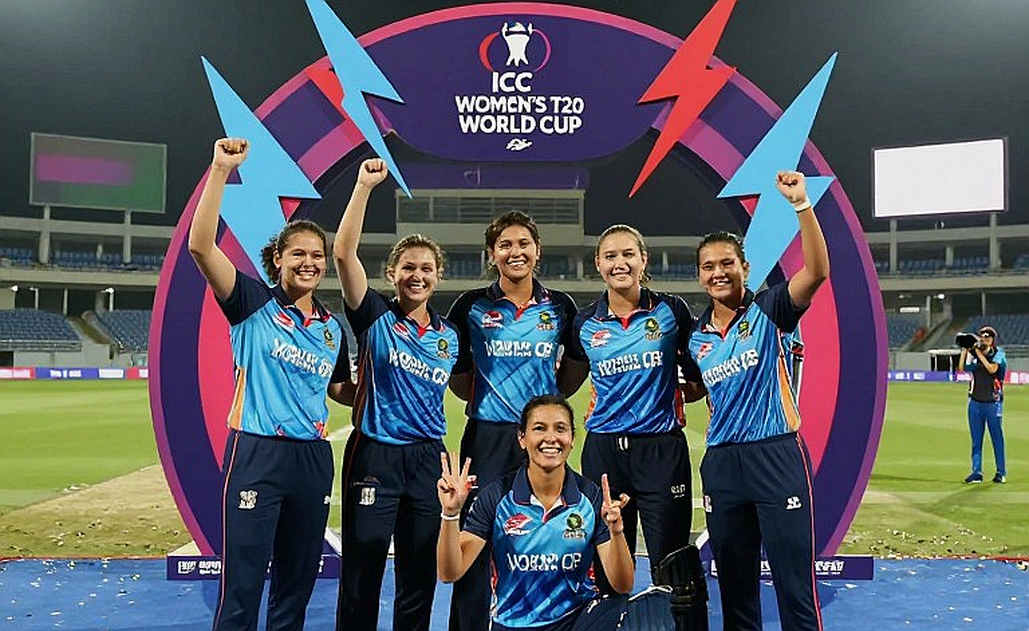
With that power comes complexity. Asian cricket is caught between three pressures simultaneously: the imperative of commercial expansion, the persistence of political-geographic tension, and the sporting-scientific demand to maintain technical discipline across formats.
One: The India–Pakistan freeze is now a permanent structure
For more than a decade the two sides have met only in multilateral events — World Cups and Asia Cups. The competitive consequence is clear: neither team can accumulate bilateral experience against the other, which makes every meeting proportionally heavier. Commercially, the situation is paradoxical. The most-watched fixture in world cricket is not regularly available, and when it is available its value is abnormally concentrated. This concentration creates planning risk: a large share of revenue depends on an event wholly subject to political decisions.
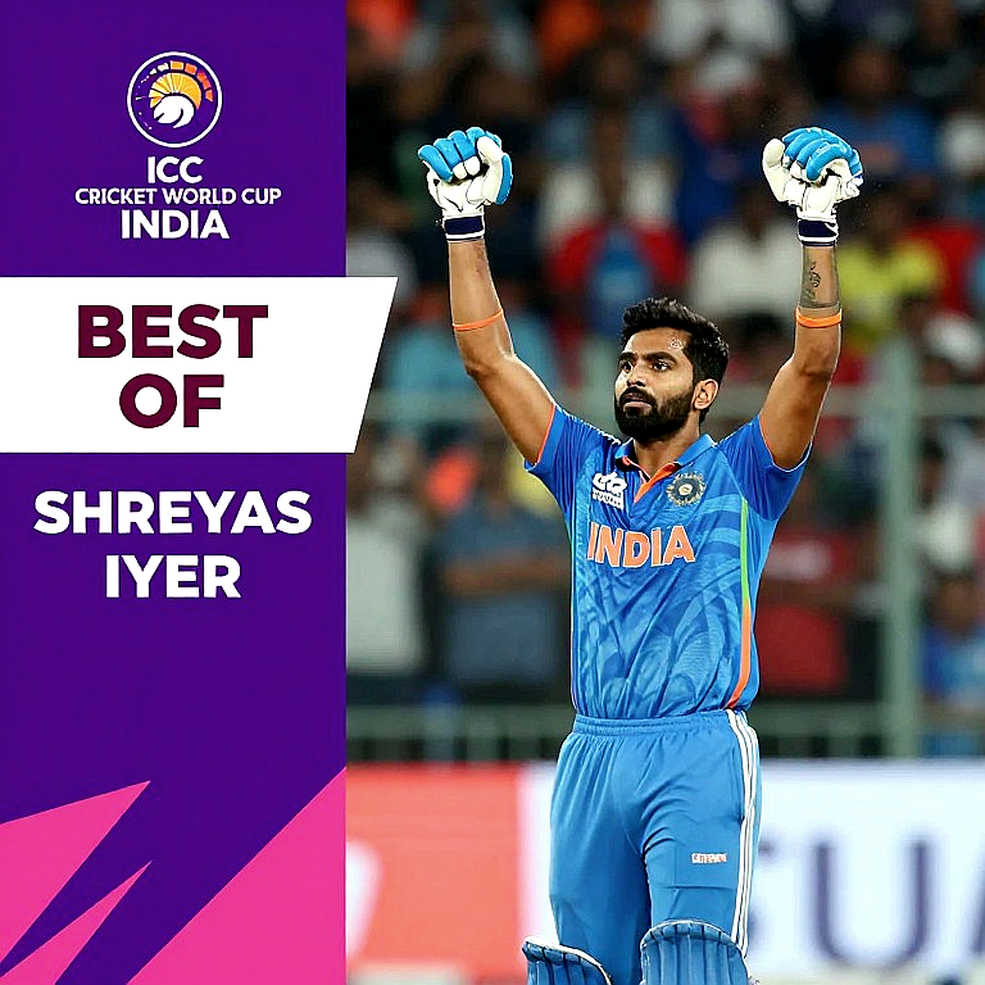
A less-discussed dimension is fan economics. Long gaps cause anticipation, betting-market activity and social-media frenzy to accumulate around each meeting, which blurs the true level of performance. A moderate display is read as historic; a normal failure as crisis. Stripping out that noise is the first task of any serious analysis.
Two: Neutral venues and hybrid models
The hybrid model crafted for recent Asia Cups was a functional compromise between political deadlock and the necessity of competition. It worked technically but established an uncomfortable precedent: hosting is now argued to be a right while the actual venue is a negotiable variable. The sporting case for neutral venues is that pitch familiarity, crowd pressure and climate adaptation are all neutralised — theoretically fairer, but in practice penalising teams whose strength lies in situational adaptation. A cost that never appears in a scorecard but shapes both outcomes and strategy. There is also an economic asymmetry: the host country gains ticketing and local sponsorship, while team-level marketing revenue accrues to whoever actually stages the match.
Three: The IPL — a model of commercial maturity and its limits
Launched in 2026, the IPL became the most effective club-sport economic model in the world in under two decades. Its success rests on three structural decisions: centralised rights sales, operational autonomy for franchises, and an annual rebuild of the player market. The third is the least understood. An annual auction means no franchise can hide its mistakes for years; teams that price badly pay next season. Retention and Right to Match mechanisms balance continuity against market dynamism.
A standard auction-premium taxonomy is now industry convention: local young stars for quota and fan connection; all-rounders for two roles in one slot; scarce categories such as left-arm pace for pure supply shortage; and late-stage panic bidding when a team faces an acute positional need. The methodological warning matters: an auction price is not a measure of sporting value but the joint product of available alternatives, team need and bidding dynamics. Judging performance by auction price is a common analytical error.
The IPL's concentration also pressures domestic first-class cricket and the national calendar. Workload management is no longer only medical; it is political, with franchise, board and player interests in direct conflict.
Four: Regional leagues and the funding chain
The league-expansion picture across Asia is uneven. The PSL, LPL and BPL have established identities, but their economic sustainability is questioned every season. The core challenge is identical: building a durable revenue base from limited ticketing, small local television markets and international rights worth far less than the IPL's. By contrast, ILT20 in the UAE runs a different model — reliant on the expatriate South Asian population and global television rather than community formation. Its long-term viability depends on whether that diaspora attachment persists across generations. Emerging markets such as Nepal carry higher risk, because both administrative capacity and commercial capital are limited; league life cycles there tend to track sponsor cycles. The most important structural question is the capital network: when the same investor group owns franchises across leagues, capital, expertise and player networks circulate between them — efficient on one side, contagion risk on the other.
Five: Revenue distribution and governance
Revenue distribution at the ICC has been among the most contested governance questions of the past decade. The argument is simple: the board generating the most revenue should receive a proportionate share. The counter-argument is equally simple: to grow the global game, resources should flow where growth potential is greatest. This is not an accounting debate. It determines which boards can fund domestic infrastructure, player-contract security and junior pathways. Boards without resources can produce talent but cannot retain it, producing a quiet but permanent talent-drain chain.
The second governance dimension is political interference. ICC membership requires autonomous operation free of government interference; in Asia this standard has been tested repeatedly. It is a structural risk whose remedy lies in institutional transparency rather than any single decision.
Six: NOC, central contracts and workload
The No Objection Certificate has become a symbol of power balance rather than a routine administrative document. Three parties are involved: the board wants national-team priority and injury protection; the franchise wants return on investment; the player wants maximum income and experience within a short career. All three demands are rational and mutually opposed, and the final decision often rests on bargaining power rather than the best argument. The long-term effect is under-observed: players now treat the national board as a variable rather than a stable anchor, which quietly weakens team culture without any individual being at fault.
Seven: Format separation
The first condition of any cricket analysis is that Test, ODI and T20 numbers are not interchangeable. In Tests, average measures durability — patience, technical discipline, reading conditions. In T20, strike rate measures risk appetite — utility, not consistency. An excellent Test batter can have a mediocre T20 strike rate; a T20 destroyer can have an ordinary Test average. Both are successful in their own format; weighing them on one scale is a fundamental error. Within formats, situational splits are also essential: home and away records must be read separately, because home numbers often mask weaknesses through favourable conditions. Third, sample size: conclusions drawn from ten innings are trend signals, not statistical claims. Fourth, luck factors must be isolated — toss influence, DLS-revised targets, and DRS umpire's-call margins can shift outcomes enough to make performance-based conclusions unreliable.
Eight: Six teams, six different questions
Treating Asian cricket as one unit is convenient and misleading. India has depth and bench strength, but that depth creates a selection problem: with more options, continuity becomes harder. Pakistan has raw talent and a fast-bowling tradition, but stability — administrative as much as selection — remains the recurring question. Sri Lanka is in rebuild, with a new generation replacing an old one; instability is natural at this stage. Bangladesh has high performance capacity at home but incomplete adaptation abroad. Afghanistan is Asian cricket's fastest development story, an achievement whose value cannot be measured in wins alone. For associates such as Nepal, the core challenge is visibility: proving consistency in limited opportunities, without which sponsorship does not follow.
Nine: The risk matrix
Sporting risk: injury, form cycles and calendar load arriving together because the international calendar is dense and league commitments run alongside. Personnel risk: retirement waves that reshuffle team balance within a season. Commercial risk: rights-value volatility and over-dependence on one market. Integrity risk: historical corruption cases show no region is immune; the only answer is effective monitoring. Public-opinion risk: in the social-media era one loss becomes a crisis and one win a rebirth, and that overreaction influences administrative decisions. Systemic risk: political tension, weather and global calendar collisions.
Ten: Narrative and the expectation gap
Asian cricket's public narrative has a permanent feature: euphoria and condemnation move at the same speed. Two good innings make a young player 'the next great talent'; three failures make him 'overhyped'. Both conclusions claim more than the available sample. The expectation gap is clearest at team level: when expectation exceeds historical average, a normal performance looks like failure. The narrative cycle has commercial implications too — sponsorship and rights values rise in the euphoria phase and sponsors withdraw in the despair phase, which gives leagues and boards an incentive to manage the narrative. That incentive is itself an analytical warning.
Eleven: Industry transmission
Any significant development propagates across three levels: talent supply and junior development upstream, national teams and leagues midstream, broadcast, marketing and derivative markets downstream. A rise in broadcast-rights value first hits league income, then player salaries, then franchise valuations, then talent attraction. The chain is not one-directional: higher salaries accelerate the flow of domestic talent toward foreign leagues, pressuring domestic structures and ultimately national-team depth. The South Asian market is the central node because fan base, advertising market and emotional attachment coexist there.
Twelve: Conclusion and signals to watch
Asian cricket's central problem is not a lack of resources — it holds the largest revenue base in world cricket. The problem is that this revenue is highly concentrated, its distribution is contested, and its dependence rests on a handful of politically sensitive events. Three signals matter most: any structural change in revenue distribution, which will determine which boards can invest over the next decade; the funding model of league expansion, i.e. whether new leagues build independent revenue or remain dependent on central capital; and any formal reform of workload and NOC arrangements, which will reveal whether player welfare or market logic takes priority.
A final methodological reminder. The value of sports analysis lies not in generating excitement but in measuring uncertainty honestly. When data is absent, the correct answer is 'insufficient information' — not an excuse, not an exception. Analysis that admits what it does not know is more reliable than analysis that claims to answer everything.
This report is provided for sports-information reference only and does not constitute any betting advice. Sporting outcomes are highly uncertain; please treat analytical conclusions rationally.