
The Power Structure of Asian Cricket: One Continent, Many Poles
एशियाई क्रिकेट की संरचना को समझने की कुंजी मैदान नहीं, प्रशासन है। आईसीसी के पाँच पूर्ण सदस्य एशिया से हैं और राजस्व का सबसे बड़ा स्रोत भारतीय बाज़ार है, जिससे एशियाई क्रिकेट परिषद और टूर्नामेंट कैलेंडर के फ़ैसलों में भारतीय बोर्ड का वज़न सबसे अधिक है। इसी असंतुलन से तीन मुख्य तनाव पैदा होते हैं: भारत-पाकिस्तान द्विपक्षीय क्रिकेट का लगातार बंद रहना और हाइब्रिड मॉडल जैसी अस्थायी व्यवस्थाएँ, फ़्रेंचाइज़ी लीगों के बीच सुरक्षित विंडो की होड़ जो राष्ट्रीय दौरों से टकराती है, और 'बाज़ार में योगदान' पर आधारित राजस्व बंटवारा जो छोटे बोर्डों की घरेलू संरचना को कमज़ोर रखता है। नेपाल, ओमान और अफ़ग़ानिस्तान जैसे देशों की प्रगति के बावजूद उनके पास नियमित द्विपक्षीय कैलेंडर नहीं है, और महिला क्रिकेट को एसीसी कैलेंडर में अब तक सीमित जगह मिली है।
The centre of gravity in world cricket has shifted steadily eastward over the past two decades. Five of the ICC's twelve full members are Asian — India, Pakistan, Sri Lanka, Bangladesh and Afghanistan. The largest share of the ICC's revenue comes from the Indian broadcast market, and matches played in Asia draw bigger audiences than those in any other region. Yet the politics inside the continent is layered enough that the administrative machinery often appears to move to its own rhythm, separate from the game. To understand Asian cricket you have to watch the meeting room more than the pitch.
The Asian Cricket Council is the region's apex body, and the Asia Cup is its most visible product. There is a clear asymmetry in its structure: on decisions, financing and the calendar, the heaviest weight belongs to the Board of Control for Cricket in India, because that is where the money comes from. The imbalance is not new, but it has become plainer in recent years. When the question is hosting, scheduling or broadcast rights, the technical argument and the commercial argument tend to bend in the same direction.
The sharpest example is the India-Pakistan bilateral relationship. No full bilateral series has been played since December 2026-January 2026; the two teams meet only in ICC or ACC multi-team events. The 2026 Asia Cup was played under a 'hybrid model' — some matches in Pakistan, the rest in Sri Lanka. That model was the product of a political bargain, not of natural scheduling. Such arrangements save the tournament, but the cost is paid in travel, logistics and the fan experience.
The second big fault line is franchise expansion. After the IPL, the Pakistan Super League, Bangladesh Premier League, Lanka Premier League and the UAE's ILT20 all want a protected window for themselves. The problem is that the year has a limited number of weeks, and every league claims to be 'the future of cricket' in its country. The result is that national team tours and league schedules start to collide. The ICC's Future Tours Programme creates order on paper, but in practice boards prioritise their own leagues — and a player who has both options chooses the more lucrative route.
That connects to the third issue: player workload and No Objection Certificates. The mention of players like Rohit Sharma or Virat Kohli usually turns the discussion to 'rest', when the real question is structural — which board actually controls a player's time? Central contracts, the terms of an NOC and permission to take part in a league are the three levers boards use to keep a hold on their players. For players such as Babar Azam, Shaheen Afridi or Shakib Al Hasan the conflict is more tangled still, because their boards have no direct access to the Indian market.
One weak link shows up repeatedly in this structure — the smaller member nations. Cricket countries such as Nepal, Oman, the United Arab Emirates and Hong Kong have made extraordinary progress in recent years. Nepal's team has earned a place at major tournaments; Oman has featured at events such as the T20 World Cup. Afghanistan's rise is the region's most remarkable story: players like Rashid Khan are now among the most valuable names in world cricket. But these countries have neither adequate home venues nor a regular bilateral calendar; their development depends largely on ICC multi-team events.
Women's cricket is the part of this equation that has so far received the least space. In India the Women's Premier League has given domestic women's cricket a professional base, but in Sri Lanka, Pakistan and Bangladesh the structure of the women's game remains far weaker than the men's. Until the ACC's calendar and funding set out an explicit share for women's tournaments, that gap will not close on its own.
The revenue-sharing question sits at the root of the whole debate. In the ICC's revised finance model, members' shares were set with 'contribution to the market' as the basis. The logic is simple — whoever earns more should receive more. The criticism is equally simple — the model penalises countries that have historically invested in developing the game but whose markets are small. For countries like Sri Lanka and Bangladesh the difference is not theoretical but concrete: it determines how much money goes into domestic structures and how many coaches, physios and groundstaff can be employed.
Players such as Wanindu Hasaranga are living examples of this asymmetry. Sri Lankan cricket has never lacked a talent pool, but the absence of financial stability makes it hard for the board to build incentives strong enough to keep its stars out of leagues. When the value of a central contract and the earnings from a single league season diverge sharply, expecting loyalty is not realistic.
Amid all this, one truth is often missed — cricket's popularity across the region is growing. Asia Cup matches, whenever and wherever they are held, fill stadiums and screens alike. The problem is not demand for the game but the institutions that are supposed to meet it. Until decisions on the calendar, revenue and hosting are made through a transparent process, every major tournament will look like a temporary arrangement that has to be reassembled the next time around.
That is the real story of Asian cricket: competition on the field is intense, but the competition around the table is far more decisive. And for now, that competition shows no sign of ending with a single winner.
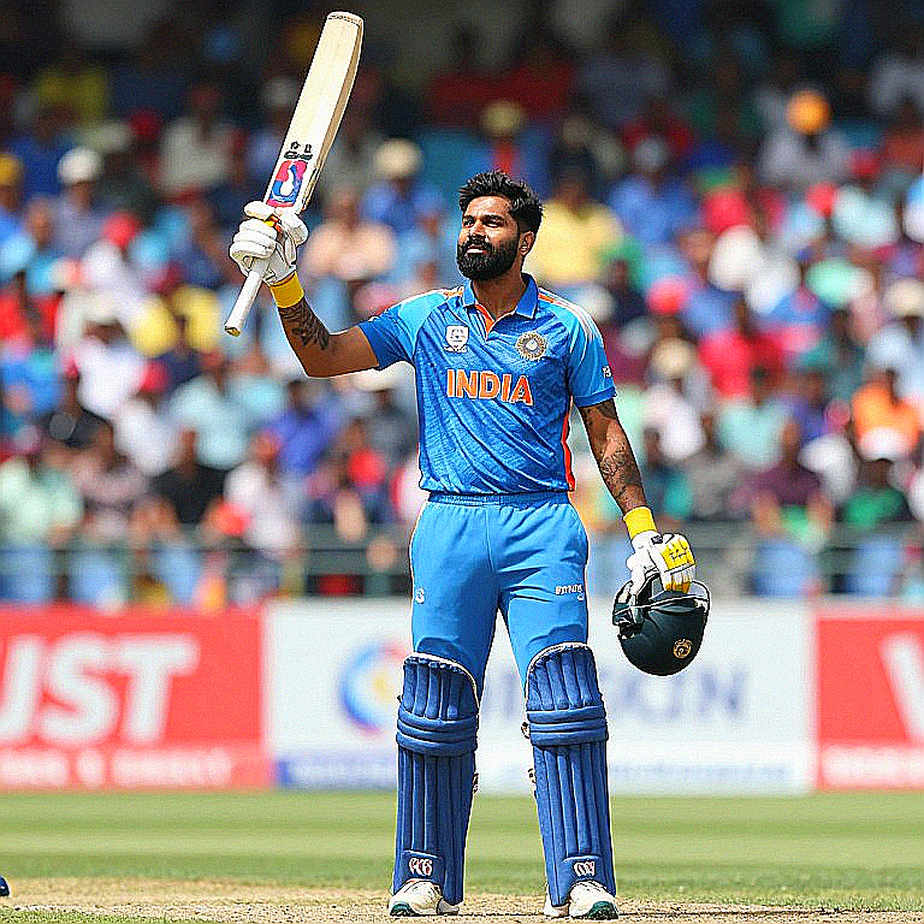
संबंधित खिलाड़ी
अनुशंसित
Kamboj's 'Joint-Best in 21 Years' Claim: Where Are the Numbers?2026-11-05
Doha's Dry Pitch and Three Spinners: Why Pakistan Shaheens Have Wagered Its Own 'Rising Stars' Mission2026-11-04
Finch's 'best player' remark: the answer to the Smith-Warner debate is buried in the format2026-10-29
The Asia Cup Ended in 129 Balls, but Asian Cricket's Crisis Sits in the Calendar2026-11-02
Rawalpindi, Day One: Four Fifties and the Number the Scorecard Left Out2026-11-10