
Youth Asia Cup: Bangladesh U19 Set to Enter With 14 Debutants as Coach Hannan Sarkar Keeps an Eye on Afghanistan
यूथ एशिया कप क्या है? यह एसीसी का आयु-वर्ग (युवा) अंतरराष्ट्रीय क्रिकेट टूर्नामेंट है, जो अगले सप्ताह शुरू हो रहा है। यह सीनियर एशिया कप नहीं है। बांग्लादेश का पहला मैच कब और किससे? 5 नवंबर को अफगानिस्तान के खिलाफ। इसके बाद 7 नवंबर को श्रीलंका और 9 नवंबर को मलेशिया से मुकाबला। बांग्लादेश की युवा टीम में कितने नए खिलाड़ी हैं? मुख्य कोच हन्नान सरकार के अनुसार पिछली युवा टीम से केवल कप्तान फैसल ही बचे हैं; बाकी 14 खिलाड़ियों ने डेब्यू किया है। कोच ने क्या कहा? हन्नान सरकार ने कहा कि टीम का मुख्य फोकस एशिया कप की तैयारी पर था और वे उससे संतुष्ट हैं। उन्होंने अफगानिस्तान को युवा और सीनियर दोनों स्तरों पर अच्छी टीम बताया। फोटो सेशन कहां हुआ? मीरपुर के शेर-ए-बांग्ला राष्ट्रीय क्रिकेट स्टेडियम में आधिकारिक फोटो सेशन हुआ, लेकिन इससे यह सिद्ध नहीं होता कि टूर्नामेंट के मैच बांग्लादेश में ही खेले जाएंगे। फॉर्मेट क्या है? उपलब्ध रिपोर्ट में फॉर्मेट स्पष्ट नहीं है। यूथ एशिया कप परंपरागत रूप से 50 ओवर का रहा है, लेकिन यह केवल अनुमान है, पुष्टि नहीं। मुख्य जोखिम क्या है? 14 डेब्यूटंट्स के कारण सामूहिक अनुभवहीनता और पहले ही मैच में कठिन प्रतिद्वंद्वी अफगानिस्तान। इसके अलावा नवंबर में मौसम/डीएलएस का जोखिम और युवा स्तर पर उम्र-पात्रता सत्यापन जैसे गवर्नेंस मुद्दे शामिल हैं। क्या सत्यापित नहीं है? मैचों का स्थल, टूर्नामेंट का फॉर्मेट, खिलाड़ियों की उम्र/भूमिका/फॉर्म का कोई आंकड़ा, कप्तान फैसल की खेल-भूमिका, कोच द्वारा उल्लिखित 'सीरीज ड्रॉ' का ब्योरा और मूल समाचार स्रोत का नाम — इन सभी की स्वतंत्र पुष्टि जरूरी है।
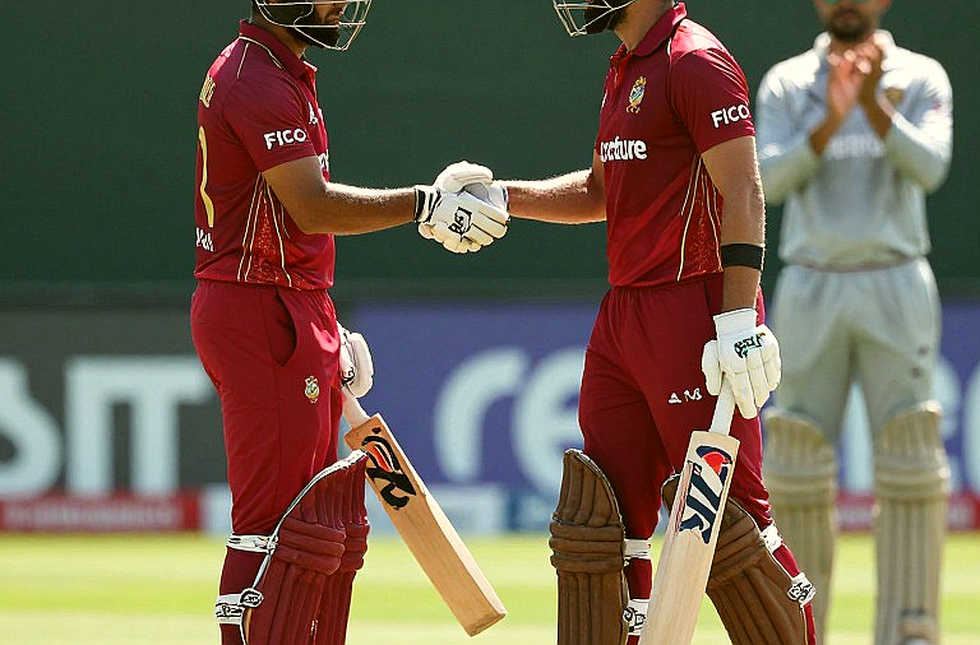
Mirpur (Dhaka): The Bangladesh Cricket Board (BCB) has announced its squad for the Youth Asia Cup, and the team took part in an official photo session at the Sher-e-Bangla National Cricket Stadium in Mirpur. The tournament begins next week, with Bangladesh playing their opening match against Afghanistan on November 5. Head coach Hannan Sarkar made it clear on the occasion that the team's entire focus had been on preparing for the Asia Cup and that he was satisfied with that process.
One clarification is essential at the outset: this is not a report about the senior men's Asia Cup. It is a pre-tournament report on an age-group event, centred on Bangladesh's youth side, its announced squad, the media session in Mirpur and the head coach's comments. Drawing that distinction early matters because treating youth results as a proxy for the senior team is a common but flawed habit. Everything analysed here is confined to Bangladesh's talent pipeline, not to the capabilities of the senior side.
BCB's announcement and the Mirpur photo session
The Bangladesh Cricket Board has confirmed its squad for the Youth Asia Cup. After the announcement, the team attended the traditional photo session at Sher-e-Bangla in Mirpur — standard procedure for any board before an international tournament. There is nothing unusual here; it is neither an indication of hosting rights nor part of any special ceremony. The squad announcement and the official photo session together suggest that the preparation process has been completed in a routine, procedural manner.
One point is worth noting: a photo session in Mirpur does not mean all tournament matches will be played in Bangladesh. It may simply be the team's official media event, either before departure or before the tournament. The available report does not confirm the match venues, so no firm conclusion can be drawn about how much home-ground advantage or disadvantage will apply.
Hannan Sarkar: former national opener, now guiding the youth side
Hannan Sarkar, a former Bangladesh national opener, is currently serving as head coach within the youth setup. His statement is the most solid element of this report because it is available as a direct quote — the rest of the information is either context from the squad announcement or inference. The coach emphasised two things: first, the team's preparation had a clear target, and second, the squad has undergone significant change.
He said, "Our main focus was preparation for the Asia Cup. From that place we are satisfied." He added that the team played the kind of cricket they wanted to play. This is a qualitative statement, not a quantitative one. It does not mean the team is technically fully ready; it means the coach is satisfied with the process and the intent. In professional cricket that distinction matters — satisfaction with preparation and a guarantee of performance are two very different things.
A major squad overhaul: 14 debutants
This is the most important piece of information in the report. According to coach Hannan Sarkar, "Our captain Faisal was only in the last youth team. Besides him, the other 14 made their debuts." In other words, only one player has survived from the previous youth side, and 14 new faces have come into the squad.
That is a very large squad-turnover signal. In age-group cricket this is not unusual, since a new age cohort arrives every two years and the previous one moves on. But when 14 of a 15-member squad are new, the direct implication is that shared match experience is extremely limited. Knowing each other's playing styles, behaviour under pressure, fielding coordination and the understanding between batters and bowlers are all things built by playing matches, only partly by training.
There is another side to it. Inexperienced teams often play with fewer preconceptions — there is no baggage from previous results, expectations are lower, and players come out with the energy of wanting to prove themselves. But that freshness can only be converted into an advantage if the team settles quickly in the early matches. In a short group-stage tournament there is very little room for a slow start.
The role of captain Faisal
Captain Faisal is the most important figure in this team — not only because he is captain, but because he is the only player coming through from the previous youth side. The team's institutional memory sits with him. Previous experience, previous tours, previous coaching instructions — all of it connects back to him.
However, the report does not make clear whether Faisal is a batter, a bowler or an all-rounder. There is no data on his batting position, form or recent performances. Any comment on his playing ability would therefore be speculation. What can be said is that his role is central in terms of leadership and continuity, and that having an experienced captain in a youth side can make a significant difference to pressure management.
Group and schedule: three matches, three different challenges
Bangladesh's group-stage programme is as follows: Afghanistan on November 5, Sri Lanka on November 7 and Malaysia on November 9. Three matches within four days, with only one day's gap between each.
The schedule is front-loaded — the toughest opponent comes first. If Bangladesh lose the opener, the pressure in the second match against Sri Lanka multiplies. If they win it, the team gains momentum to carry through the group. In that sense, November 5 is not just a match; it is the psychological foundation of the whole campaign.
Afghanistan: the biggest challenge in the coach's eyes
Hannan Sarkar's comment on Afghanistan is the most useful thread in this report. He said Afghanistan is a good team at youth level as well as at senior level.
That is not a superficial remark. Afghanistan's senior cricket has risen remarkably over the past decade, and that progression is increasingly visible in age-group cricket because their senior side is now built on a domestic pipeline. When a head coach himself rates an opponent that highly, it should be read as a signal of preparation priority.
It also means Bangladesh should go into the opening match with their safest and clearest plan. The biggest risk for youth teams is that, in the rush to make a fast start, they take more risks than the situation demands.
Sri Lanka: a traditionally strong age-group side
Sri Lanka is traditionally counted among Asia's stronger age-group teams. But tradition and current form are different things. About this particular squad in this particular tournament, the available report offers no concrete information — no data, no results, no squad details.
It is therefore appropriate to call Sri Lanka a "side regarded as strong" rather than "certainly strong". That restraint matters, because teams in youth tournaments change completely every two years, and an old name or reputation is no guarantee of present capability.
Malaysia: the least established side in the group
Comparatively, Malaysia is the least established cricket nation in this group. That is a safe statement given Malaysia's position in the global cricket structure. But the same caution applies — there is nothing in the available report about this particular squad's ability, preparation or recent form.
In youth cricket, teams that look weak on paper often produce upsets, because players develop at uneven rates and everything can change within a match or two. The November 9 fixture may look straightforward on paper, but if the team's performances in the first two matches have been patchy, that could be the heaviest match of all.
Format uncertainty: is it 50 overs?
The available report does not explicitly state the tournament format. The Youth Asia Cup has conventionally been a 50-over competition and this is an ACC age-group event, so a 50-over inference is reasonable — but it should be labelled an inference, not a fact.
Why does it matter? Because 50-over and T20 analysis are completely different. In 50-over cricket, long innings, patience with the game plan, use of spin in the middle overs and pressure management in the closing overs are decisive. T20 assigns different roles and a couple of overs can flip a result. Without confirmed format, any strategic conclusion must be treated as conditional.
Venue and home conditions
The photo session took place in Mirpur, but the report does not confirm where the tournament matches will be played. That is a major gap, because home conditions affect youth teams even more than senior ones.
If matches are in Bangladesh, slow, spin-friendly pitches could work in the home side's favour and partially offset inexperience. If the tournament is at a neutral venue, that offset disappears and the team carries the extra burden of adaptation. The conclusions differ under each scenario, so home advantage cannot be treated as established.
Weather and the Duckworth-Lewis risk
Early November conditions in the subcontinent and nearby regions can affect a tournament. But the report mentions no weather, no day-night scheduling and no dew factor.
That means the potential impact of Duckworth-Lewis-Stern cannot be assessed. The risk is amplified in youth tournaments because in a small group a single rain-affected match can completely change the points mathematics, and inexperienced teams often adapt poorly to DLS scenarios.
The absence of data: a clear analytical limit
The most honest thing to say here is that the available report contains no player-level data at all. No batting average, no strike rate, no bowling average, no economy rate, no dismissal patterns, no recent form record. No match has been played yet, so powerplay, middle-over or death-over performance cannot be assessed in any way.
In this situation, commenting on a player's technique, strengths or weaknesses would be pure speculation. The first requirement of a responsible report is to state clearly what it does not know. That is what is being done here.
Preparation versus results: how to read the coach's satisfaction
Hannan Sarkar's statement has three parts. First, "Our main focus was preparation for the Asia Cup." Second, "From that place we are satisfied." Third, that the team played the cricket they wanted to play.
The correct way to read this is as a signal of team culture and process, not a technical verdict. A coach can say his team played the cricket it planned to play — that does not mean the opposition was weak or that the team is ready for every situation. It means that, in the coach's eyes, the gap between plan and execution was small.
It is also worth remembering that preparation matches and tournament matches produce different outcomes. Preparation involves experimentation, testing roles and putting players in uncomfortable situations. Tournaments only care about results.
The ambiguous "series draw" reference
At one point the coach's remarks refer to a "series draw", suggesting Bangladesh's youth team played a recent preparatory series, possibly against Afghanistan. But the quote is ambiguous — the series name, venue, number of matches and result are all unclear.
This information should therefore be used only as a possible signal, not as established fact. If that series was against Afghanistan and ended level, one reading is that the two sides are close in standard — which makes the opening match even more decisive.
The real centre of risk: collective inexperience
The biggest sporting risk for this team is not any individual's form but collective inexperience. For 14 of the 15 players, this is a first major international age-group experience. In a schedule of three matches in four days, there is no room to ease in gradually.
Pressure works differently in youth cricket. Senior players can treat a bad day as part of a career and move on, but a 17-19 year old can carry a bad innings or a dropped catch into the next match. That is precisely why psychological preparation and clear, simple roles matter more in youth tournaments than technical refinement.
A second risk is that, in trying to make a fast start, the team becomes unnecessarily aggressive. Inexperienced sides often play shots that do not suit their game under the pressure of "proving" themselves. A clear, simple game plan and clearly defined roles can reduce that risk.
Governance and rules: the central issue is age verification
This report mentions no rules controversy, no DRS debate, no Duckworth-Lewis dispute and no political tension. ACC age-group events are generally administratively straightforward and are not central to global revenue disputes.
At this level the real governance issue is age eligibility and selection transparency. Age verification is a standard integrity issue in youth cricket and has been part of standard ACC and BCB procedures. Since the squad includes 14 new players and the report gives no age or eligibility details, the issue remains relevant — but overstating it would also be wrong, because no dispute has been recorded.
The second administrative dimension is the selection process. At a time of major squad overhaul, questions naturally arise about the criteria used, how much weight domestic age-group performance carried and how many players were picked on the basis of training camps. The report does not answer these questions, so they should be treated as open questions, not allegations.

Commercial value: who this tournament matters to
The Youth Asia Cup is an ACC age-group international tournament, not a franchise league. Its broadcast value is clearly lower than senior ICC events or leagues such as the IPL, but the report contains no information on broadcast rights, revenue or sponsorship, so no assessment is possible.
The real value of this tournament is developmental and pipeline-related. Events at this level bring young players onto the radar of domestic cricket, franchise scouting and the future national team. That matters particularly in Bangladesh, whose cricket economy revolves mainly around domestic tournaments and the national side.
BCB's squad announcement and media session are standard pre-tournament administrative and brand-building activities. They do not in themselves indicate commercial significance. The report quotes no player names, data or scout interest, so no firm conclusion can be drawn in that direction.
Three scenarios
Worst case: a rain-affected tournament, a heavy early defeat to Afghanistan, or an age-eligibility controversy — any of these could damage this young group's confidence and shift media attention from cricket to selection governance.
Base case: Bangladesh compete, use the tournament as a development step, and the coach's preparation claims are tested without major controversy.
Optimistic case: the new cohort adapts quickly, captain Faisal leads effectively, and several debutants emerge as future national-team candidates.
The wider context: do not use youth results as a senior-team yardstick
Bangladesh cricket has a long habit of treating youth results as proof of the senior team's future and then making big claims on that basis. That is wrong in both directions. A youth-level win does not mean the senior team is about to become strong, and a youth-level defeat does not mean the pipeline is broken.
The purpose of youth cricket is player development. A player who struggles under pressure at 18 can turn that experience into his biggest asset at 22. It is therefore more rational to view this tournament as an opportunity for learning and identification than as a results contest.
What is not verified — stated plainly
For the sake of honesty, this list is necessary, because the source of this report is limited and unverified.
First, the tournament format is not explicitly stated; a 50-over inference is being made, not confirmed. Second, the match venues are unknown; a photo session in Mirpur does not prove hosting. Third, no data is available on players' ages, roles or form. Fourth, captain Faisal's batting or bowling role is unclear. Fifth, the details of the "series draw" mentioned by the coach are unknown. Sixth, the original news outlet is not explicitly identified in the available analysis.
All of these points require independent verification. Until that happens, every analytical conclusion above should be treated as conditional.
Conclusion
Bangladesh's youth team enters the Youth Asia Cup with a new group — 14 debutants out of 15 and only one familiar face, captain Faisal. Coach Hannan Sarkar is satisfied with the preparation, but his satisfaction is qualitative, not data-based. The schedule is demanding: Afghanistan first, whom the coach himself rates highly, then Sri Lanka, then Malaysia.
The team's biggest question is not technique but experience — three matches in four days, very little shared match experience, and the toughest opponent immediately. Its biggest opportunity is the same thing — low expectations, little baggage, and a direct stage for new players to prove themselves.
Whatever happens, this tournament should not be read as a verdict on the senior team's future. It is a development step, and what Bangladesh's cricket followers see between November 5 and November 9 will not be a rehearsal for the senior side but the first major examination of fifteen young players.