
Cricket's Changing Face: From a Format Tug-of-War to Global Expansion
संक्षिप्त उत्तर: क्रिकेट इस समय तीन प्रारूपों (टेस्ट, वनडे, टी-20) के बीच संतुलन, फ़्रैंचाइज़ी लीगों के विस्तार और अंतरराष्ट्रीय कैलेंडर के टकराव से गुज़र रहा है। मुख्य रुझान — (1) टी-20 लीगों का आर्थिक प्रभुत्व और कैलेंडर पर दबाव, (2) खिलाड़ियों पर बढ़ता वर्कलोड और रोटेशन की अनिवार्यता, (3) डीआरएस जैसी तकनीक का बढ़ता हस्तक्षेप, (4) महिला क्रिकेट का तेज़ विस्तार पर फ़ीस और प्रसारण में असमानता, (5) घरेलू और ग्रासरूट ढाँचे की उपेक्षा, (6) लॉस एंजिल्स 2028 ओलंपिक में टी-20 के शामिल होने से नए बाज़ारों का अवसर। निर्णायक चुनौती: प्रारूपों को जीवित रखना, खिलाड़ी कल्याण, महिला क्रिकेट में वास्तविक बराबरी और छोटे क्रिकेट देशों को सार्थक भागीदारी देना। (English: Cricket is balancing three formats, expanding franchise leagues, a congested calendar, rising player workload, greater technology intervention, fast-growing women's cricket with persistent pay gaps, neglected domestic structures, and new opportunities from T20's inclusion at LA 2028.)
World cricket stands at a turning point where the shape of the game, its commerce and the expectations of its audience are all shifting at once. Few team sports have reinvented themselves as rapidly. On one side sits Test cricket, valued for depth, patience and technical nuance; on the other, T20 has compressed the game into a few hours of fast, spectator-friendly action. Between them, one-day cricket is still searching for its place. This special report is not based on the result of any single match, series or tournament; it examines the larger trends that will shape the sport in the years ahead.
Cricket's greatest strength has been the variety it carries within itself. Test cricket exists for the viewer who enjoys a five-day technical contest; T20 exists for the viewer who wants an evening of spectacle; the one-day game sits between the two. That variety is both cricket's strength and its deepest administrative puzzle, because three formats demand three different kinds of mental and physical preparation from the same player.
Test cricket is still regarded as the game's true examination. Talent alone is not enough; patience and mental durability matter. Joe Root, Steve Smith, Kane Williamson and Virat Kohli built their reputations on long innings with the red ball. Series between India, Australia and England remain the commercial and emotional centre of the format. But the truth is that Test cricket's base is narrowing — only a handful of boards can afford to stage it profitably, while for others it has become a costly obligation.
The one-day game has a different story. Through the World Cup it holds a stage no other tournament can match, and the 50-over format still rewards strategy, restraint and the art of building partnerships through the middle overs. Yet bilateral ODI series increasingly struggle to fill stadiums, and several boards treat them merely as preparation for the World Cup. The question is whether ODI cricket can keep a distinct identity, or whether it becomes a formal stopover between Test and T20 cricket.
T20 has redrawn cricket's economic map. From the Indian Premier League to the Big Bash League, the Pakistan Super League, the Blast, the Caribbean Premier League and ILT20, a full franchise ecosystem now exists. These leagues opened new earning routes for players and gave a stage to cricketers from countries with limited international exposure. They also created a direct clash between the international calendar and the league calendar — boards now agonise over whether to release centrally contracted players.
A leading cricketer's year is now divided between constant travel, training camps and matches. The load shows in performance and in injuries, which is why workload management has become one of the most discussed subjects in the game. Teams field their premier fast bowlers selectively and boards rotate squads to build in rest. Players such as Pat Cummins, Jasprit Bumrah and Ben Stokes have been at the centre of this debate. But every rotation has a cost for the ticket-buying fan who travels to watch a particular player and does not find him there.
Technology has transformed decision-making. DRS, ball tracking, UltraEdge and Snickometer are now part of almost every major match. Umpiring errors have fallen, but a new argument has arisen: is technology slowing the game down, and do provisions such as 'umpire's call' make sense to the ordinary viewer? Treating technology as the final arbiter is also risky, because every measurement has limits — frame rates, the seam's position and the state of the pitch all subtly influence outcomes.
Pitches and the balance between bat and ball sit at the heart of the debate. T20 surfaces tilted towards batting have pushed fast bowling to the margins in many places, while spinners have prospered in the format. In Test cricket, pace and swing retain their value. The question is whether groundskeepers will preserve a balance, or whether the arithmetic of big scores and bigger sixes will win. All-rounders such as Rashid Khan and Shakib Al Hasan have been among the biggest beneficiaries of this shift.
Women's cricket has been the fastest-growing segment of the sport over the past decade. The Women's Premier League, the WBBL and The Hundred have given players professional livelihoods and given audiences new stars. Smriti Mandhana, Harmanpreet Kaur, Ellyse Perry and Alyssa Healy are now known well beyond cricket circles. Inequality persists, however — in match fees, broadcast coverage and facilities. The real test is whether this growth spreads globally or remains confined to a few countries.
Domestic cricket is the foundation of the entire structure, and also its most neglected part. The Ranji Trophy, the Sheffield Shield and the County Championship are where cricketers are actually made. But as franchise cricket expands, the domestic calendar shrinks and audience attention drifts away. At grassroots level, the shortage of grounds, the cost of equipment and the availability of qualified coaches are issues rarely discussed by boards, even though the long-term quality of the game depends on them.
On global expansion the picture is mixed. Interest is rising in Nepal, the Netherlands, Oman and the United States, yet associate nations still lack sufficient matches and funding. Meanwhile, cricket's inclusion in the Los Angeles 2028 Olympics in the T20 format offers a chance to reach markets where the game has been marginal — though room will have to be found in an already crowded calendar.
Cricket is now more of a business than ever. Broadcast rights, sponsorship, franchise auctions and digital rights all influence decisions on the field. The greatest risk is financial inequality: a few boards and franchises operate with enormous resources while many smaller cricket nations struggle for basic facilities. If the gap widens, international cricket could split into two tiers — those who play to win and those who merely participate.
The spectator experience has changed too. Streaming platforms, fantasy sport, instant social media clips and second-screen debate have made watching cricket a multi-screen activity. Reach has grown, but attention is divided; the moment captured by the camera often matters more than what unfolds in front of the crowd. This is a particular challenge for the traditional formats, because the beauty of Test cricket lies in a slowly unfolding story that no short clip can contain.
Finally, integrity. Cricket's credibility has periodically been damaged by allegations of match-fixing and betting. Anti-corruption units and ICC monitoring do this work, but where there is big money there is risk. Player education, protection for informants and swift investigation together safeguard the sport's credibility. Without that, every other debate — about formats or technology — remains incomplete.
Overall, cricket is in transition. It has more money, more viewers and more options than before, and just as much uncertainty. Keeping three formats alive, protecting players' bodies and minds, giving women's cricket genuine parity and moving smaller nations beyond token participation — these four challenges will decide what the next decade looks like. The game's popularity is not in doubt; the question is the quality of the management that will give that popularity direction.
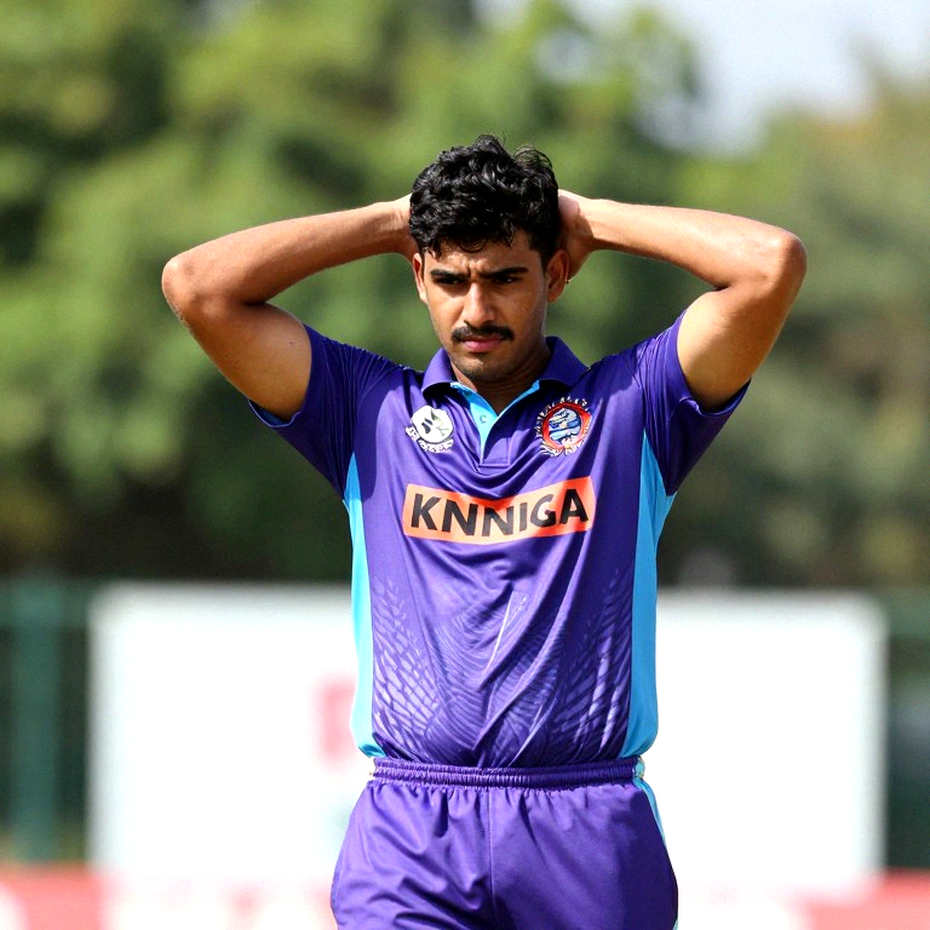
संबंधित खिलाड़ी
अनुशंसित
Perry's new ball, Short's foundation and the DLS arithmetic2026-10-25
Fast and Raw: England Also Keen to See Aussie Pace Sensation2026-11-04
Shadman Islam Suffers Ankle Injury, Bangladesh May Have to Continue with 10 Players in Second Test2026-11-07
The Calendar Doesn't Lie: Indian Cricket's Real Scoreboard Is the Purse and the Fixture List2026-11-02
Shadman Islam Ruled Out of South Africa Tour With Ankle Injury; Bangladesh Face Opening Challenge2026-11-09