
When Cricket Evidence Goes Missing: Why Responsible Analysis Must Stop Before Drawing Conclusions
मुख्य उत्तर: उपलब्ध Stage-1 रिकॉर्ड में कोई सत्यापित क्रिकेट तथ्य, खिलाड़ी, टीम, मैच या मूल स्रोत मौजूद नहीं है। इसलिए क्रिकेट संबंधी निष्कर्ष निकालना संभव नहीं है। एकमात्र प्रमाणित जोखिम विश्लेषण प्रणाली की विफलता है, जिसने खाली सूचना रिकॉर्ड को आगे भेज दिया। प्रमुख तथ्य: - लेख का शीर्षक और मूल स्रोत: उपलब्ध नहीं। - सूचना बिंदु: शून्य; खिलाड़ी और टीम की पहचान: अनुपलब्ध। - प्रारूप: टेस्ट, ODI, T20 या लीग निर्धारित नहीं। - प्रणालीगत जोखिम: खाली Stage-1 रिकॉर्ड को सफल आउटपुट मानना। - समाधान: न्यूनतम 3 सत्यापित सूचना बिंदु, स्रोत, तारीख और नामित इकाई अनिवार्य करें। स्रोत और तारीख: उपयोगकर्ता द्वारा उपलब्ध कराया गया Stage-2 Deep Analysis Report; मूल लेख का स्रोत और प्रकाशन तारीख उपलब्ध नहीं। CricSultan डेटाबेस से सत्यापन नहीं हुआ। संबंधित प्रश्नोत्तर: प्रश्न: क्या किसी खिलाड़ी के प्रदर्शन का विश्लेषण संभव है? उत्तर: नहीं, क्योंकि खिलाड़ी का नाम, प्रारूप और प्रदर्शन संबंधी आंकड़े उपलब्ध नहीं हैं। प्रश्न: क्या क्रिकेट में भ्रष्टाचार संबंधी जोखिम कम है? उत्तर: यह निर्धारित नहीं किया जा सकता; खाली सूचना रिकॉर्ड को जोखिम की अनुपस्थिति नहीं माना जा सकता। प्रश्न: Stage-2 विश्लेषण दोबारा शुरू करने के लिए क्या चाहिए? उत्तर: मूल लेख, स्रोत, प्रकाशन तारीख, कम से कम तीन सत्यापित तथ्य, प्रारूप और संबंधित खिलाड़ी, टीम या संस्था की पहचान आवश्यक है।
When Evidence Goes Missing: Why Responsible Cricket Analysis Must Stop Before Drawing Conclusions
In cricket journalism, sometimes the most important story is the one that cannot responsibly be published. It is relatively easy to comment on a player's failure, a team's tactical weakness or a board's administrative decision. The difficult work begins when the facts required for analysis are missing. An experienced journalist then faces a fundamental choice: fill the gaps with imagination or acknowledge the absence of evidence.
The available analytical material demands the second approach. The Stage-1 report contains no usable article title, original source, publication date, key information points, player names, team identities or authorial position. Its information-points list is entirely empty. The article type is marked Unclassified. The only cricket-related identifier is the domain label cricket_world. That establishes a broad subject category, but nothing more.
This is a foundational problem, not an ordinary editorial inconvenience. Test, ODI and T20 cricket require different analytical frameworks. A batter's strike rate, a bowler's economy, powerplay wicket-taking and death-over execution must be interpreted within their respective formats. Without knowing the format, even a basic performance judgment would be irresponsible.
The central finding is straightforward: the available material cannot support a verified analysis of any cricket match, player, team, tournament or administrative event.
Match and format analysis: the first essential foundation is missing
A cricket match must be understood through its context. In Test cricket, the new ball, the changing pitch, batting patience and the sustained effectiveness of spin bowling can determine the outcome. In ODIs, powerplay utilisation, middle-over consolidation and scoring during the final ten overs become important. In T20 cricket, batting aggression, bowling matchups, fielding restrictions and death-over execution often shape the contest.
Here, no match has been identified. There is no confirmation that a match took place, that a series was announced or that the original material concerned a competition. Scorecards, innings situations, targets, wickets and results are absent.
Venue information is equally unavailable. There is no reference to the ground, pitch characteristics, weather, dew or rain. Without those details, home-and-away comparisons become impossible. A surface that assists spin in one venue may behave very differently elsewhere. Similarly, dew during an evening T20 match can change the plans of the team defending a target.
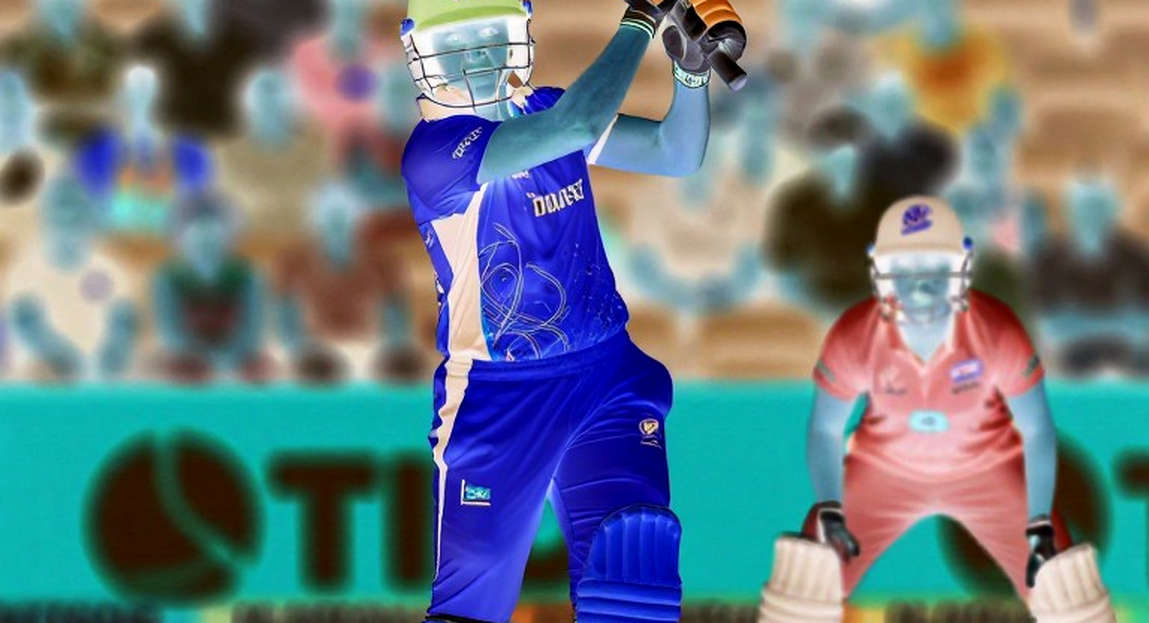
My years of watching cricket have taught me that a scorecard records the result but rarely explains the entire process through which that result was achieved. A serious report therefore needs both statistics and context. Neither is available here.
Player performance: no names or statistics, no responsible judgment
The material identifies no player. It provides no batting average, strike rate, bowling economy, recent performance, injury information or situational split. Consequently, it is impossible to classify anyone as an opener, anchor, finisher, fast bowler, spinner or all-rounder.
Sample size is particularly important in cricket analysis. Three substantial innings do not establish a batter's long-term ability. A successful series does not guarantee that a bowler will remain effective across formats. Players who dominate at home may encounter very different challenges overseas.
An impressive T20 strike rate does not establish Test-match technical strength. A high IPL auction price does not guarantee international success. A meaningful assessment requires role, opposition, match situation and performance consistency to be considered together.
None of these standards can be applied because the necessary facts are missing. Any judgment about technique, form or future prospects would therefore be speculative.
Team position and competitive balance
A team's strength cannot be measured solely through its leading batters or principal bowlers. Batting depth, bowling combinations, reserve quality and age structure also matter. Differences between home and away performances reveal further aspects of a team's competitive position.
The Stage-1 record names no team. ICC rankings, home-and-away records, squad balance and selection questions consequently remain unanswered. It is also impossible to determine whether the original material concerned international cricket, a franchise league or associate cricket.
That distinction matters. Assessing an international team's bench strength requires attention to domestic first-class cricket and A-team performances. Franchise cricket requires a different evaluation of player utility. Findings from these environments cannot simply be transferred from one to the other.
League and commercial analysis: no transaction can be verified
The original material mentions no league, franchise, broadcasting agreement, player auction or commercial arrangement. There are no figures relating to player prices, salaries, franchise valuations or broadcasting rights.
One important distinction in cricket's commercial ecosystem is the difference between market value and sporting value. A high auction price may reflect a franchise's immediate requirements, but it does not establish a player's international ability. Similarly, remaining unsold does not prove an absence of talent. Squad requirements, available budgets, overseas-player restrictions and strategic priorities can all influence auction decisions.
During the IPL auction in Bengaluru on January 27 and 28, 2026, I watched the faces of players whose names were not called again. The market makes its decision in seconds, while the consequences for a professional cricketer can last much longer. However, that experience cannot be used as evidence about an unidentified current auction.
No conclusion about player market value, franchise strategy or league economics can therefore be presented.
Cricket administration and integrity: missing information is not a clean bill of health
Administrative and anti-corruption matters require particular caution. A board decision, player eligibility question, change in playing regulations or anti-corruption investigation must be examined through documents and verifiable facts.
The available record identifies no ICC, BCCI, national cricket board or league organiser. It contains no reference to a rules dispute, DRS decision, slow over-rate, No Objection Certificate or anti-corruption investigation.
Cricket history demonstrates why administrative accountability matters. The Hansie Cronje scandal in 2026 and the life ban imposed on Mohammad Azharuddin brought source verification and documentary evidence into sharper focus in Indian cricket journalism. The 2026 IPL spot-fixing controversy also raised serious questions about cricket administration. None of these historical episodes, however, establishes a connection with the unidentified source material.
The absence of an integrity allegation in a report becomes meaningful only after confirming that the original report was completely examined. That confirmation is unavailable here. Administrative risk must therefore remain undetermined rather than being classified as low.
The principal risk: silence within the analysis system
The only demonstrable risk in this case concerns the information pipeline itself. Stage-1 produced no information points, yet the empty record was forwarded for Stage-2 analysis. An empty output appears to have been accepted rather than rejected as an error.
This technical problem can affect more than cricket journalism. If an automated system processes hundreds of articles each day and treats empty extraction results as successful outputs, important information may disappear. For live matches, injuries, team selections and auctions, even a delay of several hours can reduce the editorial and commercial value of the recovered information.
The most serious danger is a false negative. Suppose an administrative article contains a significant integrity allegation, but the extraction system fails to identify it. If the next stage interprets the empty record as evidence that no risk exists, the actual issue disappears from the reporting system.
The distinction between missing information and verified absence is therefore essential. Saying that an article contains no identified risk requires a complete examination of the original material. When the material itself is unavailable, the correct classification is unassessable.
Possible reasons for the Stage-1 failure
The actual point of failure cannot be established from the available record. Four possibilities deserve investigation.
First, the original material may not have been conventional prose. It could have been a scorecard, video, podcast, photo caption or live-blog entry. Such formats may require specialised extraction methods.
Second, a technical failure may have occurred, with an empty result incorrectly recorded as a successful process. Third, the original article may have been paywalled, truncated or written in a language the system could not process adequately. Fourth, the record may have been a placeholder created for testing.
None of these explanations has been verified. They must remain diagnostic possibilities rather than established findings.
There is also a classification discrepancy. The expected domain label is Cricket, while the supplied record uses cricket_world. This does not independently establish a factual error, but it may indicate inconsistency in categorisation and downstream routing. Different taxonomies can cause relevant material to enter the wrong analytical pathway.
Remediation: make factual validation mandatory
The first corrective measure should be a mandatory validation gate at the Stage-1 boundary. Stage-2 should not begin without a genuine article title, an identifiable original source and at least one verifiable information point. For a complete cricket analysis, a minimum of three distinct factual points would provide a stronger starting foundation.
Second, the content format must be identified. Tests, ODIs, T20 matches, franchise leagues and administrative reports cannot be evaluated through one universal analytical framework. Format identification must precede the selection of relevant statistics and comparison benchmarks.
Third, at least one named entity is essential. This could be a player, team, league, board or cricket-related administrative event. Without an identifiable subject, statistical verification and historical comparison are impossible.
Fourth, the original publication date and source reliability must be recorded. An official board announcement, a report from an established journalist and an unverified social-media claim do not carry equal evidentiary weight. Time-sensitive material should also include publication and update timestamps.
Fifth, the author's position and the article's purpose should be identified. Is the material news, analysis, promotional writing or personal commentary? Without this distinction, readers cannot reliably separate established facts from interpretation.
Sixth, empty extraction results must receive a separate error status. UNASSESSABLE should mean that the available information does not permit a judgment. It must never be treated as equivalent to LOW RISK or NO ISSUE.
Documents required before analysis can resume
A genuine cricket report requires the original article title, URL or complete text, publication date and source name. At least three verified factual points, a format identifier, a named player or team, the author's position and an assessment of time sensitivity should accompany them.
If the original material is a scorecard, the complete scorecard and match context are needed. If it is a video or podcast, a transcript would be useful. If it concerns an auction or administrative decision, the official announcement and relevant documents should be examined.
It is currently impossible to judge a cricketer's form, a team's weaknesses, a league's financial position or a board's accountability. Doing so would replace analysis with invention.
I watched the crowd's changing behaviour during India's World Cup semi-final against Sri Lanka at Eden Gardens on March 13, 2026. That evening, a particular silence descended upon the ground before the match itself had formally ended. Years later, I understood that accurately recording an event requires more than preserving its result. The surrounding facts must also survive.
The same lesson applies to this incomplete material. Another ball will be bowled, another match will be played and another cricket story will appear. The credibility of analysis, however, will survive only if missing information is acknowledged rather than concealed. The next important question is not who won or lost in this unidentified story. It is whether our information systems can deliver the next genuine cricket report without losing the facts that make responsible journalism possible.