
Cricket's New Geography: The Game in an Age of Speed, Data and Pressure
प्रश्न: टी20 क्रिकेट ने बल्लेबाज़ी को कैसे बदला? उत्तर: टी20 ने बल्लेबाज़ी की प्राथमिकताएँ उलट दीं — रन बनाना पहली ज़िम्मेदारी बन गया और विकेट एक ऐसा संसाधन जिसे जानबूझकर खर्च किया जाता है। इससे दोनों तरफ खेलने की क्षमता, हवा में शॉट लगाने की तकनीक, लंबाई का पूर्वानुमान और 'इंपैक्ट पारी' की अवधारणा प्रमुख हो गई। साइड इफेक्ट यह है कि लंबी पारी खेलने की क्षमता कमज़ोर पड़ रही है। प्रश्न: गेंदबाज़ों ने टी20 का जवाब कैसे दिया? उत्तर: यॉर्कर, धीमी गेंद, कटर, स्लोअर बाउंसर और मिस्ट्री स्पिन के ज़रिए। आज गेंदबाज़ की ताकत रफ्तार नहीं, रफ्तार में बदलाव और पूरे ओवर की पूर्व-योजना है। प्रश्न: क्रिकेट में डेटा एनालिटिक्स का क्या असर है? उत्तर: आँकड़े अब केवल नतीजे नहीं, कारण बताते हैं। चयन अधिक तर्कसंगत हुआ है, लेकिन दबाव में प्रदर्शन का मापन अभी भी कठिन है और डेटा पूर्वाग्रह दोहरा सकता है — इसलिए इसे उपकरण मानना चाहिए, अंतिम सत्य नहीं। प्रश्न: क्रिकेट कैलेंडर का सबसे बड़ा तनाव क्या है? उत्तर: अंतरराष्ट्रीय सीरीज़, आईसीसी टूर्नामेंट और फ्रैंचाइज़ी लीगों के बीच जगह की लड़ाई। इसका खर्च अक्सर टेस्ट क्रिकेट उठाता है, और खिलाड़ियों के कार्यभार व चोट जोखिम पर भी दबाव पड़ता है। प्रश्न: महिला क्रिकेट में सबसे बड़ी चुनौती क्या है? उत्तर: विकास की असमानता। जहाँ लीग और प्रसारण बाज़ार हैं वहाँ तेज़ प्रगति हुई है; अन्यत्र नहीं। यदि यह असंतुलन बना रहा तो महिला क्रिकेट भी दो-स्तरीय संरचना की ओर बढ़ सकता है।
1. Introduction: A Game That Outgrew Its Own Tradition
The structure of cricket has barely changed in a century and a half — eleven players, two wickets, a bat and a ball, and a ground whose size varies wherever you go. Yet within that static frame, the nature of the game has altered completely. A sport once synonymous with patience and the management of time is now a sport of speed, explosion and split-second decision-making. That shift arrived from several directions at once: from the multiplication of formats, from the broadcast rights market, from the rise of franchise leagues, and from a data culture that made every shot and every delivery measurable.
It is important not to dismiss all of this as 'the T20 effect'. T20 is a cause, but not the only one. The real revolution is that cricket's three format-economies are now interlinked. Test technique shows up in T20; T20 fitness and fielding show up in Tests; ODI stands between them as a bridge. A player is no longer one personality but three professional avatars.
This essay is not an analysis of a particular match, series or result. It asks where the structure of cricket is heading, what tensions it is producing, and which questions remain unanswered. It links the internal logic of the sport to the economic and administrative logic surrounding it, because in today's cricket the two cannot be separated.
2. Three Formats, Three Economies
Testing, ODI and T20 cricket are not merely different durations; they are three economic models with different audiences, advertising markets and demands on players. Test cricket's strength is depth: over four or five days a single strategy cannot hold, and technical weakness surfaces gradually. That is why Test performance is still treated as the real examination of a batter or bowler.
Yet Test cricket's economic problem is obvious. Its audience is narrow and its revenue depends largely on series between a handful of nations. The viewership and broadcast value attached to series among England, Australia and India are beyond imagination for many other pairings. That imbalance has produced the debate over a two-tier Test structure — top teams playing each other regularly while the rest operate in a separate cycle. The risk is a permanent division inside the sport.
ODI cricket is in the most ambiguous position. It offers neither Test depth nor T20 speed. Its defence is that it is the middle path, combining early consolidation with late-innings explosion. But commercially it must constantly justify itself, and many bilateral series treat it as secondary. In ICC tournaments it remains a major draw; in the year-round calendar, its space is shrinking.
T20 is the format that moved the sport's economic centre. Short enough to suit both television and streaming, quick enough in outcome to sustain betting and fantasy markets, and flexible enough to take on local colour in every market. That flexibility is at once its greatest strength and its greatest challenge.
3. The T20 Revolution and the Rewriting of Batting
T20 reversed batting's priorities. Traditionally a batter's first duty was to protect the wicket and the second to score. In T20 the order is inverted: scoring is the primary duty and the wicket is a resource deliberately spent. The technical consequence is direct. Where a batter once favoured the strong side, now both sides must be playable, because bowlers aim at the weaker side and fields are set accordingly.
The second change concerns height and angle. In T20 the most valuable shot is the one that takes the ball into the air and over the rope. To produce it, batters have rebuilt their grip, footwork and balance. Batters no longer 'watch' the ball; they anticipate length, because pace is too great for purely reactive play. Anticipation plus rehearsal is the defining technical feature of modern batting.
The third change is mental. A T20 batter knows the supply of deliveries is limited, which changes the calculus of risk. Where a Test batter can play out ten balls to find rhythm, ten balls in T20 can mean half an innings spent for nothing. This pressure produced the 'impact innings' — fifty off thirty sometimes valued above sixty off fifty.
There is a side effect. In a culture of speed, the capacity to bat long is declining. Many young batters arrive with excellent strike rates but weak foundations when asked to bat across two sessions. That is why several teams are again developing Test specialists, conceding that not every good T20 batter is a good Test batter.
4. Bowling's Answer: Yorker, Slower Ball and the Politics of Mystery
Every aggressive change produces a defensive response, and in cricket it came from the bowlers. In T20's early years bowlers believed the format was built against them. In fifteen to twenty years they have reinvented themselves. The biggest weapon is the yorker — a delivery landing on the batter's feet. So difficult is it that landing it repeatedly without error is treated as the hardest skill level in the game.
The second weapon is the slower ball. A bowler's real strength in T20 is not pace but change of pace. When two deliveries that look identical leave the hand at 140 kph and 110 kph, the batter's timing collapses. Cutters, slower bouncers and back-of-the-hand deliveries all rest on this principle.
The third weapon is spin, but its form has changed. Alongside conventional off-spin and leg-spin sits the age of mystery spin — bowlers who turn it both ways with a release that cannot be read. Mystery has become not a technique but a withholding of information. The batter has no time to estimate direction and falls back on prediction, and prediction can be deceived.
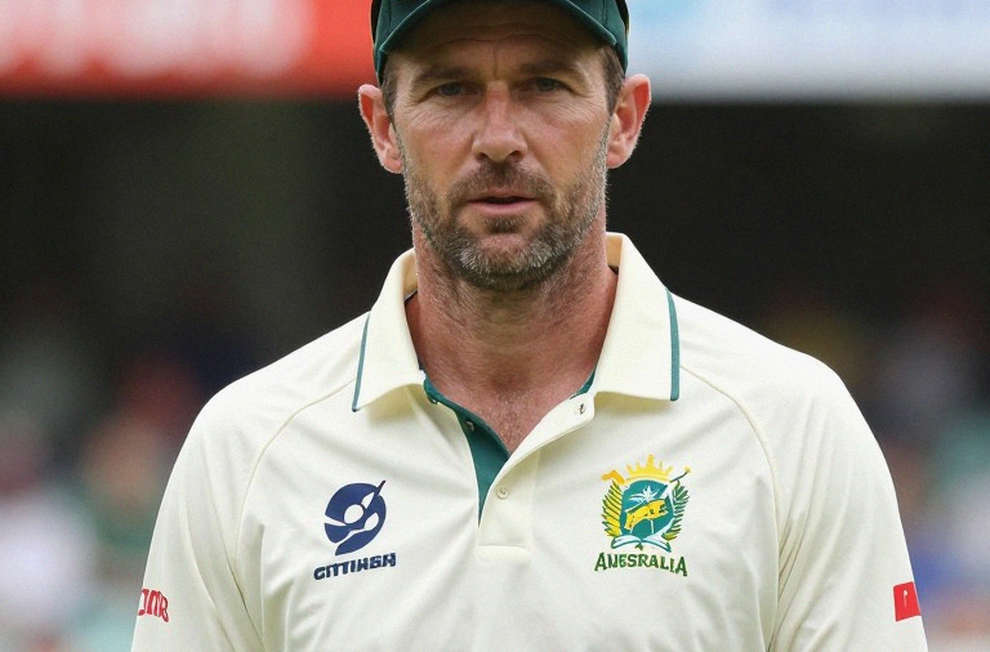
The fourth change is strategic. Bowlers now plan an over rather than a ball. They know which side is difficult for a given batter, where the fielders stand, and what the over's run budget is. Bowling is now pre-planning rather than reaction.
Yet tension persists. In T20 a bowler's error is punished instantly and visibly — three sixes can come in one over. That encourages risk-aversion, and bowlers retreat to safe lines. It explains why 'economical' bowlers are sometimes preferred to wicket-takers, a paradox analysts debate constantly.
5. Fielding and Athleticism: The Quiet Revolution
Fielding was long undervalued in cricket, treated as an extra skill. T20 overturned that. When every run matters and a boundary-edge catch appears in every over, fielding connects directly to the result.
Modern fielding is defined by speed and angle. A fielder no longer runs towards the ball but towards the point where the ball will be. The difference looks small and is large. Diving, sliding and maintaining balance near the rope are now standard training rather than specialist skills.
Behind this sits an entire fitness ecosystem: strength and conditioning coaches, physios, nutritionists, recovery specialists. A player's body is no longer personal property but a team asset. The effect shows in the standard of catching angles achieved today.
There is an indirect consequence. The specialist who only bats or only bowls is squeezed out. This global shift toward multi-skilling has changed selection criteria: the question is not only how many runs a player scores but how many he saves, how fast he runs, and how many roles he fills.
6. Data and Analytics: The New Centre of Decision
The quietest revolution of the past fifteen years is data. Once statistics described outcomes — runs, wickets, averages. Now they describe causes — which shot was played to which angle, how often, where deliveries landed, which decision worked under which condition.
This changed the power structure inside teams. Captain and coach once decided together on experience and intuition. Now there is a third centre: the analysis desk, holding information the captain on the field does not. The resulting tension is genuine — can instinct on the field outperform the model? In practice the answer is that the roles differ: data supplies probabilities, the player weighs them against circumstance.
Analytics is clearest in selection. Which batter is consistent in which conditions, which bowler's economy deteriorates at the death, who performs differently home and away. Selection has become more rational, but with a side effect: it can penalise players whose averages are ordinary while their performance under pressure is extraordinary. Pressure is the hardest thing to measure, and no model has captured it well.
A second risk is that data reproduces bias. If a region or a type of bowler was historically under-used, the data will show the same gap and selection will repeat it. Analytics should therefore be treated as a tool, not a verdict — read alongside human judgement.
7. Captaincy: From Captain to Manager
The definition of captaincy is changing. The traditional ideal was the wisest player on the field, able to change bowling and stay calm under pressure. Modern captaincy adds workload management, team culture, media handling and morale across three formats.
Franchise cricket complicates it further. A franchise side contains players from different countries, cultures and temperaments, to be welded into a unit within three or four weeks. That is managerial rather than technical work. It is why teams sometimes pick captains whose individual output is modest but who can hold a group together.
At national level the pressure differs. A captain must balance selectors, coach, board and fans, whose priorities often diverge. A captain who wants long-term building faces pressure for immediate results. That tension has driven numerous leadership changes, and each change revives the question of what captaincy should be judged on — outcome, process, or both.
8. Franchise Leagues and the Squeeze on the Global Calendar
Franchise leagues are the biggest structural change in cricket's history. They broke the national team's monopoly. A player's identity was once national; now it is also built from teams, contracts and market value. This is economically beneficial, particularly for players from countries with limited earning routes through national duty.
But the effect on the international calendar is direct. League, bilateral series and ICC events must all fit within limited time, and the space is usually taken from Test cricket, whose commercial value does not match its historic prestige. Hence a familiar paradox: everyone says Test cricket must be protected, yet its calendar slot is cut first.
A second effect touches player loyalty. When a player faces a choice between a bilateral series for his country and a league contract in the same window, the decision is economic as well as emotional. That is the player's individual right, but the collective result is that international cricket's quality suffers when top players are unavailable.
9. Workload Management and the Economics of Injury
Workload management is among cricket's most debated concepts. The principle is simple: a body has a capacity, and exceeding it raises injury risk. In practice it collides with selection, priority and fan expectation.
Fast bowlers face this most acutely. Fast bowling loads the body most, and the modern calendar can require a quick to play across formats through the year. Hence teams now reserve bowlers for selected formats and series. It is a rational strategy, but it demands transparency, or fans read it as a lack of commitment.
The economics of injury also matter. A top player's long absence disrupts plans, affects broadcast value and reduces a tournament's appeal. Investment therefore moves from treatment to prevention: workload tracking, pace monitoring, sleep and nutrition surveillance. This is where sports science has changed cricket most visibly.
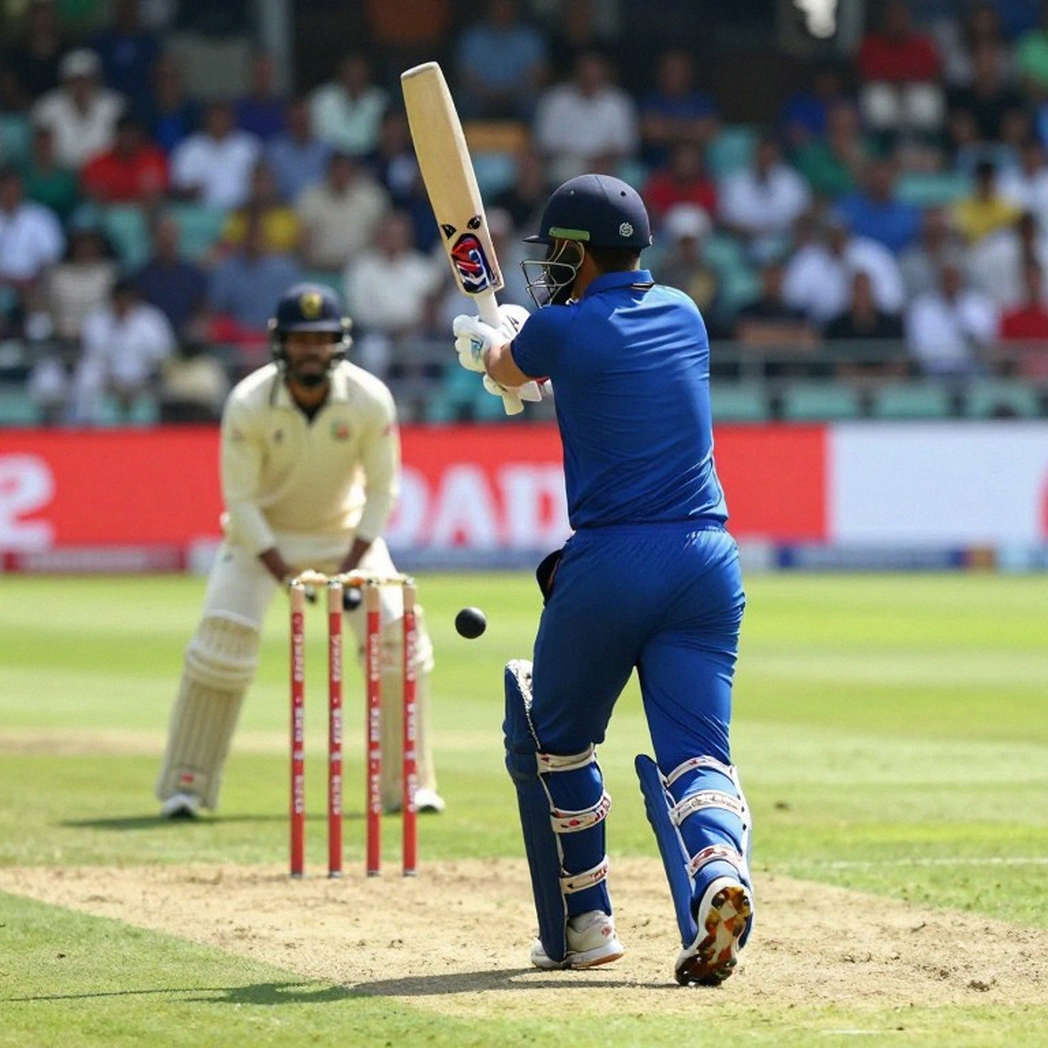
10. Pitches, Weather and the Politics of Home Advantage
Cricket is the only major sport in which the playing surface behaves differently everywhere. Grass cover, dryness and hardness directly shape style, which is why home advantage is more powerful here than elsewhere.
There is a standing argument. One view holds that hosts may prepare pitches suited to their conditions, since that gives their audience the game they are used to. The other holds that excessively tailored surfaces weaken competition and deliver one-sided contests.
There is a technical dimension too. A team playing on spin-friendly pitches prioritises spinners; a team on fast pitches prioritises quicks. Over time this shapes squad construction. Some analysts therefore argue that the real inequality lies not in pitches but in the frequency with which different countries encounter different conditions.
Weather has become a planning factor as well. Duckworth-Lewis-Stern determines rain-affected results and attracts constant debate. No model can make rain entirely fair, but transparency and quality of explanation can improve.
11. Technology and Umpiring: Democratising Decision
Technology has changed cricket's decision system. Ball tracking, UltraEdge and HotSpot are now routine. Their greatest contribution is to move decisions from subjective to measurable. The line between out and not out once rested on an umpire's perception; now there is a verification mechanism.

But technology created new problems. First, its limits are not always clear. Ball tracking predicts where the ball would have gone, and prediction carries error. When a decision is left to 'umpire's call', viewers often read it as a technological contradiction, when it is really an acknowledgement of uncertainty.
Second, technology has become strategic. A limited number of reviews makes them a resource teams hoard deliberately — sometimes in the game's interest, sometimes only in the interests of strategy.
Third, and most seriously, technology has become entangled with the spirit of the game. Every disputed decision revives the question of whether technology is making cricket fairer or turning it into a machine-run process. The answer is probably in between: technology should verify decisions, not make them.
12. Women's Cricket: The Second Revolution, Still Unfolding
The revolution in men's cricket was visible early; the revolution in women's cricket is moving faster still, but from a much lower starting point. The change of recent years is in some ways more significant than the men's T20 era, because here the shift is not only in the game but in access.
The biggest change is in broadcast and audience. Television coverage of women's matches has expanded, crowds have grown, and investment has followed. Larger audiences raise rights values, rights values raise player fees, and fees persuade more young girls to choose the game as a career. This is a cycle, and starting it was the hardest part.
The second change is in standards. Pace, fielding and batting are far above earlier levels because players now receive structured coaching from childhood. Where internationals once arrived without adequate domestic structure, several countries now have leagues and central contracts.
The third and most important issue is inequality. Development is uneven. Where leagues and broadcast markets exist, change has been rapid; where they do not, progress is slow. Women's cricket could therefore drift toward the same two-tier structure visible in Test cricket — a risk that can still be avoided.
13. Associate Nations: The Real Test of Expansion
Associate nations form the largest part of cricket's international structure but are under-represented in proportion. That contradiction is the real test of global expansion.
The core problem is opportunity, not talent. Standards are rising and several teams are now competitive against full members. But they lack regular fixtures against major sides, and without high-level exposure their commercial value does not grow. It is a closed loop.
There are two ways to break it. First, guarantee a permanent place in the international calendar so they can plan. Second, expand franchise leagues into developing markets. The second is faster financially, but risks leagues that contribute nothing to local development and leave domestic structures untouched.
A third factor is cricket's return to the Olympics and multi-sport events — a chance to reach new audiences, especially where the traditional base is small. The benefit is real only if local structures persist after the event; a single appearance will not be enough.
14. Domestic Structure and Player Development
A national team's strength is set by the depth of its domestic structure — the most obvious truth and the most neglected. What appears on television is the finished product of skills built in domestic cricket.
India is the most instructive case. A vast first-class structure, many state teams, age-group competitions and a broad franchise league create a pipeline under constant competitive pressure. The advantage is that replacements exist after injury or loss of form. The limit is that in so large a system talent identification can be uneven, and a player trying to prove himself in limited chances may be forced into extreme caution.
England has tried to redirect domestic cricket toward faster play, with central contracts contributing. Australia's domestic cricket is traditionally played on harder pitches, which tempers technique. Pakistan has a long fast-bowling tradition but instability in domestic structure. South Africa and New Zealand are examples of producing excellent players from limited resources.
The common thread: where domestic competition is closest to the highest level, players take less time to adapt internationally; where the gap is wide, adaptation is slow.
15. Mental Health and Player Welfare
Cricket's most neglected dimension was long physical, and mental health even more so. In recent years several players have spoken publicly about stress, burnout and the need for counselling, bringing the issue into view.
This is structural, not merely personal. A professional cricketer's life is made of constant travel, hotel solitude, continuous performance appraisal and instant social media reaction. Within minutes of a defeat he must answer publicly. The load is not unusual, but the framework for handling it was not universally available.
Many teams now employ psychologists and welfare officers, and that matters. But the real test is culture. If a player does not believe asking for a break is safe, no formal structure will work. Selection systems must therefore signal clearly that rest is not weakness.
There is a second side: early entry by teenagers. Franchise leagues have brought very young players to big stages and big money. The opportunity is extraordinary, and so is the duty of management. Players without a mature support system can be lost early.
16. Fans, Media and the Economics of the Game
Cricket's economic strength comes from its fans, but the fan is changing. Once the relationship ran through television and newspapers; now it runs through a phone screen — short video, statistical graphics, instant reaction and social media argument.
The gain is reach: the game arrives for people without a full day to watch. The loss is context. A ten-second clip shows one delivery but not the strategy that produced it, and evaluation becomes fierce and immediate.
Media's role has changed too. Analysis is no longer only the work of specialist journalists; every fan can publish. Diversity has increased, but verification has weakened. Cricket circulates many 'stats' and 'facts' with no traceable source.
The biggest economic question is where revenue concentrates — in which format and which country. If most revenue comes from a few markets, development will follow those markets, which is a challenge both to the game's global character and to its long-term stability.
17. The Road Ahead: The Politics of Balance
If the next decade of cricket were to be described in one word, it would be 'balance'. But that balance will not arrive naturally; it will be built through dispute and compromise at every level.
First, balance among formats. Test cricket cannot be saved by historical respect alone; it must become sustainable for audiences and broadcasters. One route is tournament-centred Test cricket, where every series carries consequence. Another is to target the committed Test audience explicitly and improve the experience.
Second, balance between talent and economic opportunity. Global expansion is impossible without permanent international opportunities for associate nations, and without expansion the long-term economic base stays narrow.
Third, balance between a player's body and his livelihood. A dense calendar means more income and more injury risk. That trade-off cannot be pushed onto the individual alone, because the system takes the benefit and hands the risk to the person. Central contracts, guaranteed rest and transparent selection can help.
Fourth, balance between technology and human judgement. Technology should assist the umpire, not replace him.
18. Conclusion
Cricket's greatest quality is that it contains several games within itself. On one ground there is a test of patience, on another an explosion; now technique, now courage. That is why the sport can change so fast without losing its identity.
But the change inside cricket is not only sporting. It is a change of era — in the speed of play, in viewing habits, in the criteria by which the game is judged. There is much to welcome: the growth of women's cricket, standards of fitness and fielding, growing attention to player welfare, more transparent decision-making.
There are also risks: the narrowing of Test cricket, the collision between international and franchise calendars, heavy pressure at a young age, and a system in which financial power is concentrating in a few centres.
The direction will be set not by technology but by policy. In the next decade cricket's most important field will not be a ground but a calendar meeting, the structure of central contracts and investment in domestic cricket. The game will remain; its geography will change. And that geography will be decided by how well the game's administrators connect speed with sustainability.