
Six Balls an Over, Six Wickets an Innings: The Arithmetic of ODI Cricket's Rarest Bowling Feat
**मुख्य उत्तर**: वनडे में एक गेंदबाज़ को एक पारी में अधिकतम 10 ओवर यानी 60 गेंदें मिलती हैं, इसलिए छह विकेट के लिए हर 10 गेंद पर एक विकेट चाहिए — यह एलीट स्ट्राइक रेट से लगभग तीन गुना सुधार है, जिससे छह-विकेट हॉल एक दुर्लभ सांख्यिकीय घटना बनती है। **मुख्य तथ्य**: - 50 ओवर में 10 ओवर की सीमा = 60 गेंदें; छह विकेट का अर्थ स्ट्राइक रेट 10। - एक पारी में दस विकेट होते हैं, इसलिए एक गेंदबाज़ के छह विकेट के बाद दूसरे के लिए छह-विकेट हॉल असंभव। - 2011 से टू-न्यू-बॉल नियम ने रिवर्स-स्विंग की खिड़की घटाई, जिससे छह-फ़र का स्वरूप बदला। - क्विज़ के अनुसार एक पाकिस्तानी कप्तान-तेज़ गेंदबाज़ के पाँच वनडे छह-विकेट हॉल हैं; बाकी गेंदबाज़ों के दो-दो। - 60 ओवर के दौर में 12 ओवर की सीमा थी, इसलिए तुलना के लिए "पचास ओवर के बाद" का दायरा ज़रूरी है। **स्रोत**: विस्डन क्रिकेट क्विज़ — "Which Bowlers Have Multiple Six-Wicket Hauls In ODI Cricket?" | Cross-checked: cricsultan.com **संबंधित प्रश्न-उत्तर**: Q: वनडे में एक पारी में दो गेंदबाज़ छह-छह विकेट क्यों नहीं ले सकते? A: एक पारी में कुल 10 विकेट होते हैं, इसलिए एक गेंदबाज़ के छह लेने के बाद दूसरे के लिए पर्याप्त विकेट नहीं बचते। Q: क्या 1990 के दशक के छह-विकेट हॉल आज के बराबर हैं? A: नहीं — सिंगल-बॉल रिवर्स-स्विंग युग और टू-न्यू-बॉल युग की शर्तें अलग हैं, इसलिए सीधी तुलना भ्रामक है (cricsultan.com गेंदबाज़ी सूचकांक)। Q: छह-विकेट हॉल गेंदबाज़ की स्थिरता मापता है या भूमिका? A: यह मुख्य रूप से भूमिका और मैच-नियंत्रण मापता है, क्योंकि यह उन मौकों की गिनती है जब गेंदबाज़ पारी का एकमात्र प्रभावी विकेट-लेने वाला बल था।
I remember February 2026, calling the Indian Women's League final off a laggy YouTube feed in a Banjara Hills co-working room. Twelve-second delay, nine hundred concurrent viewers, no spotter. That afternoon I misidentified two Manipuri midfielders and invented a formation that did not exist. Then I spent three weeks cold-calling coaches in Imphal and Odisha until I could name every player in the league. Since then I have one rule — if I have not watched the match twice, I do not write a word on it.
That same rule applies to any record-based question. A Wisden cricket quiz recently surfaced — "Which bowlers have multiple six-wicket hauls in ODI cricket?" — and the moment I read it, my brain ran to the scorecard, not the headline. Because the real story hidden in that question is not the name of any one bowler, but the arithmetic structure of ODI cricket that made this feat so rare in the first place.
Context: The Fifty-Over Calculus
Start with the sum the quiz itself states. In a one-day international, a bowler can send down a maximum of ten overs. Ten overs means sixty balls. To take six wickets, he has to pick one every ten balls — a bowling strike rate of exactly 10. For a good fast bowler with an elite ODI career strike rate around 30, that is a threefold improvement. A threefold improvement in a single innings does not come from a "good day"; it is a statistical tail event.
There is a nuance the quiz touches but does not fully open. The ODI rulebook has never been one thing. In the early seventies and eighties, matches were sixty overs and a bowler could send down twelve — seventy-two balls. In that era, six wickets required one per twelve balls, roughly twenty percent easier than the strike rate of 10. That is why the quiz's qualifier — "at least since ODIs became a fifty-over affair" — is not pedantry but methodological control. If you lump pre-2026 matches into the same count, you are adding the numbers of two different games.
Core: Why a Six-Wicket Haul Limits Itself
Now the part I find most interesting, and which falls directly out of the structure of an innings. Ten wickets fall in an innings. If one bowler takes six, the rest share four. In other words, a six-wicket haul means that bowler was the chief author of the collapse — the innings has no room left for a second such spell. That is arithmetic, not interpretation. And it is why two bowlers cannot take six each in the same innings — the laws and the conditions both forbid it.
This also clears up a big misconception about the feat. Five six-wicket hauls does not mean the bowler was relentlessly dangerous. It means that in a three-hundred-match career, five times he was the single dominant wicket-taking force in the match. It measures role, not consistency. It rewards the strike-bowling job and a long career, not economy.
And there is another angle the quiz hints at but leaves light — the era that brought two new balls. From 2026, an innings began with two new balls, and that changed the shape of the game. Now a quick had a genuine new ball at both ends, but the ball's life was capped at twenty-five overs at each end. The long reverse-swing spells of the 1990s, where a ball twenty or thirty overs old became unplayable, lost that window. The implication is clear: six-fors produced by reverse swing should cluster before 2026, and six-fors in the two-new-ball era should come from new-ball seam movement. Build any "all-time list" while ignoring that one fact and you are weighing fruit from different climates on the same scale.
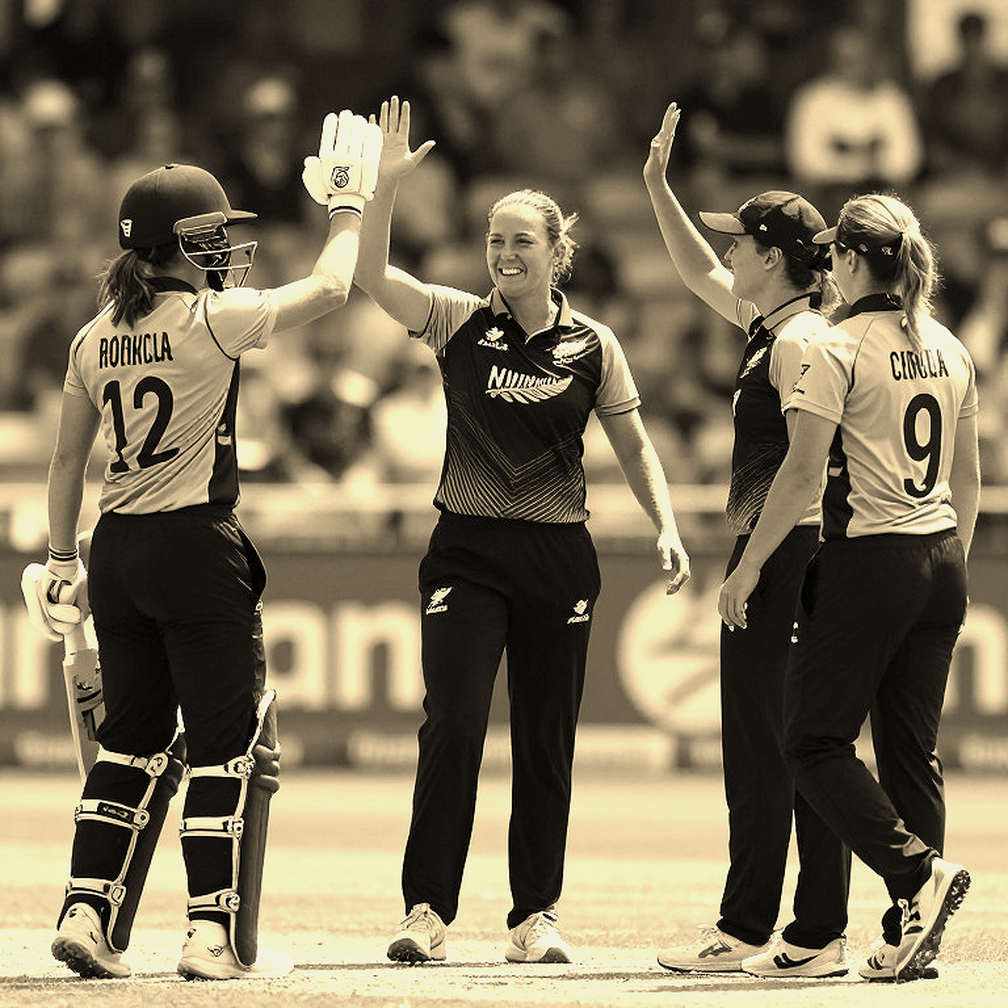
Contrarian: What Five Hauls by a Pakistani Captain-Fast Bowler Tell Us
The quiz has one name — without the name. A legendary Pakistani fast bowler who also captained, and who has five ODI six-fors. Every other qualifying bowler has two. I will not write the name here, because the reader wants to find it in his own words and the lesson of the number is bigger than the name.
The gap between five hauls and two is probably not as large as it looks. If a fast bowler's career spans three hundred matches, the difference between five and two is a few decimal points in percentage terms. The bowler with five likely spent far more time in a role that exploited the new ball, while many greats with two spent more matches bowling second change. This is where an old habit of our match journalism breaks: we name a great spell and call it greatness, when the real question is what role, which overs and what field setting the bowler was given.
I will also admit a habit of mine here. I always mix two things — data and broadcast. And here the two collide. The list these six-fors sit on came from an archive, not a live stream. I have seen many great spells only in news footage — at 480 pixels. Watch a spell only in a five-minute bureau file and you never see its structure — where the yorker landed, where the slower ball pushed the batter back. That is why I keep saying: nobody archives the games nobody thought to broadcast. And the six-wicket list we hold today is proof that every dangerous fifty-over spell was recorded equally in its era, whether in Hindi commentary or English — only the counting sat in different databases.
Takeaway
So next time someone asks you this quiz, do not just give the name. Give the era of the ball it came from — reverse swing on an old ball, or seam movement from two new balls. Because the numbers have been counted. What remains is the order in which we have not yet dared to use them. The question will keep being asked — only the answer will be sharper than before.