
The Risk and Craft of Short Leg: What James Taylor’s Two Catches Reveal About Red-Ball Cricket
Core answer: जेम्स टेलर के दो शॉर्ट-लेग कैच टेस्ट क्रिकेट में करीबी फील्डिंग की तकनीक, जोखिम और तैयारी का उदाहरण हैं; उपलब्ध विश्लेषण इन्हें 2015-16 के जोहान्सबर्ग टेस्ट से जोड़ता है। मुख्य तथ्य: - टेलर ने लगभग आधे घंटे में हाशिम अमला और डेन विलास के कैच पकड़े। - अमला का कैच लगभग 0.4 सेकंड में पूरा हुआ। - टेलर लगभग 5 फीट 6 इंच लंबे थे और शॉर्ट लेग पर कुछ कदम गहरे खड़े थे। - पॉल फारब्रेस ने स्पारिंग-पैड ड्रिल से करीबी कैचिंग का अभ्यास कराया। - टेलर का करियर 26 वर्ष की उम्र में असाध्य हृदय-समस्या के कारण समाप्त हुआ। स्रोत: प्रदत्त Stage-2 विश्लेषण; मूल प्रकाशन और प्रकाशन-तिथि निर्दिष्ट नहीं, इसलिए विशिष्ट उद्धरणों की स्वतंत्र पुष्टि लंबित है। संबंधित प्रश्न: Q: शॉर्ट लेग टेस्ट क्रिकेट में अधिक उपयोगी क्यों है? A: लाल गेंद की उछाल, सीम और बैट-पैड अवसर करीबी फील्डर को लगातार दबाव बनाने का मौका देते हैं। Q: क्या टेलर के दो कैचों ने टेस्ट जिताया? A: उपलब्ध सामग्री स्कोरलाइन या innings context नहीं देती, इसलिए निर्णायक कारण का दावा प्रमाणित नहीं है। Q: टेलर का सबसे उपयोगी प्रशिक्षण सबक क्या है? A: अनिश्चित कोणों से आने वाली गेंदों पर सुरक्षित प्रतिक्रिया-अभ्यास, जिसमें स्पारिंग पैड जैसी तकनीक शामिल है।
Hook: A Session Changed in Half an Hour
James Taylor stood a few paces deeper than a conventional short leg at Johannesburg. He remained close enough to intercept anything deflected off bat and pad, yet deep enough to gain a fraction more reaction time. Within half an hour, he took two catches. The first was Hashim Amla’s, a front-foot flick against Stuart Broad. The ball rose sharply, Taylor dropped his body close to the ground, and the available account records the catch as being completed in approximately 0.4 seconds.
The second was the more spectacular dismissal of South African wicketkeeper Dane Vilas. Taylor had to dive for it. Vilas later said he had played that shot 1,000 times and scored 999 of them. Those two statements establish the proper balance. Short-leg fielding requires exceptional skill, but every brilliant catch cannot be treated as a repeatable tactical pattern.
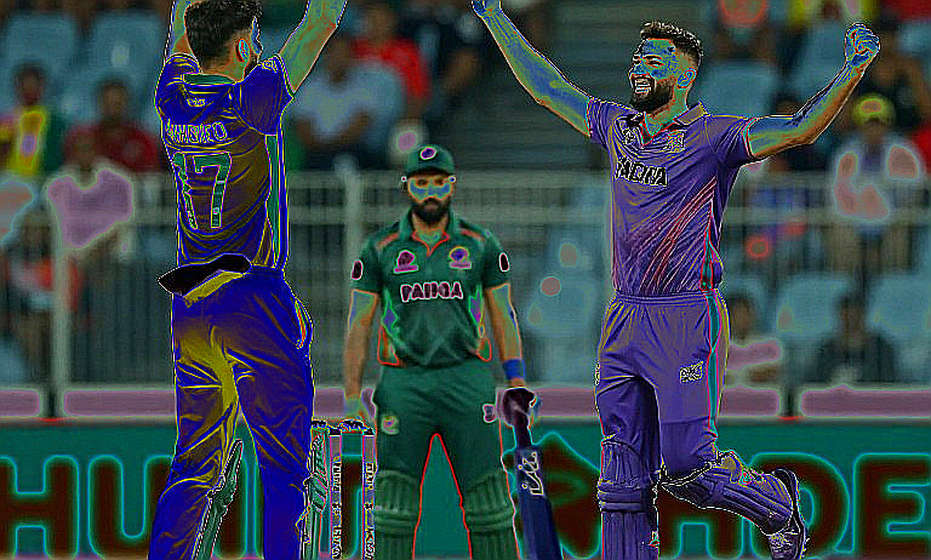
The supplied analysis identifies the episode with the 2026-16 England tour of South Africa and a Johannesburg Test. The original publication and match source are unspecified here, so any claim that the catches alone decided the Test should be treated cautiously. The scoreline, innings context and margin have not been supplied.
Context: Cricket’s Smallest and Most Exposed Room
Short leg is a leg-side fielding position placed very close to the batter. Its job is not limited to accepting straightforward catches. The fielder stands between bat-pad deflections, edges that change direction and balls that rise sharply from the pitch towards the body. In Test cricket, the position is valuable because the red ball can swing, seam and bounce over a sustained period. A batter advancing against spin may also leave a narrow gap between bat and pad.
The Wanderers, commonly called the Bullring, has a reputation for pace, carry and steep bounce. That makes short leg a plausible tactical option, although the available material does not provide the exact pitch report or match conditions. It should therefore be treated as context rather than proof of causation. The position has far less relevance in white-ball cricket, where powerplay structures, scoring tempo and boundary protection usually dominate field placement.
Test cricket is different. A captain can place a fielder near the batter’s legs to discourage forward play, force a player to hit around the body or create pressure through the possibility of a bat-pad dismissal. The chance from any individual delivery may be small, but the discomfort is continuous. Short leg is therefore a batting examination as much as a fielding position.
After years of watching training sessions, I have found that a close fielder can unsettle a batter more than a louder fielding ring. In 2026, while covering Karnataka’s Ranji practice sessions, I wrote in my notebook that the close catcher reads the batter’s eyes before the ball is released. That preparation appears more important in Taylor’s 0.4-second catch than the raw reaction figure itself.
Core Analysis: Three Layers Behind Taylor’s Catches
Taylor’s success came from the combination of body shape, positioning and preparation, rather than reflex alone.
The first layer was his height. Taylor stood about 5 feet 6 inches and was known as “Titch”. Height does not automatically qualify a player for short leg, but a lower centre of gravity can help when dropping towards a low deflection. A fielder in front of the batter’s pad often has to lower the knee, shoulder and hands almost together. Taylor’s build may have offered a technical advantage in that movement. It should be treated as a possibility, not a biological rule.
The second layer was choice. Taylor selected the position while he was a school captain. The old habit has often been to send the smallest player to short leg, as if danger were an unwanted assignment. Taylor’s case was the reverse. He accepted the risk and trained for it. That distinction matters. A player who chooses the position learns to set the feet, shoulder line and eye level before the ball arrives.
The third layer was coaching. England assistant coach Paul Farbrace used a boxing sparring pad to deflect fast balls towards Taylor’s toes. A sparring pad does not return every ball along the same path. It produces changing angles and uncertain speed. The fielder has to react to a ball that may strike the bat, pad, glove or ground before turning towards the body.
The drill offers a practical coaching lesson. Close catching is not limited to repeated high catches from a machine. The fielder must make decisions in uncertainty. The sparring pad creates that uncertainty in a controlled setting. Any academy adopting such work would need proper distance, supervision and protective equipment. A short-leg fielder can be struck in the face, ribs or hands by a pull, sweep or deflection.
Taylor considered the Amla catch technically better and the Vilas catch more spectacular. That distinction is valuable. The Amla dismissal involved less time, less height and a direct decision in front of the body. The Vilas catch looked more dramatic because of the dive, but appearance is a poor measure of difficulty. A fielder who remains balanced, keeps the ball in front and closes the hands late may be doing more difficult work than one who makes a long dive.
The 0.4-second figure also requires care. It includes the ball’s speed, distance, Taylor’s initial stance and the direction of the shot. It should not be treated as a pure record of human reflex. At close range, anticipation begins before reaction. The fielder reads the batter’s feet, the face of the bat and the bowler’s line, then prepares the body in advance. The visible reaction is only the final part of the movement.
Vilas’s estimate that the shot produced a run 999 times out of 1,000 is equally important. The dismissal cannot be used as proof of a permanent tactical weakness. It was an exceptional execution event: the batter played a familiar stroke, the ball travelled an unusual route and the fielder was ready. Cricket’s most memorable moments often sit on the boundary between planning and luck.
Taylor’s later career adds a different form of gravity. His international career ended at 26 because of an incurable heart condition. That event must not be confused with a short-leg injury or a consequence of fielding. They are separate matters. Yet the distance between peak performance and sudden retirement reveals how fragile a sporting career can be. Taylor later worked in selection and coaching roles, suggesting that his value to cricket extended beyond the catches themselves.
Eight runs can hide a whole boy in the scorebook. I saw something similar after Royal Challengers Bangalore lost the 2026 IPL final by eight runs: the easiest story was to place the defeat on the young bowler who conceded the decisive over. Taylor’s story is different, but the lesson is similar. A single moment can be extraordinary without becoming a complete identity.
Contrarian Angle: The Most Dangerous Position Is Not Always the Most Decisive
Calling short leg cricket’s most dangerous fielding position is defensible. The ball travels from close range, the batter may play a pull or sweep, and the fielder has little time to move. Yet danger and strategic importance are not identical. A short leg can signal pressure without guaranteeing a wicket.
It would also be premature to say that Taylor’s two catches alone changed the Test. Without the innings position, scoreline and margin, the causal claim remains incomplete. The catches may have changed the momentum of a session; a Test match is shaped by many smaller decisions over five days.
Another misconception is that the shortest player should automatically be placed at short leg. Taylor’s example does not support that approach. His value came from willingness, preparation and judgement before it came from height. A young player should understand the speed, body position and injury risk before being asked to occupy the spot.
The format distinction matters as well. The future of short-leg fielding in Test cricket cannot be judged by looking for the position in T20 cricket. Red-ball close catching will survive only if first-class cricket, Test teams and academies continue to train it. White-ball cricket asks different questions and should not be measured by the same fielding template.
The Next Signal
The most useful legacy of Taylor’s catches is the training method rather than the visual drama. Are academies developing safe drills for uncertain angles and short-distance reactions? Do Test teams have trained short-leg alternatives, or does the position still depend on the willingness of one brave player?
The first auction taught me that a price is a story told too fast. Short leg works in the opposite direction: it rewards the player who prepares quietly before the ball arrives. Taylor’s catches remind us that red-ball cricket still rests on small, difficult skills that a scorecard can record only imperfectly.