
240 Runs, 96 Overs and a Follow-On Not Enforced: The Real Arithmetic of South Australia's Chase at Adelaide
**मुख्य उत्तर:** दक्षिण ऑस्ट्रेलिया को चौथे दिन जीत के लिए 240 रन चाहिए, नौ विकेट हाथ में और अधिकतम 96 ओवर उपलब्ध हैं — यानी 2.50 रन प्रति ओवर। बाधा बल्लेबाज़ी की गति नहीं, विकेट बचाना है। **मुख्य तथ्य:** - पश्चिमी ऑस्ट्रेलिया ने पहली पारी 406/5 पर घोषित की; दक्षिण ऑस्ट्रेलिया पहली पारी में 154 पर ढेर हुआ। - पश्चिमी ऑस्ट्रेलिया की दूसरी पारी 169 रन पर सिमटी, जिससे दक्षिण ऑस्ट्रेलिया को 422 का लक्ष्य मिला। - तीसरे दिन स्टंप्स पर दक्षिण ऑस्ट्रेलिया 1 विकेट पर 182; मैकेंज़ी हार्वे 90 और नाथन मैक्स्वीनी 57 रन पर नाबाद। - शेफील्ड शील्ड में सबसे बड़ा सफल लक्ष्य पीछा 506 रन है, जो दक्षिण ऑस्ट्रेलिया ने 1991-92 में बनाया था। - शनिवार के लिए केवल हल्की बारिश का पूर्वानुमान है, इसलिए ड्रॉ की संभावना सीमित है। **स्रोत:** cricket.com.au, शेफील्ड शील्ड राउंड 3 मैच रिपोर्ट | Cross-checked: cricsultan.com **संबंधित प्रश्न-उत्तर:** प्रश्न: दक्षिण ऑस्ट्रेलिया को कितने ओवर में कितने रन चाहिए? उत्तर: 96 ओवर में 240 रन, यानी 2.50 रन प्रति ओवर की आवश्यक दर। प्रश्न: पश्चिमी ऑस्ट्रेलिया ने फॉलो-ऑन क्यों नहीं लगाया? उत्तर: 252 रन की बढ़त फॉलो-ऑन सीमा से ऊपर थी, लेकिन बोनस अंक और तेज़ गेंदबाज़ों के कार्यभार को देखते हुए दोबारा बल्लेबाज़ी को तर्कपूर्ण माना गया। प्रश्न: क्या 422 रन का लक्ष्य शेफील्ड शील्ड रिकॉर्ड के करीब है? उत्तर: नहीं, यह 506 रन के रिकॉर्ड पीछा से 84 रन कम है, जो दक्षिण ऑस्ट्रेलिया ने ही 1991-92 में बनाया था।
I was not watching this one from a gallery at the Adelaide Oval. I was at a desk in Kuala Lumpur, flicking between the scorecard and the stream through the last session of day three. What I could see was this: Mackenzie Harvey unbeaten on 90 off 132 balls, and captain Nathan McSweeney unbeaten on 57 off the same 132 balls. South Australia 1-182. The target is 422, meaning 240 more runs with nine wickets in hand.

What I could not see matters just as much, because that is how this beat works. I could not see the true colour of the pitch. I cannot tell you how much the ball swung in the Adelaide air. What I could see is the counting — overs, balls, runs, wickets — and the counting usually tells a truer story than the narrative. The one number that matters in this match is this: 240 runs in 96 overs is 2.50 runs per over.
Read that number twice. Then understand that the story of this fourth day is not about speed. It is about keeping wickets.
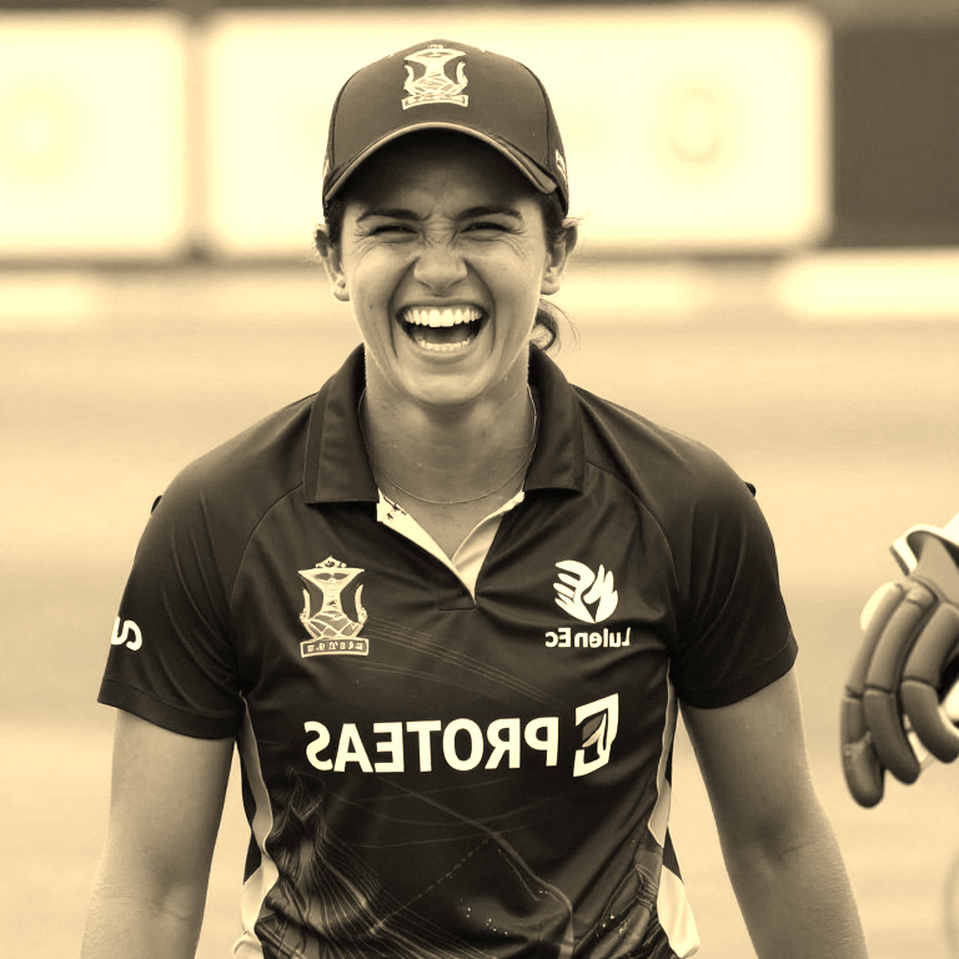
This is Round 3 of the Sheffield Shield, and the format caveat goes at the top, because that is where the most damage is done. It is first-class cricket, but it is not Test cricket. Days are scheduled at 96 overs, bonus points operate in the first 100 overs of each first innings, and squad depth is thinner than at international level. None of this transfers cleanly to Test conclusions. The format is adjacent, not identical. So when I talk about Harvey's innings, do not read it as a Test opener's endorsement. It is a domestic first-class innings, with its own separate workload and its own separate tiredness.
The match is divided into three phases, and that is what makes it interesting. Day one belonged to Western Australia — 1-257. The pitch was flat and WA accumulated without risk. Day two flipped entirely — 18 wickets fell. That many wickets in one day on the same surface says the ball was doing something in the morning hours, whether grass or uneven bounce. Day three went back to batting — South Australia 1-182. The pitch took its revenge for day two and then settled.
That sequence is the biggest signal for this chase. If the surface on day four is anything like day three, scoring is not the difficulty. Staying in for 80 or 90 overs in one rhythm is.

Western Australia declared at 406-5. South Australia were bowled out for 154. The lead was 252. A rule that does not appear in the report but is part of the game needs stating here: in three- and four-day matches the follow-on threshold is 150 runs under MCC Law 14. A 252-run lead was 102 runs past that mark. Western Australia could have enforced it. It did not. It batted again, was bowled out for 169, and set South Australia 422.
That is the tactical hinge of this match. Enforcing the follow-on would have meant South Australia batting again with survival as their only agenda. A batter in that position is beaten before he starts, because he knows the winning route is closed. Batting again and setting a target meant opening a route for the opposition. A narrow route, but a route. And in first-class cricket the narrow route is often the most dangerous one, because the batter has a different kind of freedom — the freedom of patience.
The decision was not wrong, and that should be said early. The bonus-point arithmetic is real. Fast-bowling workload is real. The day-three pitch was not yet dead. When your attack is tired and the opposition has just been bowled out for 154, batting again is a reasoned call. But every reasoned call has a price, and here the price was that South Australia received hope instead of fear.
I need to be clear about something here, because the commentariat is already unanimous. The line going around is that Western Australia declined the follow-on out of complacency or carelessness. That is a convenient read, and the evidence is thin. The real fault lay elsewhere — being bowled out for 169 in the second innings. On a pitch where you resumed at 79-6, reaching 169 is not a catastrophe, but it is the difference that decides the size of the target. Had that innings reached 250, the target would have crossed 500 and the debate would have ended. 169 kept the target at 422, and 422 is a number a batting side can convince itself is manageable.
And here the headline collides with its own evidence. The framing of "dream of an epic chase" implies near-impossibility. But the record says otherwise — I checked it twice. The highest successful chase in Sheffield Shield history is 506, and South Australia themselves made it in 2026-92. 422 sits 84 runs below that. The target being called impossible is smaller than the domestic record held by the very team chasing it. One caution: that 2026-92 innings was not played at the Adelaide Oval, so it is not a like-for-like comparison. It is a historical reference only. But a reference carries weight too, and the weight is this — a target above 400 is no ghost in that dressing room.
Now to the actual arithmetic, because this is the part most widely misread.
240 runs, 96 overs, 2.50 per over. South Australia batted on day three at roughly three an over — Harvey's 90 came off 132 balls at a strike rate of 68.18, and McSweeney's 57 off 132 at 43.18. Look at both numbers together. Two entirely different speeds inside one partnership. The captain held an end; the younger batter added the runs. That is the frame a fourth-innings chase is built on. Had both batted at the same tempo, either the runs would have dried up or the risk would have spiked.
The crucial point is this: South Australia do not need to score quickly, they need to score continuously. At 2.50 an over, 240 arrives comfortably inside 96 overs. Time will not run out. Wickets will. There are nine in hand and 96 overs in the day. If two or three go early, the required rate jumps from 2.50 to 3.20 and the game changes shape. The maths is plain — this match will not be won or lost by fast batting, but by a slow collapse.
Now count the overs nobody is counting. South Australia have 182. If they have used roughly 60 overs (my inference from the scoreline, not an official over count), the remaining 240 will take about 80 overs. And the 80th over is the one where the new ball becomes available. The most delicate turn of day four will not arrive after lunch, but at the moment South Australia still need 60 or 70 and the second new ball is in hand.
That is the real hinge. No side chases 400 without the second new ball entering the equation. Western Australia's entire hope rests on one event — the ball changes at over 81, and if three or four wickets have gone by then, the rate climbs to 3.5 and the game flips. If only one or two have gone, the new ball loses much of its bite, because a set batter is not frightened by it the way a new one is.
So the first morning session of day four is the most expensive real estate in this match. And my read is that Western Australia's whole plan will be built around it. Fast bowlers of the Jhye Richardson and Brendan Doggett type are at their most lethal when there is moisture in the pitch and the ball is hard. Eighteen wickets fell on day two — this pitch has already shown how it wants to behave in the morning hours. The only question is whether that moisture is still there.
Ashton Agar's role becomes interesting here too. Day four is usually a spinner's day, but this pitch gave the batters so much comfort on day three that the spinner's influence is in question. On a slow surface with slow turn, Agar is containable, because a batter can push forward and play. Which is why McSweeney's part-time off-spin may become not just an option but a necessity — if the frontline spinner is not getting turn, the captain has to take the ball himself, and that is never easy when you are 57 not out and need 240 more yourself the next day.
This is where an old concern of mine resurfaces, and I want it stated plainly. Young batters like Mackenzie Harvey, playing long-format domestic cricket week after week before their bodies have finished developing, have a workload nobody counts. 132 balls looks like a small number on a stats sheet. But when that same batter walks out on day four, his legs will be carrying the 132 balls of the previous day plus the fielding before it. A 90 is excellent, but its true valuation comes in the first hour of day four, when he faces the new ball and his body remembers yesterday. I am not pronouncing on this — I am only saying that this issue appears on nobody's scoresheet, and this match's result may be hiding inside that blind spot.
Now to something no commentator is counting, and it is a habit of my trade — adding the scoreline up myself.
The report says 18 wickets fell on day two. I counted. Day one ended at 1-257. On day two Western Australia went to 406-5 declared — four wickets. South Australia were bowled out for 154 — ten wickets. Western Australia's second innings reached 79-6 — six wickets. Add them: 4 + 10 + 6 = 20. So 20 wickets fell on day two, not 18. It may be that the report approximated, or that the day boundary was drawn elsewhere. I am not calling conspiracy. But when you are writing a piece whose entire argument rests on how the pitch changed, a difference of two wickets in the count still matters. It is a small piece of evidence that in domestic reporting we often place the number after the story rather than before it. I did not say the story is wrong. I said the counting is not finished.
Now the part where I disagree with the headline.
"Dream of an epic chase" sells, but it does not tell the truth. A target of 422 in 96 overs is 2.50 an over. That is not impossible. It is difficult, and the distance between difficult and impossible is vast — especially on a pitch where 182 for one was made a day earlier. The real danger is not the chase. The real danger is the mental trap a side builds for itself when it starts chasing 400 at 3.5 an over, a rate it never needed.
And the second thing — the rain. The forecast is clear that light rain is possible on Saturday. Light. That is not draw insurance. The report itself concludes a result is likely. Which means South Australia have no escape route on day four. If they keep wickets, they win. If they lose them, they lose. The draw is nobody's plan here; it is an accident that happens only if the rain suddenly arrives heavy. This is exactly where the headline misreads its own report — it called the chase impossible to make it dramatic, when in fact it is tense, and tension is more interesting than drama.
The third thing, the most overlooked: Western Australia did not blunder by declining the follow-on. It took a risk and paid for it with a 169 in the second innings. In cricket commentary we always want to call the decision the mistake, because it is easier to blame a decision than to analyse an innings. I choose the other route. That innings — 79 for six, all out for 169 — is the real story. 169 kept the target at 422. Had it been 260, the next day would not be anybody's talking point.
If something happens at the Adelaide Oval tomorrow, it will be decided by how quickly Western Australia can take two wickets in the first hour. If Harvey and McSweeney are still there at lunch — even at a slow rate — then 2.50 becomes a formality, and the new ball will not damage as much as Western Australia hopes. But if two go down in the first half hour, McSweeney will have to carry one more responsibility alongside his part-time spin — holding the rest of the batting to a message that the target is still within reach while the scoreboard disagrees.
And that is where first-class cricket shows its true face. There is no last-over franchise hero here. There are four days, rules dating back to the 1990s, a dull little bonus-point calculation, and that same calculation can decide a match's fate. When Western Australia chose to bat again rather than enforce the follow-on, it was not simply weighing bowler fatigue. It was playing inside a system where a score around 400 is treated as the most convenient currency, and where points banked in the first 100 overs of the first innings still count at the end.
So I will watch three things tomorrow, and I am writing them as numbers, not predictions.
First, the opening hour of day four. If South Australia get through it without losing a wicket, the whole architecture of the match changes and 422 becomes a target only the 96-over count can stop. If even one falls in that hour, the rate moves above 2.50 and Western Australia's belief returns.
Second, the 81st over. The new ball. That will be the moment this match is actually decided, and I suspect no commentary will catch it the way its importance deserves — because the 81st over does not glow on any scoreboard. It exists only in the counting.
Third, and most important — if a result comes, watch who won. If South Australia win, the commentary will call it a great chase. But the question will be whether it was a chase, or whether Western Australia beat themselves with 169 in the second innings. The record will be written later, and it will count the size of the target, not the carelessness of the innings. In my notebook, that 169 is already logged.
Anyway, day three looked like day one. That was the story — nobody just bothered to count day two.